
 Follow Official WeChat


Distributed Acoustic Sensing (DAS) Market Size and Share Analysis Report
I. Global Market Overview
The global Distributed Acoustic Sensing (DAS) market is experiencing explosive growth, projected to surge from USD 3.2 billion in 2024 to USD 7.8 billion by 2032, representing a Compound Annual Growth Rate (CAGR) of 11.8%. This expansion is primarily driven by three core factors: a sharp increase in demand for safety monitoring of energy infrastructure, accelerated deployment in smart city construction, and deepening exploration in marine resource development.
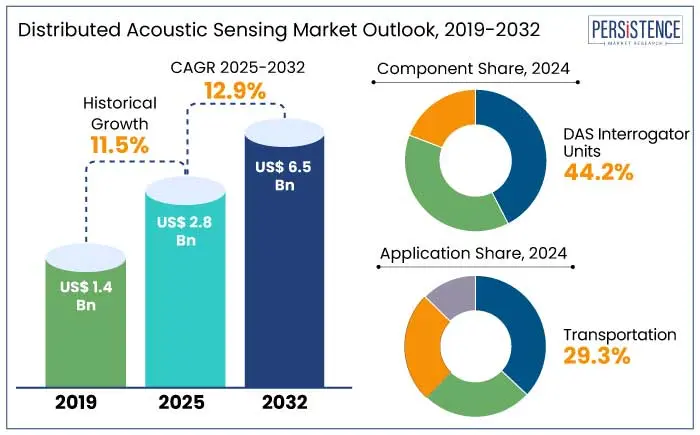
Market Segmentation Insights:
-
Vertical Market Distribution
-
Oil & Gas Pipeline Monitoring commands the largest share (35.2%), with annual inspection accuracy reaching ±2m.
-
Transportation Infrastructure shows the fastest growth (CAGR 14.5%), covering over 80,000 km of smart highways globally.
-
Border Security market penetration has risen to 42%, with a false alarm rate below 0.1%.
-
Technology Evolution Trends
-
Market share for AI-empowered DAS systems is projected to rise from 28% in 2024 to 67% by 2032.
-
Next-generation demodulation units achieve ultra-long-range monitoring of 120 km (Signal-to-Noise Ratio > 65 dB).
-
Multi-physics field integrated monitoring solutions reduce costs by up to 30%.
Regional Competitive Landscape:
North America leads the global market with a 38% share, driven by:
-
A nationwide million-kilometer-level fiber optic network.
-
Stringent pipeline safety regulations (e.g., new PHMSA rules).
-
Defense applications accounting for over 25% of the market.
The Asia-Pacific region exhibits the fastest growth (CAGR 13.9%). China's "14th Five-Year Plan" explicitly lists DAS technology in its key sensor development catalog, with the domestic market expected to exceed USD 1.2 billion by 2025.
Industry Chain Value Distribution:
-
High-end Demodulation Equipment (Gross Margin 45-50%).
-
Specialized Sensing Cables (Market Share growing at 8.2% annually).
-
Intelligent Analysis Software (AI algorithm premium reaching 60%).
Emerging Application Frontiers:
-
Polar Glacier Monitoring (Resolution: 0.05m/day).
-
Deep-Sea Mining Safety Systems (Pressure Resistance: 1000 bar).
-
Space Station Structural Health Monitoring (Undergoing space adaptability validation).
Data sources for this report include:
-
Latest industry surveys by MarketsandMarkets™.
-
International Energy Agency infrastructure reports.
-
Financial analysis of 15 leading global manufacturers.
-
Operational data tracking from 36 demonstration projects.
More Blog Videos
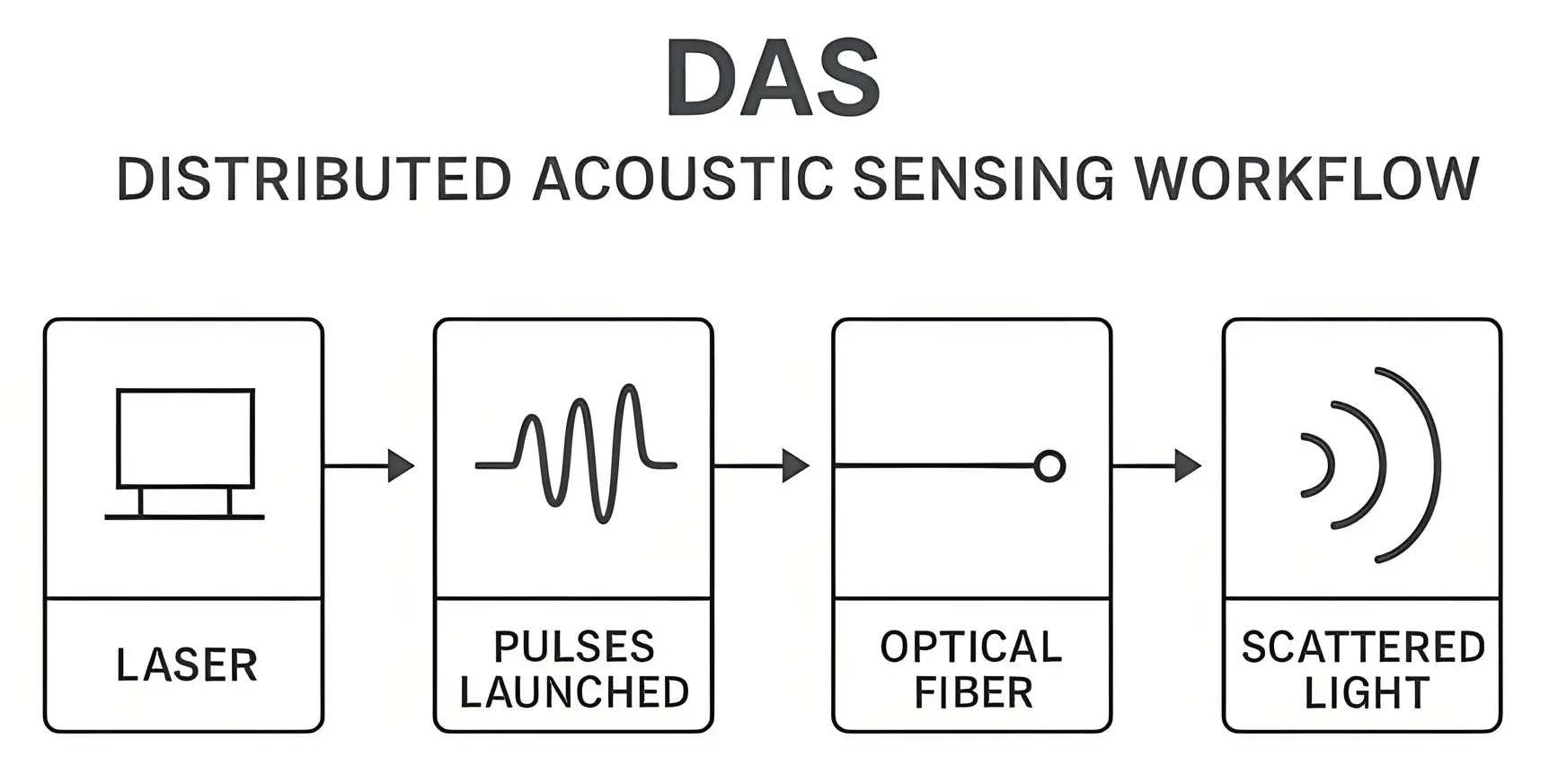
What is a DAS Distributed Acoustic Sensing System? Principles and Application Analysis
In the field of optical fiber sensing technology, the DAS (Distributed Acoustic Sensing) system has emerged as a pivotal technology with rapid development in recent years. By utilizing the optical fiber itself as the sensing element, a DAS system enables continuous, real-time, and long-distance monitoring of vibration and acoustic signals along the fiber. This capability has led to its widespread application in fields such as oil pipeline monitoring, railway safety monitoring, perimeter security, and seismic monitoring.
Release Date: 2026-03-13
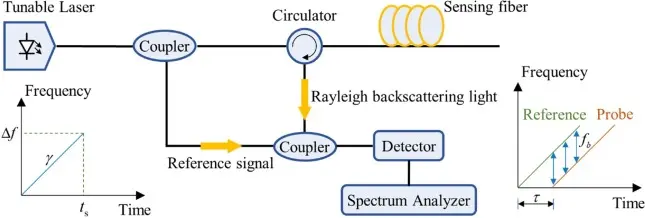
OFDR vs. OTDR: What's the Difference? A Comprehensive Comparison of Principles and Applications
In the fields of optical fiber testing and fiber optic sensing, OTDR (Optical Time Domain Reflectometer) and OFDR (Optical Frequency Domain Reflectometer) are two critically important measurement technologies.
Release Date: 2026-03-09
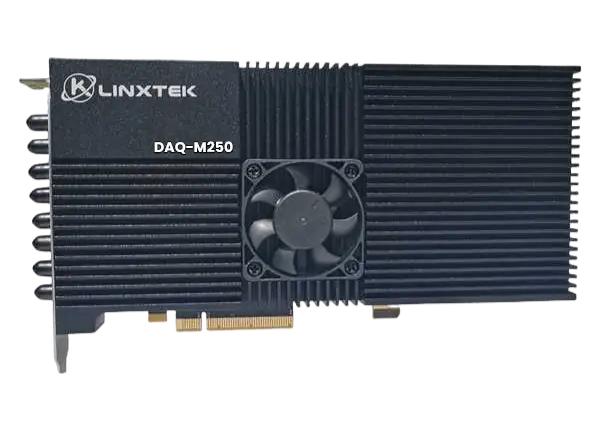
Core Technologies and Selection Guide for High-Speed Data Acquisition Cards
With the advancement of optoelectronic measurement techniques, Distributed Acoustic Sensing (DAS), radar signal processing, and scientific experimental equipment, the High-Speed Data Acquisition Card (DAQ) has become a core component in many high-end instrumentation systems. The performance of the data acquisition card directly dictates the system's signal acquisition capability, measurement precision, and real-time processing power.
Release Date: 2026-03-04
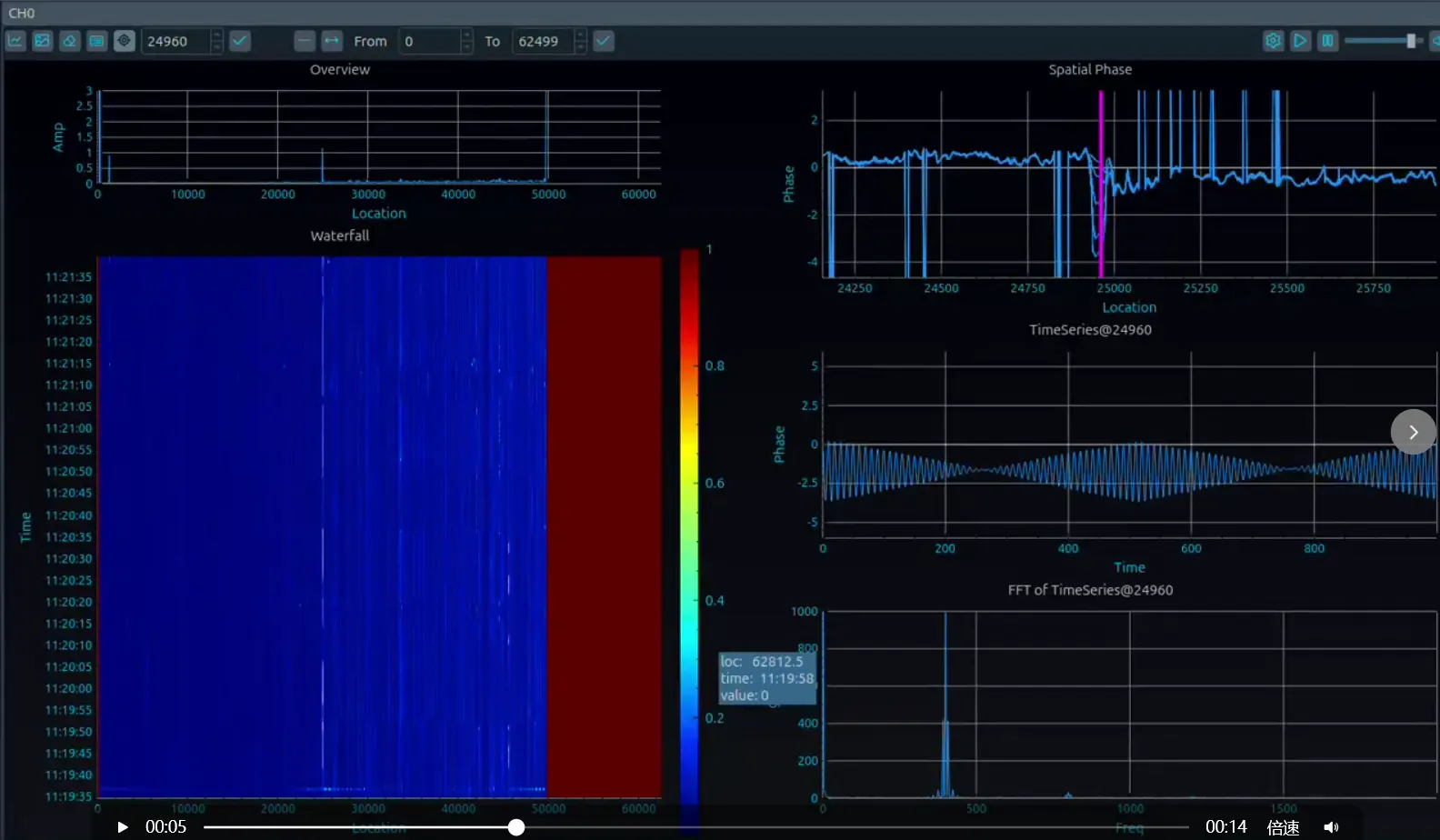
Engineering Methods for Enhancing DAS Signal-to-Noise Ratio (SNR)
Engineering Optimization Practices for Distributed Acoustic Sensing (DAS) Systems In a Distributed Acoustic Sensing (DAS) system, the Signal-to-Noise Ratio (SNR) directly dictates the achievable sensing distance, spatial resolution, capability to detect weak vibrations, false positive and false negative rates, and the efficacy of post-processing algorithms. Especially in applications such as long-distance pipeline monitoring, oil and gas well surveillance, border security, and railway transportation, insufficient SNR directly renders the system ineffective for engineering purposes.
Release Date: 2026-02-28

Engineering Practice of DAS in Utility Tunnel Vibration Monitoring
As the scale of urban underground utility tunnels continues to expand, achieving 24/7 online monitoring of structural integrity, external construction disturbances, and unauthorized intrusion has emerged as a critical challenge in the development of smart cities.
Release Date: 2026-02-25
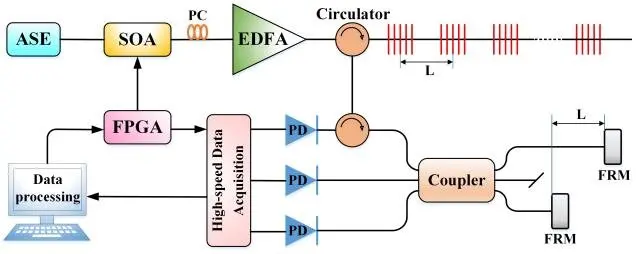
Comparison of DAS and FBG Vibration Monitoring Technologies
With the widespread adoption of fiber optic sensing technology in fields such as rail transit, pipeline security, perimeter intrusion detection, and structural health monitoring, Distributed Acoustic Sensing (DAS) and Fiber Bragg Grating (FBG) based vibration monitoring have emerged as the two most frequently compared solutions by end-users.
Release Date: 2026-02-14