
 Follow Official WeChat

Engineering Methods for Enhancing DAS Signal-to-Noise Ratio (SNR)
——Engineering Optimization Practices for Distributed Acoustic Sensing (DAS) Systems
I. Why is the Signal-to-Noise Ratio (SNR) so Critical for DAS?
In a Distributed Acoustic Sensing (DAS) system, the Signal-to-Noise Ratio (SNR) directly dictates:
- Achievable Sensing Distance
- Spatial Resolution
- Capability to Detect Weak Vibrations
- False Positive and False Negative Rates
- Efficacy of Post-Processing Algorithms
Especially in applications such as long-distance pipeline monitoring, oil and gas well surveillance, border security, and railway transportation, insufficient SNR directly renders the system ineffective for engineering purposes.
Therefore, enhancing DAS SNR is not a trivial matter of software filtering but a comprehensive system-level engineering challenge.
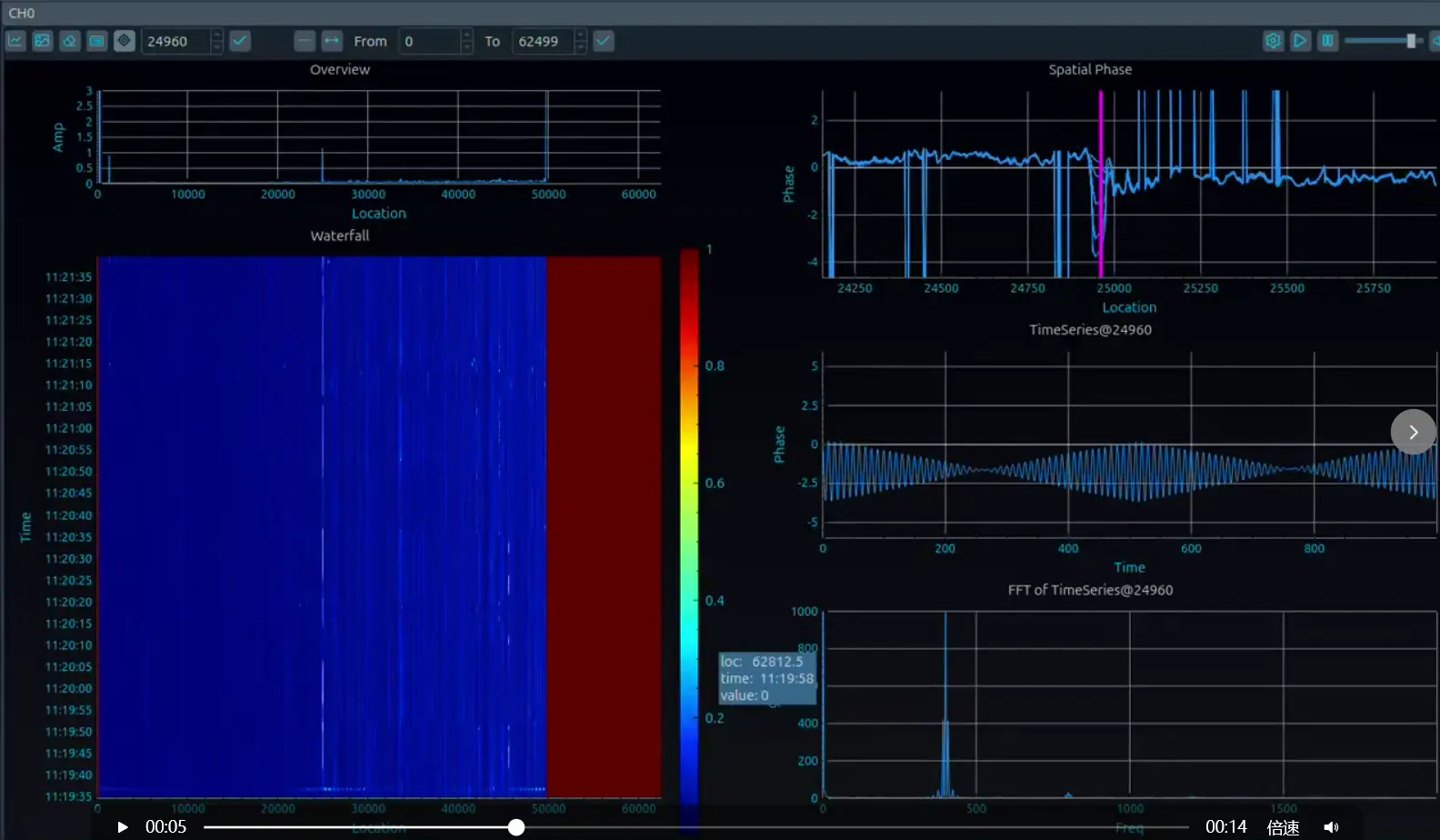

II. Core Factors Affecting DAS SNR
1️⃣ Optical Link Noise
- Coherent Fading
- Polarization Fading
- Randomness of Rayleigh Backscattering
- Laser Phase Noise
- EDFA Noise Figure
2️⃣ Electronic Acquisition Chain Noise
- ADC Quantization Noise
- Front-end TIA Thermal Noise
- Analog Bandwidth Limitations
- Clock Jitter
3️⃣ Environmental Factors
- Fiber Optic Cable Laying Quality
- Ambient Temperature Variations
- Fiber Mechanical Coupling Conditions
- Mechanical Structural Resonance
III. 8 Engineering Methods to Enhance DAS SNR
The following systematically introduces key methods for improving DAS SNR, grounded in engineering practice.
Method 1: Enhancing ADC Resolution and Optimizing Sampling Rate
Many users ask: Why choose a 16-bit 250 MSPS ADC over a 1 Gsps sampling rate?
In practical engineering:
- A 16-bit ADC significantly enhances the dynamic range.
- 250 MSPS, while satisfying spatial resolution requirements, is more conducive to improving effective SNR.
- A higher sampling rate does not necessarily yield more effective information.
Properly matching the pulse width and sampling rate is more critical than merely pursuing a high sampling speed.
Method 2: Optimizing Laser Linewidth and Phase Stability
The laser linewidth directly impacts the phase noise.
Engineering recommendations:
- Employ a narrow linewidth laser (<3kHz).
- Control temperature drift.
- Minimize Relative Intensity Noise (RIN).
The stability of the light source often dictates the upper performance limit of the system.
Method 3: Mitigating Coherent Fading
Coherent fading is a quintessential challenge in DAS systems.
Engineering solutions include:
- Multi-frequency modulation techniques.
- Phase-diversity acquisition.
- Spatial averaging algorithms.
- Dynamic phase reconstruction algorithms.
Shanghai Kunlian Technology has implemented coherent fading suppression algorithms in its professional and high-end DAS systems, significantly improving long-distance stability.
Method 4: Mitigating Polarization Fading
Random polarization changes can cause instantaneous signal fading.
Engineering solutions:
- Polarization-diversity reception.
- Polarization control modules.
- Dual-channel acquisition and fusion algorithms.
In high-end systems, combining coherent and polarization suppression mechanisms can significantly improve long-haul link stability.
Method 5: Optimizing Front-End Analog Link Design
Key optimization points include:
- Low-noise TIA design.
- Appropriate transimpedance gain selection.
- Matching analog filtering.
- Power integrity design.
- Common-mode interference suppression.
In practical engineering, optimizing the analog link often yields more direct and effective SNR improvements than software algorithms alone.
Method 6: Pulse Parameter Optimization
- Pulse width
- Pulse repetition frequency
- Modulation scheme
Pulse parameters determine the trade-off between spatial resolution and signal energy, serving as a critical tuning variable in engineering optimization.
Method 7: Optimizing Fiber Optic Cable Laying and Mechanical Coupling
Many SNR issues actually originate from field engineering practices:
- Loose fiber optic cable.
- Poor coupling within conduits.
- Insufficiently compacted backfill.
- Downhole cementing quality.
Engineering experience indicates that mechanical coupling quality can impact signal strength by 6 to 15 dB.
Method 8: Digital Signal Processing (DSP) Optimization
- Optimized phase demodulation.
- Bandpass filtering.
- Adaptive noise suppression.
- Multi-point fusion algorithms.
- Enhanced spectral analysis.
However, it is crucial to emphasize:
Algorithm optimization must be built upon a foundation of high hardware SNR; otherwise, it merely amplifies the noise floor.
IV. Summary of Engineering Experience
Improving DAS SNR is not a single-point optimization task but a holistic system engineering endeavor encompassing: Optics + Analog Electronics + Digital Electronics + Algorithms + Mechanical Structure + Field Installation.
Many customers focus solely on algorithms during testing, while overlooking:
- ADC resolution.
- Laser linewidth.
- Coherent fading suppression mechanisms.
- Polarization fading suppression mechanisms.
In reality, the ultimate system performance is determined by the underlying hardware design capability.
V. Why Are Professional DAS Systems More Stable?
In engineering-focused applications such as:
- Oil & gas pipeline monitoring.
- Subway vibration monitoring.
- Border security.
- Submarine cable monitoring.
- Oil exploration.
long-term system stability is far more critical than laboratory performance.
A professional system should possess:
- High-resolution ADC (e.g., 16-bit).
- Optimized sampling rate (e.g., 250 MSPS).
- Coherent fading suppression.
- Polarization fading suppression.
- Engineering-grade power supply and EMI design.
- Capability for long-term stable operation.
VI. Conclusion
Improving DAS SNR is not about simply stacking specifications; it is a testament to system engineering capability. In the field of distributed fiber optic acoustic sensing, a truly mature system must address:
- Coherent fading.
- Polarization fading.
- High-precision data acquisition.
- Stable optical design.
This is precisely the core focus of Shanghai Kunlian Technology's long-term dedication to the R&D of high-performance DAS systems.
If you are currently evaluating:
- Whether the SNR of your DAS system meets requirements?
- If 250 MSPS is sufficient?
- Whether both coherent and polarization suppression are necessary?
- How to enhance the stability of long-distance systems?
More Blog Videos
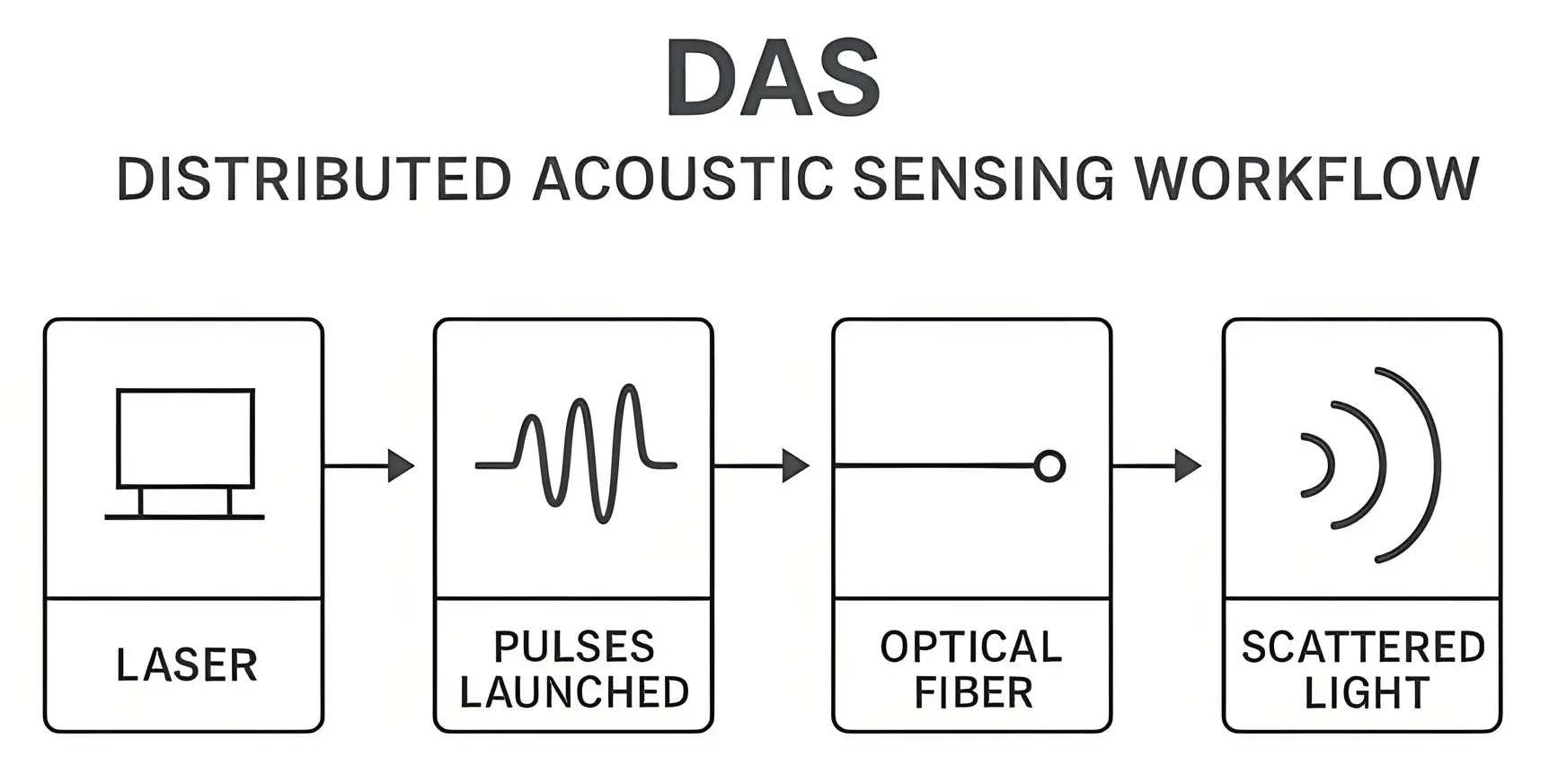
What is a DAS Distributed Acoustic Sensing System? Principles and Application Analysis
In the field of optical fiber sensing technology, the DAS (Distributed Acoustic Sensing) system has emerged as a pivotal technology with rapid development in recent years. By utilizing the optical fiber itself as the sensing element, a DAS system enables continuous, real-time, and long-distance monitoring of vibration and acoustic signals along the fiber. This capability has led to its widespread application in fields such as oil pipeline monitoring, railway safety monitoring, perimeter security, and seismic monitoring.
Release Date: 2026-03-13
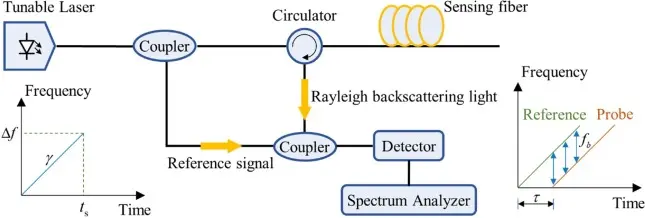
OFDR vs. OTDR: What's the Difference? A Comprehensive Comparison of Principles and Applications
In the fields of optical fiber testing and fiber optic sensing, OTDR (Optical Time Domain Reflectometer) and OFDR (Optical Frequency Domain Reflectometer) are two critically important measurement technologies.
Release Date: 2026-03-09
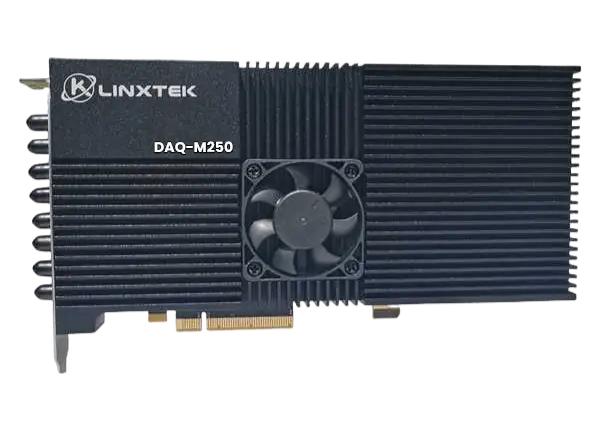
Core Technologies and Selection Guide for High-Speed Data Acquisition Cards
With the advancement of optoelectronic measurement techniques, Distributed Acoustic Sensing (DAS), radar signal processing, and scientific experimental equipment, the High-Speed Data Acquisition Card (DAQ) has become a core component in many high-end instrumentation systems. The performance of the data acquisition card directly dictates the system's signal acquisition capability, measurement precision, and real-time processing power.
Release Date: 2026-03-04

Engineering Practice of DAS in Utility Tunnel Vibration Monitoring
As the scale of urban underground utility tunnels continues to expand, achieving 24/7 online monitoring of structural integrity, external construction disturbances, and unauthorized intrusion has emerged as a critical challenge in the development of smart cities.
Release Date: 2026-02-25
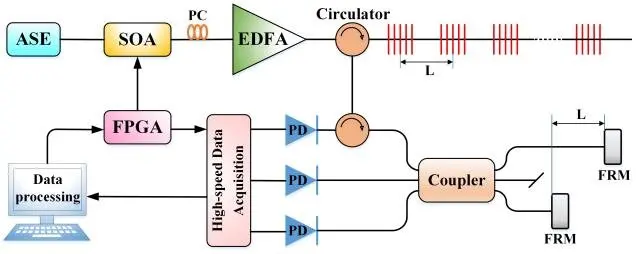
Comparison of DAS and FBG Vibration Monitoring Technologies
With the widespread adoption of fiber optic sensing technology in fields such as rail transit, pipeline security, perimeter intrusion detection, and structural health monitoring, Distributed Acoustic Sensing (DAS) and Fiber Bragg Grating (FBG) based vibration monitoring have emerged as the two most frequently compared solutions by end-users.
Release Date: 2026-02-14
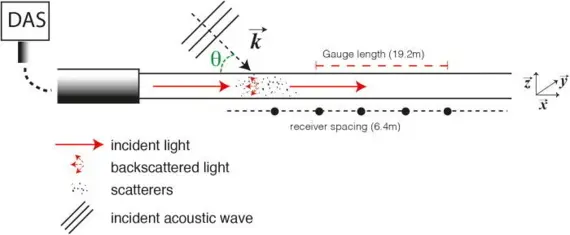
Causes and Solutions for DAS Polarization Fading
In Distributed Acoustic Sensing (DAS) systems, the phase changes of Rayleigh backscattering within the optical fiber are acquired through coherent detection, enabling continuous perception of vibration, acoustic, and strain signals. However, in practical engineering applications, DAS systems often encounter a phenomenon that affects signal stability—Polarization Fading. Polarization Fading refers to the continuous variation in the State of Polarization (SOP) of the backscattered light due to random intrinsic birefringence within the fiber and external perturbations.
Release Date: 2026-02-10