
 Follow Official WeChat


OFDR vs. OTDR: What's the Difference? A Comprehensive Comparison of Principles and Applications
In the fields of optical fiber testing and fiber optic sensing, **OTDR (Optical Time Domain Reflectometer) and OFDR (Optical Frequency Domain Reflectometer)** are two critically important measurement technologies.
Many engineers encounter a common question when performing fiber monitoring, fiber device testing, or structural health monitoring: What exactly is the difference between OTDR and OFDR, and which technology should be chosen?
This article provides a systematic comparison between OFDR and OTDR from three perspectives: technical principle, performance characteristics, and application scenarios, to assist engineers in gaining a clearer understanding of these two technologies.
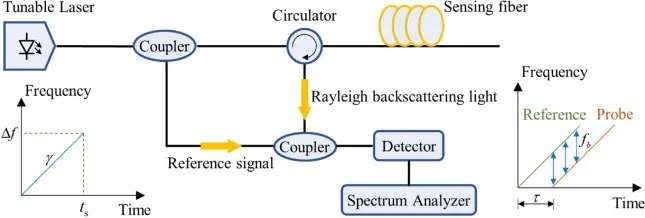
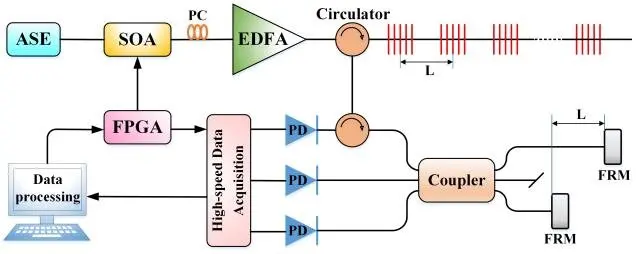
Schematic diagram of the OFDR sensing principle
1. OTDR: The Most Common Technology in Fiber Optic Testing
OTDR is one of the most widely used fiber optic testing techniques today. Its basic principle is:
Launching a short pulse of laser light into the fiber and detecting the Rayleigh backscattering and Fresnel reflections generated as it propagates. By measuring the return time of the light, the location of events along the fiber can be calculated.
Key Characteristics of OTDR
-
Long Test Range
OTDR can perform fiber testing over tens or even hundreds of kilometers.
-
Suitable for Field Maintenance
Commonly used in the construction, maintenance, and fault location of fiber optic communication lines.
-
Mature and Stable Architecture
The vast majority of current communication fiber testing equipment employs OTDR technology.
-
Relatively Low Spatial Resolution
Typically on the order of 1 m – 10 m.
Typical Applications of OTDR
- Fiber optic communication line testing
- Fiber breakpoint localization
- Fiber attenuation/loss testing
- Fiber link maintenance
- Long-distance pipeline or line inspection
The advantages of OTDR are its long test range, mature equipment, and strong field applicability. However, its spatial resolution can be a limiting factor in applications requiring high precision.
2. OFDR: High-Precision Fiber Optic Measurement Technology
OFDR (Optical Frequency Domain Reflectometer) is a technique based on swept-wavelength laser interferometry. Its basic principle is:
A narrow-linewidth tunable laser is used for linear frequency sweeping. Interferometric measurement captures Rayleigh scattering information from each point along the fiber, and a Fourier transform is then applied to recover the spatial distribution.
This method achieves extremely high spatial resolution.
Key Characteristics of OFDR
-
Extremely High Spatial Resolution
Achievable down to millimeter or even sub-millimeter level.
-
High Measurement Accuracy
Enables high-precision measurement of strain, temperature, and structural changes.
-
Suitable for Short-Range, High-Precision Measurement
Typical measurement range is tens to hundreds of meters.
-
Applicable to Distributed Sensing
Particularly well-suited for high-precision structural health monitoring.
Typical Applications of OFDR
- Fiber optic sensor testing
- Structural strain monitoring
- Aerospace structural inspection
- Composite material health monitoring
- Precision fiber optic component testing
- Laboratory-grade optical research
In recent years, OFDR technology has found increasing applications in the field of high-precision distributed fiber optic sensing.
3. Technical Comparison between OFDR and OTDR
| Comparison Parameter | OTDR | OFDR |
|---|---|---|
| Technical Principle | Pulsed Time-Domain Measurement | Swept-Wavelength Interferometry |
| Spatial Resolution | 1 m – 10 m | Millimeter-level |
| Measurement Range | Tens of km – Hundreds of km | Tens of m – Hundreds of m |
| System Complexity | Relatively Low | Relatively High |
| Typical Use Cases | Fiber optic communication maintenance | High-precision sensing and testing |
| Data Accuracy/Precision | Moderate | Very High |
In simple terms:
OTDR is more suitable for long-distance field testing, while OFDR is more appropriate for high-precision measurement.
4. How to Choose Between OFDR and OTDR?
In practical engineering, the choice of technology depends primarily on the application requirements.
Scenarios Suitable for OTDR
- Long-distance fiber optic testing
- Communication line maintenance
- Fiber breakpoint localization
- Pipeline or line inspection
Scenarios Suitable for OFDR
- High-precision strain measurement
- Structural health monitoring
- Aerospace composite material monitoring
- Laboratory-grade fiber optic testing
- Precision optical component testing
If the project's primary focus is on measurement range, OTDR is more suitable;
If the project's primary focus is on measurement precision, OFDR holds the advantage.
5. Development Trends in Fiber Optic Testing and Sensing Technologies
With the advancement of fiber optic sensing technologies, OTDR and OFDR are continuously evolving and expanding their application scenarios. For example:
-
Phase-OTDR (Φ-OTDR) technology is widely used for Distributed Acoustic Sensing (DAS)
-
OFDR technology is widely used for high-precision structural health monitoring
In recent years, a number of domestic companies specializing in the development of fiber optic sensing equipment have emerged. For instance, Shanghai Kunlian Technology has long been engaged in the R&D of distributed fiber optic sensing systems, high-speed data acquisition cards, and fiber testing equipment, accumulating extensive engineering experience in DAS and OFDR-related fields.
Driven by the growing demand for infrastructure monitoring, energy pipeline safety, and smart structure monitoring, high-precision fiber optic testing technology is becoming a key direction for future development.
6. Conclusion
OTDR and OFDR are two core fiber optic testing technologies, each possessing distinct advantages:
-
OTDR: Long-range testing technology
- OFDR: High-precision measurement technology
In engineering practice, they are not mutually exclusive but rather serve as complementary technologies for different application scenarios.
Understanding their principles and characteristics helps in selecting the more appropriate fiber optic testing solution for specific projects.
More Blog Videos
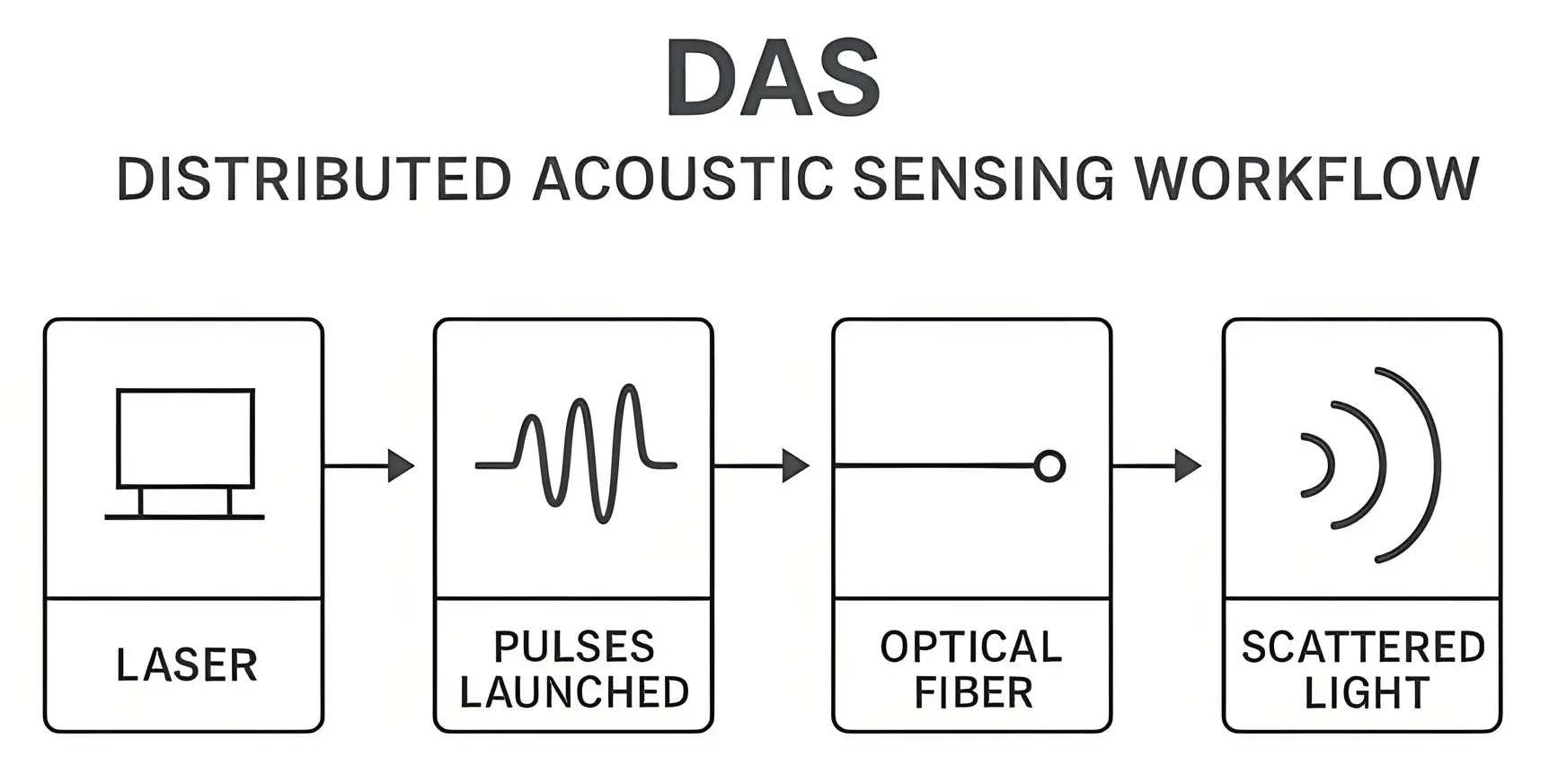
What is a DAS Distributed Acoustic Sensing System? Principles and Application Analysis
In the field of optical fiber sensing technology, the DAS (Distributed Acoustic Sensing) system has emerged as a pivotal technology with rapid development in recent years. By utilizing the optical fiber itself as the sensing element, a DAS system enables continuous, real-time, and long-distance monitoring of vibration and acoustic signals along the fiber. This capability has led to its widespread application in fields such as oil pipeline monitoring, railway safety monitoring, perimeter security, and seismic monitoring.
Release Date: 2026-03-13
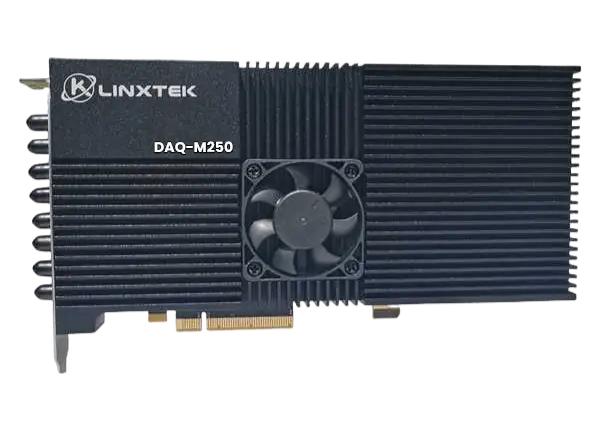
Core Technologies and Selection Guide for High-Speed Data Acquisition Cards
With the advancement of optoelectronic measurement techniques, Distributed Acoustic Sensing (DAS), radar signal processing, and scientific experimental equipment, the High-Speed Data Acquisition Card (DAQ) has become a core component in many high-end instrumentation systems. The performance of the data acquisition card directly dictates the system's signal acquisition capability, measurement precision, and real-time processing power.
Release Date: 2026-03-04
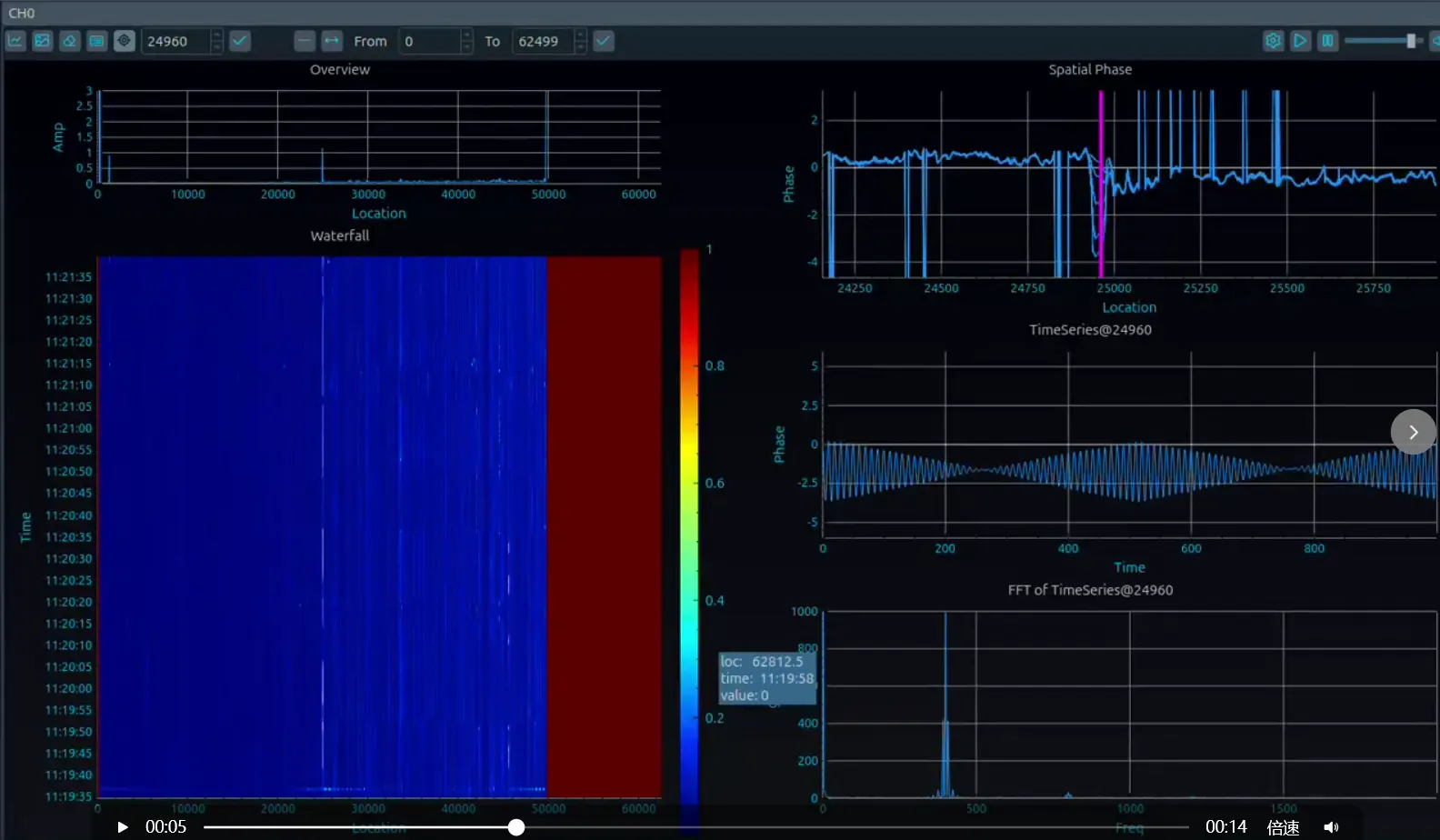
Engineering Methods for Enhancing DAS Signal-to-Noise Ratio (SNR)
Engineering Optimization Practices for Distributed Acoustic Sensing (DAS) Systems In a Distributed Acoustic Sensing (DAS) system, the Signal-to-Noise Ratio (SNR) directly dictates the achievable sensing distance, spatial resolution, capability to detect weak vibrations, false positive and false negative rates, and the efficacy of post-processing algorithms. Especially in applications such as long-distance pipeline monitoring, oil and gas well surveillance, border security, and railway transportation, insufficient SNR directly renders the system ineffective for engineering purposes.
Release Date: 2026-02-28

Engineering Practice of DAS in Utility Tunnel Vibration Monitoring
As the scale of urban underground utility tunnels continues to expand, achieving 24/7 online monitoring of structural integrity, external construction disturbances, and unauthorized intrusion has emerged as a critical challenge in the development of smart cities.
Release Date: 2026-02-25
Comparison of DAS and FBG Vibration Monitoring Technologies
With the widespread adoption of fiber optic sensing technology in fields such as rail transit, pipeline security, perimeter intrusion detection, and structural health monitoring, Distributed Acoustic Sensing (DAS) and Fiber Bragg Grating (FBG) based vibration monitoring have emerged as the two most frequently compared solutions by end-users.
Release Date: 2026-02-14
Causes and Solutions for DAS Polarization Fading
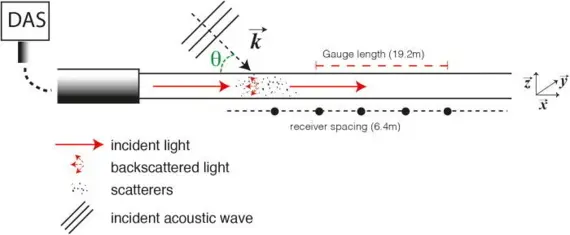
In Distributed Acoustic Sensing (DAS) systems, the phase changes of Rayleigh backscattering within the optical fiber are acquired through coherent detection, enabling continuous perception of vibration, acoustic, and strain signals. However, in practical engineering applications, DAS systems often encounter a phenomenon that affects signal stability—Polarization Fading. Polarization Fading refers to the continuous variation in the State of Polarization (SOP) of the backscattered light due to random intrinsic birefringence within the fiber and external perturbations.
Release Date: 2026-02-10