
 Follow Official WeChat


Core Technologies and Selection Guide for High-Speed Data Acquisition Cards
——For Distributed Fiber Optic Sensing & High-Performance Test Systems
With the advancement of optoelectronic measurement techniques, Distributed Acoustic Sensing (DAS), radar signal processing, and scientific experimental equipment, the High-Speed Data Acquisition Card (DAQ) has become a core component in many high-end instrumentation systems. The performance of the data acquisition card directly dictates the system's signal acquisition capability, measurement precision, and real-time processing power.
This article will introduce the key technologies of high-speed data acquisition cards from an engineering application perspective and provide practical selection recommendations. Part of the technical experience in this article originates from the practices of Shanghai KLinx-TEK in the development of high-speed DAQ and DAS systems.
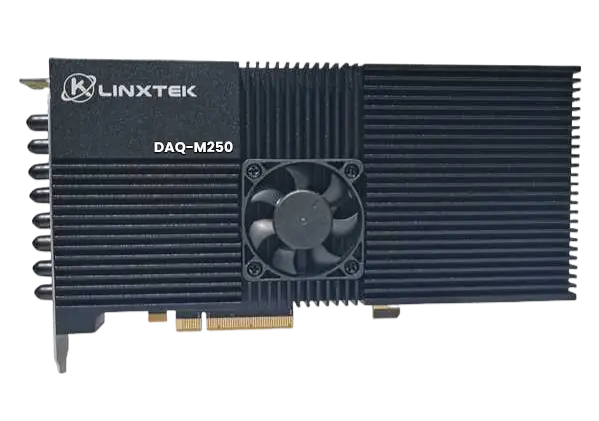
I. Basic Architecture of a High-Speed Data Acquisition Card
A typical high-speed data acquisition card usually consists of the following core modules:
-
High-Speed ADC (Analog-to-Digital Converter)
Responsible for converting analog signals to digital data; it is the core component determining the sampling rate and resolution. -
FPGA Processing Unit
Used for data buffering, real-time algorithm processing, data packetization, and high-speed interface control. -
High-Speed Memory (DDR4 / HBM)
For temporary buffering of high-speed acquired data. -
High-Speed Communication Interface
Common interfaces include:-
PCIe
-
10G Ethernet
-
Aurora
-
USB3.0
-
-
Analog Front End (AFE)
Includes circuits such as amplifiers, filters, and anti-aliasing filters.
In many high-performance systems, such as Distributed Acoustic Sensing (DAS) systems, these modules must operate in tight coordination to achieve high-precision signal acquisition.
II. Core Technologies of High-Speed Data Acquisition Cards
1. High-Speed ADC Technology
The ADC is the heart of a high-speed acquisition system, with key specifications including:
-
Sampling Rate
-
Resolution (Bit Depth)
-
Effective Number of Bits (ENOB)
-
Signal-to-Noise Ratio (SNR)
In many engineering applications, such as:
-
Distributed Fiber Optic Sensing (DAS)
-
High-speed vibration testing
-
Radar signal acquisition
Commonly used ADCs include:
-
250MSPS 16-bit ADC
-
500MSPS 14-bit ADC
-
1GSPS 12-bit ADC
Shanghai KLinx-TEK, in its DAS-U250 Distributed Fiber Optic Sensing System, employs a 4-channel 250MSPS 16-bit ADC architecture, balancing sampling precision with system stability and data throughput.
2. FPGA Real-Time Processing Technology
High-speed data acquisition cards often rely on FPGAs for real-time data processing, such as:
-
IQ Demodulation
-
FIR Filtering
-
FFT Analysis
-
Data Compression
-
Trigger Detection
Common FPGA platforms include:
-
Xilinx Kintex UltraScale
-
Xilinx Virtex Series
-
Intel Stratix Series
For instance, some high-speed acquisition cards from Shanghai KLinx-TEK utilize the Xilinx Kintex UltraScale FPGA architecture, enabling on-FPGA execution of DAS demodulation algorithms and data preprocessing, significantly reducing the computational load on backend servers.
3. High-Speed Data Transmission Technology
High-speed acquisition systems typically generate massive data volumes, for example:
4 channels × 250MSPS × 16-bit
The theoretical data rate can reach:
over 2GB/s
Therefore, reliance on high-speed data interfaces is mandatory, such as:
| Interface | Theoretical Bandwidth |
|---|---|
| PCIe Gen3 x4 | 4 GB/s |
| PCIe Gen3 x8 | 8 GB/s |
| 10G Ethernet | 1.25 GB/s |
In high-performance systems, PCIe 3.0 x8 is currently a common solution.
4. Low-Noise Analog Front-End Design
High-speed acquisition depends not only on the ADC; the noise floor is also critically important.
Analog front-end design typically includes:
-
Low-Noise Amplifiers (LNA)
-
Anti-Aliasing Filters
-
Impedance Matching
-
Clock Jitter Control
In Distributed Acoustic Sensing (DAS) systems, the signals are often very weak, making the analog front-end design critically impactful on system performance.
III. Typical Applications of High-Speed Data Acquisition Cards
High-speed data acquisition cards are widely used across various high-tech fields, for example:
1. Distributed Acoustic Sensing (DAS)
DAS systems detect vibrations and sounds by acquiring Rayleigh backscattering signals, imposing requirements on the acquisition system such as:
-
High sampling rate
-
High SNR
-
Multi-channel synchronous acquisition
The DAS series systems developed by Shanghai KLinx-TEK are built upon high-speed data acquisition card architectures.
2. Radar & Communication Signal Analysis
High-speed acquisition cards are used for:
-
Radar echo acquisition
-
Wideband signal analysis
-
Communication signal testing
3. Scientific Experiments & Optical Testing
For example:
-
Laser scanning microscopy
-
Spectral analysis
-
Ultrasonic testing
These applications typically require high-resolution ADC combined with high-speed data transmission capability.
IV. Selection Guide for High-Speed Data Acquisition Cards
When selecting a high-speed data acquisition card, it is recommended to focus on the following aspects:
1. Sampling Rate
The sampling rate must satisfy the Nyquist theorem:
Sampling Rate ≥ Signal Bandwidth × 2
For example:
| Signal Bandwidth | Recommended Sampling Rate |
|---|---|
| 50 MHz | ≥ 125MSPS |
| 100 MHz | ≥ 250MSPS |
| 400 MHz | ≥ 1GSPS |
2. Resolution
Common resolutions:
| Resolution | Application |
|---|---|
| 12-bit | Communications |
| 14-bit | Radar |
| 16-bit | Precision Measurement |
Fiber optic sensing systems typically use 16-bit ADCs.
3. Number of Channels
Multi-channel synchronous acquisition is crucial in scenarios like:
-
DAS
-
Phased array systems
-
Vibration analysis
Typical configurations:
-
2 channels
-
4 channels
-
8 channels
4. Data Interface
If the system requires real-time data processing, it is advisable to choose:
PCIe Gen3 x8 or a higher bandwidth interface
V. High-Speed Data Acquisition Solutions from Shanghai KLinx-TEK
Shanghai KLinx-TEK has long focused on the R&D of high-speed data acquisition systems and distributed fiber optic sensing technology, launching several high-speed acquisition card products, such as:
-
DAQ-M250 High-Speed Data Acquisition Card
-
DAS-M250 Distributed Fiber Optic Sensing Demodulation System
-
DAS-P250 Professional Edition DAS System
-
DAS-U250 Ultimate Edition DAS System
These products typically feature the following technical characteristics:
-
4-channel synchronous acquisition
-
250MSPS high-speed sampling
-
16-bit high-precision ADC
-
PCIe 3.0 x8 high-speed interface
-
FPGA real-time signal processing
Currently, these systems are applied in:
-
Oil & gas pipeline monitoring
-
Railway vibration monitoring
-
Perimeter security
-
Seismic monitoring
VI. Conclusion
The high-speed data acquisition card is a fundamental hardware component in modern test & measurement systems and optoelectronic sensing systems. Its performance directly dictates the overall capability of the system. With the advancement of FPGA technology and high-speed ADCs, the performance of high-speed acquisition systems continues to improve.
In the fields of distributed fiber optic sensing, radar signal processing, and scientific experimentation, high-performance acquisition cards will play an increasingly important role.
Shanghai KLinx-TEK continues to invest in R&D within the high-speed data acquisition and Distributed Acoustic Sensing (DAS) system domain, providing high-performance acquisition solutions to research institutions and industrial clients.
```More Blog Videos
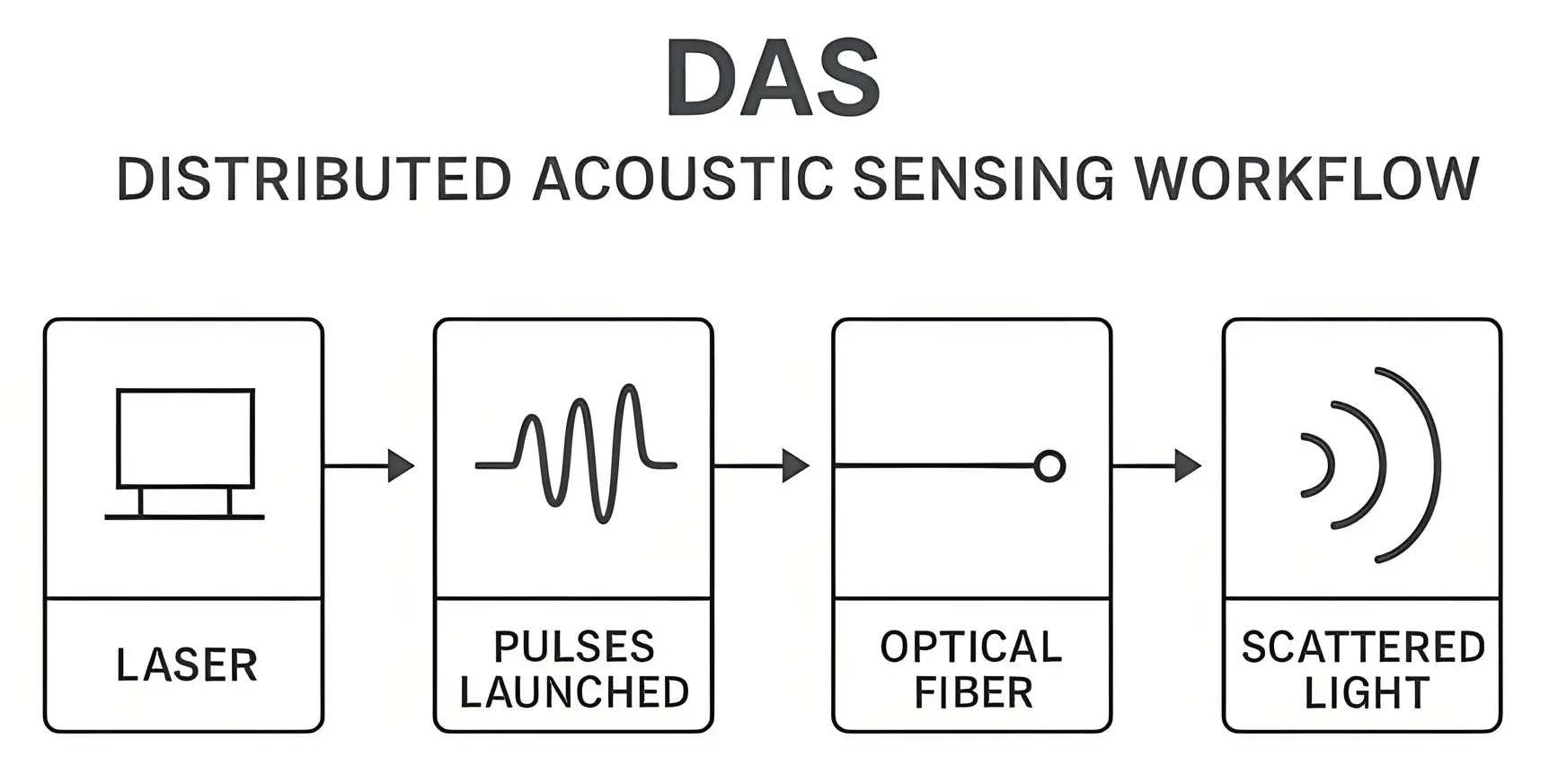
What is a DAS Distributed Acoustic Sensing System? Principles and Application Analysis
In the field of optical fiber sensing technology, the DAS (Distributed Acoustic Sensing) system has emerged as a pivotal technology with rapid development in recent years. By utilizing the optical fiber itself as the sensing element, a DAS system enables continuous, real-time, and long-distance monitoring of vibration and acoustic signals along the fiber. This capability has led to its widespread application in fields such as oil pipeline monitoring, railway safety monitoring, perimeter security, and seismic monitoring.
Release Date: 2026-03-13
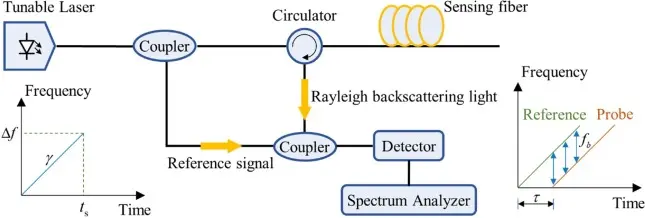
OFDR vs. OTDR: What's the Difference? A Comprehensive Comparison of Principles and Applications
In the fields of optical fiber testing and fiber optic sensing, OTDR (Optical Time Domain Reflectometer) and OFDR (Optical Frequency Domain Reflectometer) are two critically important measurement technologies.
Release Date: 2026-03-09
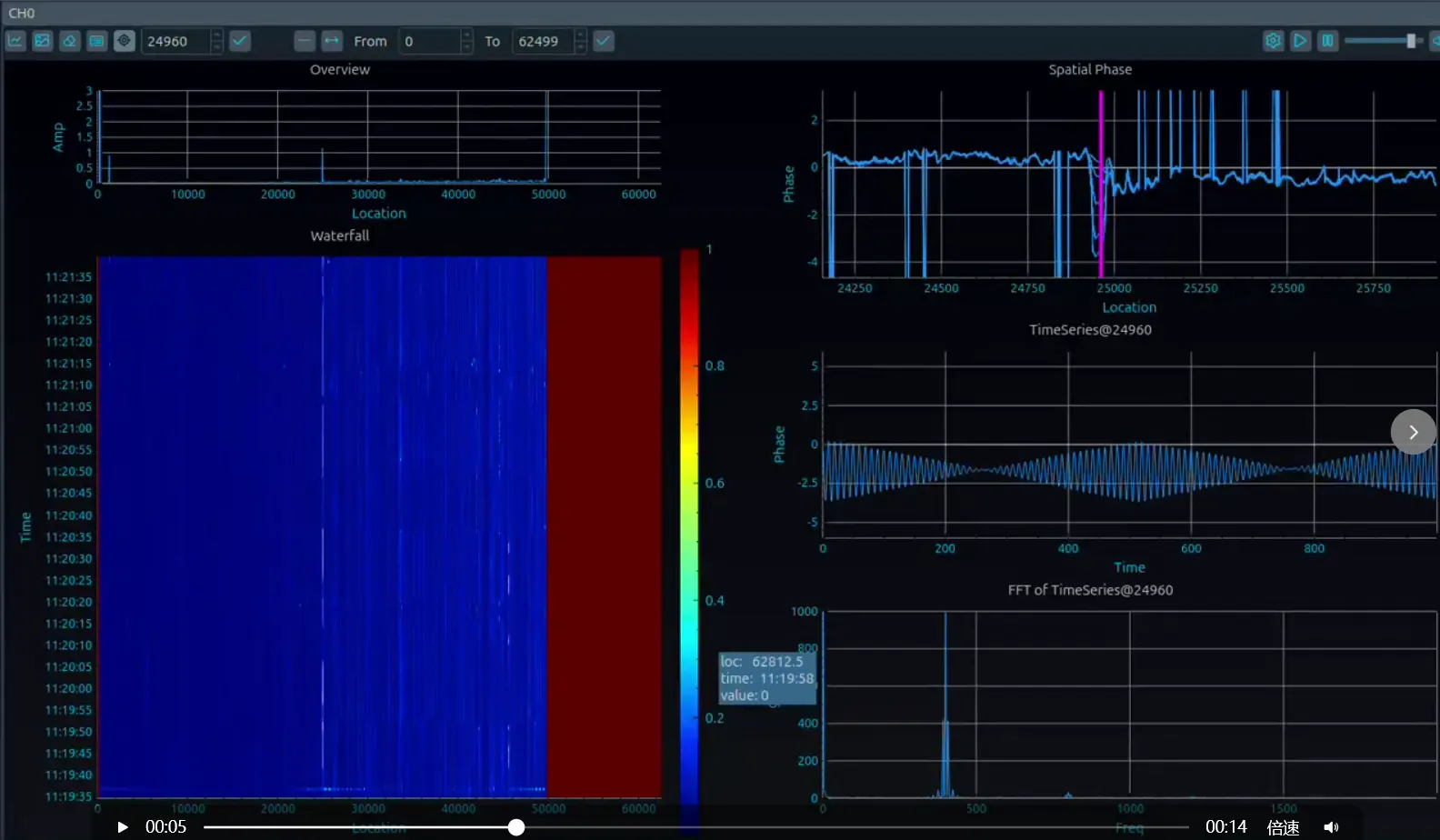
Engineering Methods for Enhancing DAS Signal-to-Noise Ratio (SNR)
Engineering Optimization Practices for Distributed Acoustic Sensing (DAS) Systems In a Distributed Acoustic Sensing (DAS) system, the Signal-to-Noise Ratio (SNR) directly dictates the achievable sensing distance, spatial resolution, capability to detect weak vibrations, false positive and false negative rates, and the efficacy of post-processing algorithms. Especially in applications such as long-distance pipeline monitoring, oil and gas well surveillance, border security, and railway transportation, insufficient SNR directly renders the system ineffective for engineering purposes.
Release Date: 2026-02-28

Engineering Practice of DAS in Utility Tunnel Vibration Monitoring
As the scale of urban underground utility tunnels continues to expand, achieving 24/7 online monitoring of structural integrity, external construction disturbances, and unauthorized intrusion has emerged as a critical challenge in the development of smart cities.
Release Date: 2026-02-25
Comparison of DAS and FBG Vibration Monitoring Technologies
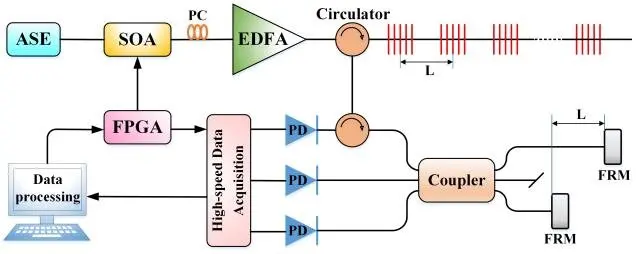
With the widespread adoption of fiber optic sensing technology in fields such as rail transit, pipeline security, perimeter intrusion detection, and structural health monitoring, Distributed Acoustic Sensing (DAS) and Fiber Bragg Grating (FBG) based vibration monitoring have emerged as the two most frequently compared solutions by end-users.
Release Date: 2026-02-14
Causes and Solutions for DAS Polarization Fading
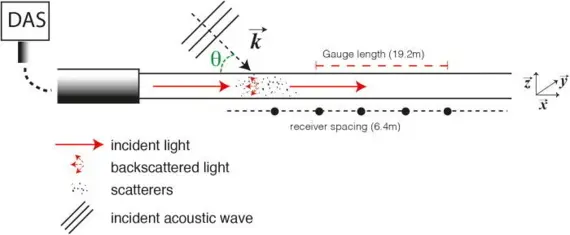
In Distributed Acoustic Sensing (DAS) systems, the phase changes of Rayleigh backscattering within the optical fiber are acquired through coherent detection, enabling continuous perception of vibration, acoustic, and strain signals. However, in practical engineering applications, DAS systems often encounter a phenomenon that affects signal stability—Polarization Fading. Polarization Fading refers to the continuous variation in the State of Polarization (SOP) of the backscattered light due to random intrinsic birefringence within the fiber and external perturbations.
Release Date: 2026-02-10