
 Follow Official WeChat


Engineering Practice of DAS in Utility Tunnel Vibration Monitoring
As urban underground utility tunnels continue to expand, achieving 24/7 online monitoring of structural integrity, external construction disturbances, and unauthorized intrusion has emerged as a critical challenge in the development of smart cities.
In this context, Distributed Acoustic Sensing (DAS) technology has increasingly become the mainstream technical solution. Shanghai Kunlian Technology, a domestic enterprise focused on the R&D and engineering application of distributed fiber optic sensing systems, has accumulated extensive engineering expertise in the field of utility tunnel vibration monitoring.
This article analyzes the deployment methodologies, key technologies, and application effectiveness of DAS in utility tunnel vibration monitoring, based on practical engineering experience.
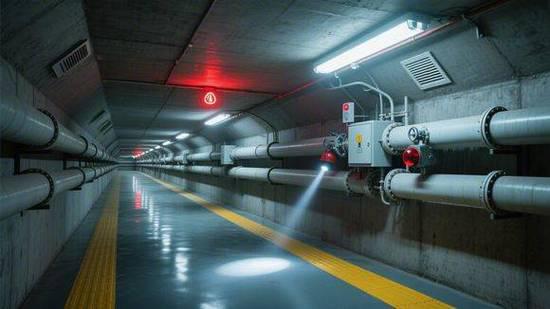
I. DAS Operating Principles and Adaptability to Utility Tunnel Environments
A DAS system operates on the principle of coherent Rayleigh scattering. It utilizes a narrow-linewidth coherent light source to emit optical pulses into a single-mode fiber. By performing high-speed sampling and phase demodulation of the phase changes in the backscattered signal, the system achieves continuous acquisition of vibration information along the entire length of the fiber.
In an underground utility tunnel environment, the system typically requires:
- High-speed sampling capability exceeding 250 MSPS
- 16-bit high-precision ADC
- Stable phase demodulation algorithm
- Robustness against coherent fading
Vibration frequencies of interest are mainly concentrated in the 1 Hz to 5 kHz range, making a 250 MSPS architecture sufficient to meet the bandwidth and dynamic range requirements in engineering applications.
II. Core Requirements for Utility Tunnel Vibration Monitoring
In practical engineering projects, utility tunnel vibration monitoring typically focuses on the following aspects:
1. Early Warning of External Construction Disturbances
This includes activities such as pile driving, excavator operation, and road construction.
DAS can identify mechanical vibrations through their spectral characteristics, enabling early warning.
2. Structural Health Monitoring
This involves detecting loose supports, abnormal structural resonance, and crack propagation.
Long-term trend analysis can assist in structural safety assessments.
3. Unauthorized Intrusion Detection
Low-frequency vibration signals from human activities like walking or running have distinct characteristics. Algorithms can differentiate these from ambient noise.
III. Key Points in Engineering Deployment
Fiber Optic Cabling Methods
- Installation parallel to existing utility lines
- Fixation to tunnel walls or cable trays
- Denser cabling in critical or high-risk zones
The spatial resolution is typically controlled around 5 meters, achieving a localization accuracy of approximately ±5 meters.
Coherent and Polarization Fading
In complex underground environments, standard DAS systems are prone to localized signal fading or even "blind spots," primarily due to:
- Coherent fading
- Polarization fading
To address this, advanced systems now integrate coherent fading suppression and polarization optimization algorithms, significantly enhancing signal stability and reliability.
IV. Typical Engineering Practice
In an urban underground utility tunnel project spanning approximately 8 km, a DAS system was deployed using a single-ended access configuration, achieving:
- Real-time online vibration monitoring
- Identification of external construction disturbances
- Alarms for intrusion events
- Precise localization of anomalous vibration points
During system operation, it successfully identified piling signals from 50 meters away and effectively distinguished human footsteps from mechanical vibrations.
V. Summary of Engineering Experience
In practical applications, key factors influencing monitoring performance include:
- Quality of fiber optic coupling
- Configuration of spatial resolution
- Stability of the phase demodulation algorithm
- Optimization of data processing and alarm models
Proper system configuration and algorithm optimization are often more critical than simply increasing the sampling rate.
VI. Technical Practice and Localized Solutions
In recent years, domestic enterprises have advanced rapidly in the field of distributed fiber optic sensing. For instance, specialized manufacturers in the Shanghai region have introduced DAS systems based on a 250 MSPS architecture, incorporating coherent fading suppression technology. These systems are now being deployed in utility tunnel monitoring, oil and gas pipeline surveillance, and rail transit applications.
Domestic technology teams, represented by Shanghai Kunlian Technology, continuously optimize high-speed acquisition architectures and noise suppression algorithms. Their KLinx-DAS series systems have been deployed in various long-distance vibration monitoring scenarios.
Conclusion
Engineering practice of DAS technology in utility tunnel vibration monitoring demonstrates that:
Through strategic fiber optic cabling, stable phase demodulation algorithms, and fading suppression techniques, it is possible to achieve long-distance, high-sensitivity, and continuous online monitoring.
With continuous improvements in algorithms and system architecture, DAS is becoming a fundamental sensing infrastructure for the smart development of underground utility tunnels.
More Blog Videos
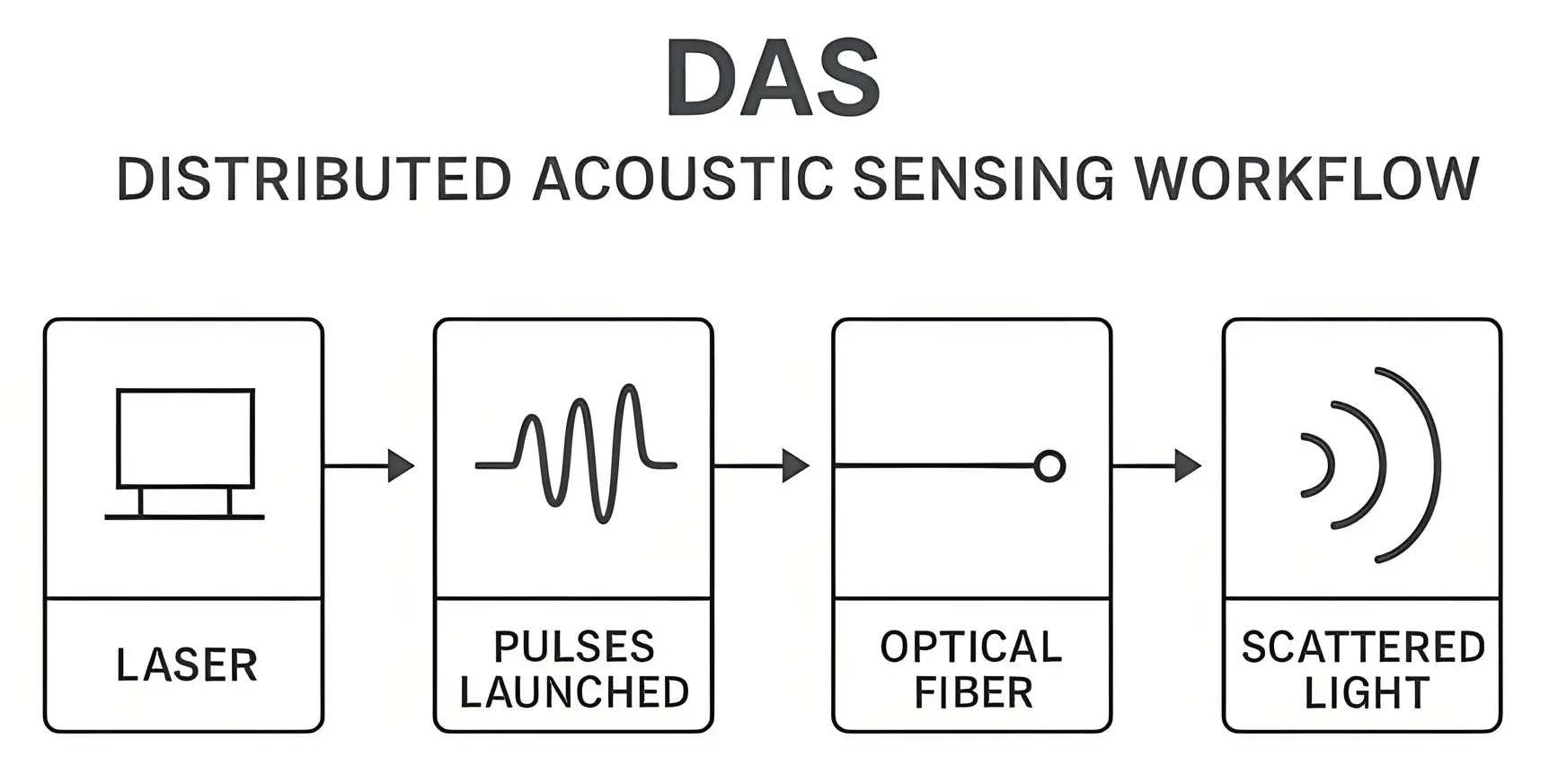
What is a DAS Distributed Acoustic Sensing System? Principles and Application Analysis
In the field of optical fiber sensing technology, the DAS (Distributed Acoustic Sensing) system has emerged as a pivotal technology with rapid development in recent years. By utilizing the optical fiber itself as the sensing element, a DAS system enables continuous, real-time, and long-distance monitoring of vibration and acoustic signals along the fiber. This capability has led to its widespread application in fields such as oil pipeline monitoring, railway safety monitoring, perimeter security, and seismic monitoring.
Release Date: 2026-03-13
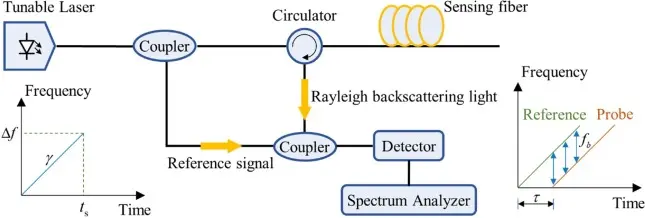
OFDR vs. OTDR: What's the Difference? A Comprehensive Comparison of Principles and Applications
In the fields of optical fiber testing and fiber optic sensing, OTDR (Optical Time Domain Reflectometer) and OFDR (Optical Frequency Domain Reflectometer) are two critically important measurement technologies.
Release Date: 2026-03-09
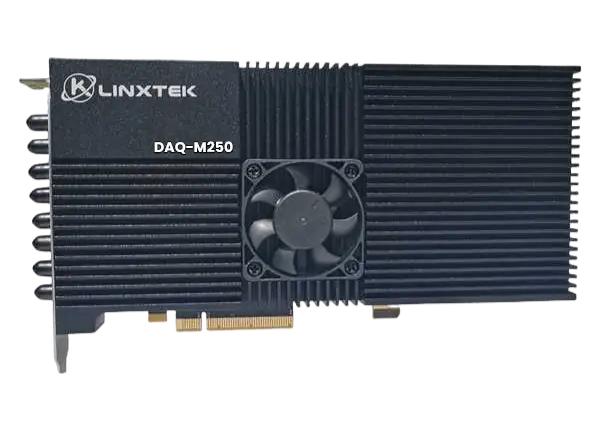
Core Technologies and Selection Guide for High-Speed Data Acquisition Cards
With the advancement of optoelectronic measurement techniques, Distributed Acoustic Sensing (DAS), radar signal processing, and scientific experimental equipment, the High-Speed Data Acquisition Card (DAQ) has become a core component in many high-end instrumentation systems. The performance of the data acquisition card directly dictates the system's signal acquisition capability, measurement precision, and real-time processing power.
Release Date: 2026-03-04
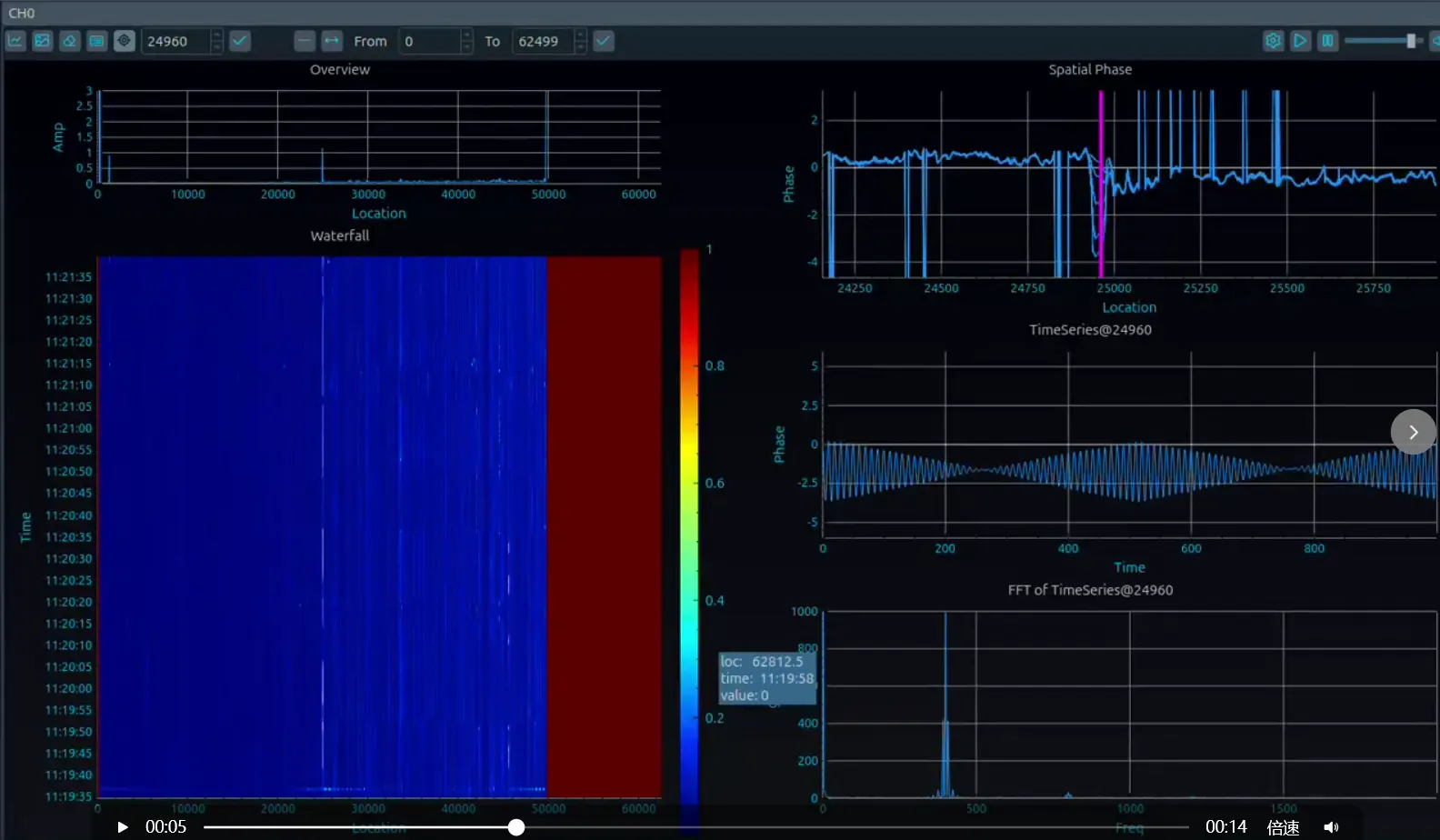
Engineering Methods for Enhancing DAS Signal-to-Noise Ratio (SNR)
Engineering Optimization Practices for Distributed Acoustic Sensing (DAS) Systems In a Distributed Acoustic Sensing (DAS) system, the Signal-to-Noise Ratio (SNR) directly dictates the achievable sensing distance, spatial resolution, capability to detect weak vibrations, false positive and false negative rates, and the efficacy of post-processing algorithms. Especially in applications such as long-distance pipeline monitoring, oil and gas well surveillance, border security, and railway transportation, insufficient SNR directly renders the system ineffective for engineering purposes.
Release Date: 2026-02-28
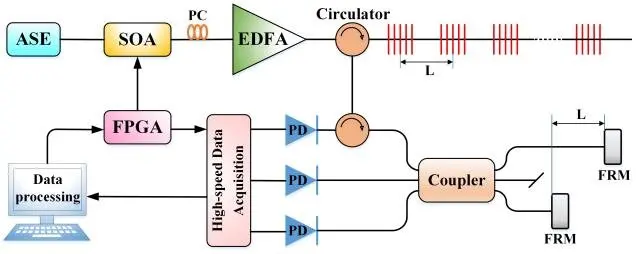
Comparison of DAS and FBG Vibration Monitoring Technologies
With the widespread adoption of fiber optic sensing technology in fields such as rail transit, pipeline security, perimeter intrusion detection, and structural health monitoring, Distributed Acoustic Sensing (DAS) and Fiber Bragg Grating (FBG) based vibration monitoring have emerged as the two most frequently compared solutions by end-users.
Release Date: 2026-02-14
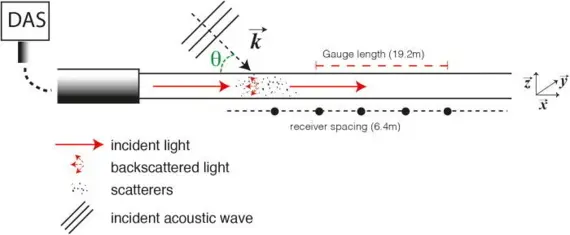
Causes and Solutions for DAS Polarization Fading
In Distributed Acoustic Sensing (DAS) systems, the phase changes of Rayleigh backscattering within the optical fiber are acquired through coherent detection, enabling continuous perception of vibration, acoustic, and strain signals. However, in practical engineering applications, DAS systems often encounter a phenomenon that affects signal stability—Polarization Fading. Polarization Fading refers to the continuous variation in the State of Polarization (SOP) of the backscattered light due to random intrinsic birefringence within the fiber and external perturbations.
Release Date: 2026-02-10