
 Follow Official WeChat


Comparison of DAS and FBG Vibration Monitoring Technologies
With the proliferation of fiber optic sensing technology in domains such as rail transit, pipeline security, perimeter protection, and structural health monitoring, "DAS vibration monitoring" and "FBG vibration monitoring" have emerged as the two most frequently compared solutions by users.
However, many customers face confusion during the actual selection process:
👉 What are the fundamental differences between DAS and FBG?
👉 Which technology is more suitable for large-scale vibration monitoring?
👉 Which one is better suited for high-precision structural measurement?
This article systematically compares DAS and FBG vibration monitoring across dimensions including operating principle, deployment methodology, monitoring range, and engineering adaptability.
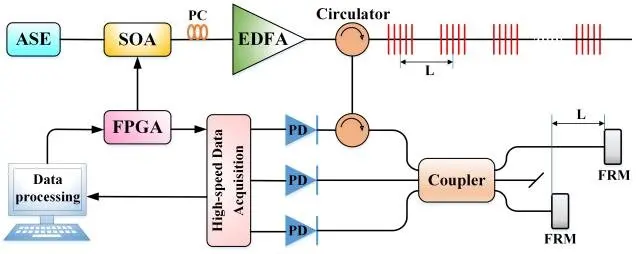
1. Comparison of Technical Principles
✅ DAS (Distributed Acoustic Sensing)
DAS utilizes the changes in Rayleigh backscattering signals within an optical fiber to achieve continuous vibration sensing along the entire length of the fiber:
- The optical fiber itself functions as the sensor.
- "Virtual sensing points" are formed at intervals of 0.5–10 meters.
-
Enables continuous vibration monitoring over tens of kilometers.
Core Characteristics:
- Truly distributed sensing
- No need for additional discrete sensors
- Supports real-time dynamic vibration data acquisition
Simplified Understanding:
One optical fiber = Tens of thousands of vibration sensors
✅ FBG (Fiber Bragg Grating)
FBG involves inscribing grating points within the fiber core, measuring strain or vibration through shifts in the reflected wavelength:
- Classified as point or quasi-distributed sensing.
- Each FBG acts as an independent sensor.
- Installation locations must be pre-determined.
Core Characteristics:
- High measurement accuracy
- Well-defined sensing points
- More oriented towards structural strain monitoring
Simplified Understanding:
One FBG = One physical sensor
2. Core Differences between DAS and FBG Vibration Monitoring
| Dimension | DAS Vibration Monitoring | FBG Vibration Monitoring |
|---|---|---|
| Sensing Modality | Distributed | Point |
| Number of Sensing Points | Thousands to tens of thousands | Typically tens to hundreds |
| Requirement for Sensor Installation | Not required | Individual installation mandatory |
| Coverage Distance | Up to 50 km | Typically <2 km |
| Spatial Continuity | Continuous | Discrete |
| Vibration Localization Capability | Meter-level localization | Confined to sensor points |
| Installation Complexity | Low | High |
| Cost Structure | Scales slowly with distance | Scales linearly with number of sensors |
3. Differences in Typical Application Scenarios
👉 DAS is better suited for:
- Subway / Railway vibration monitoring
- Long-distance pipeline intrusion detection
- Perimeter security
- Anomaly identification along fiber optic cables
- Large-scale infrastructure sensing
Characteristics:
✔ Large coverage area
✔ Capable of tracking moving targets
✔ Can reconstruct vibration time-series data
👉 FBG is better suited for:
- Bridge structural strain
- Building health monitoring
- Precision equipment vibration
- Localized high-precision measurement
More Blog Videos
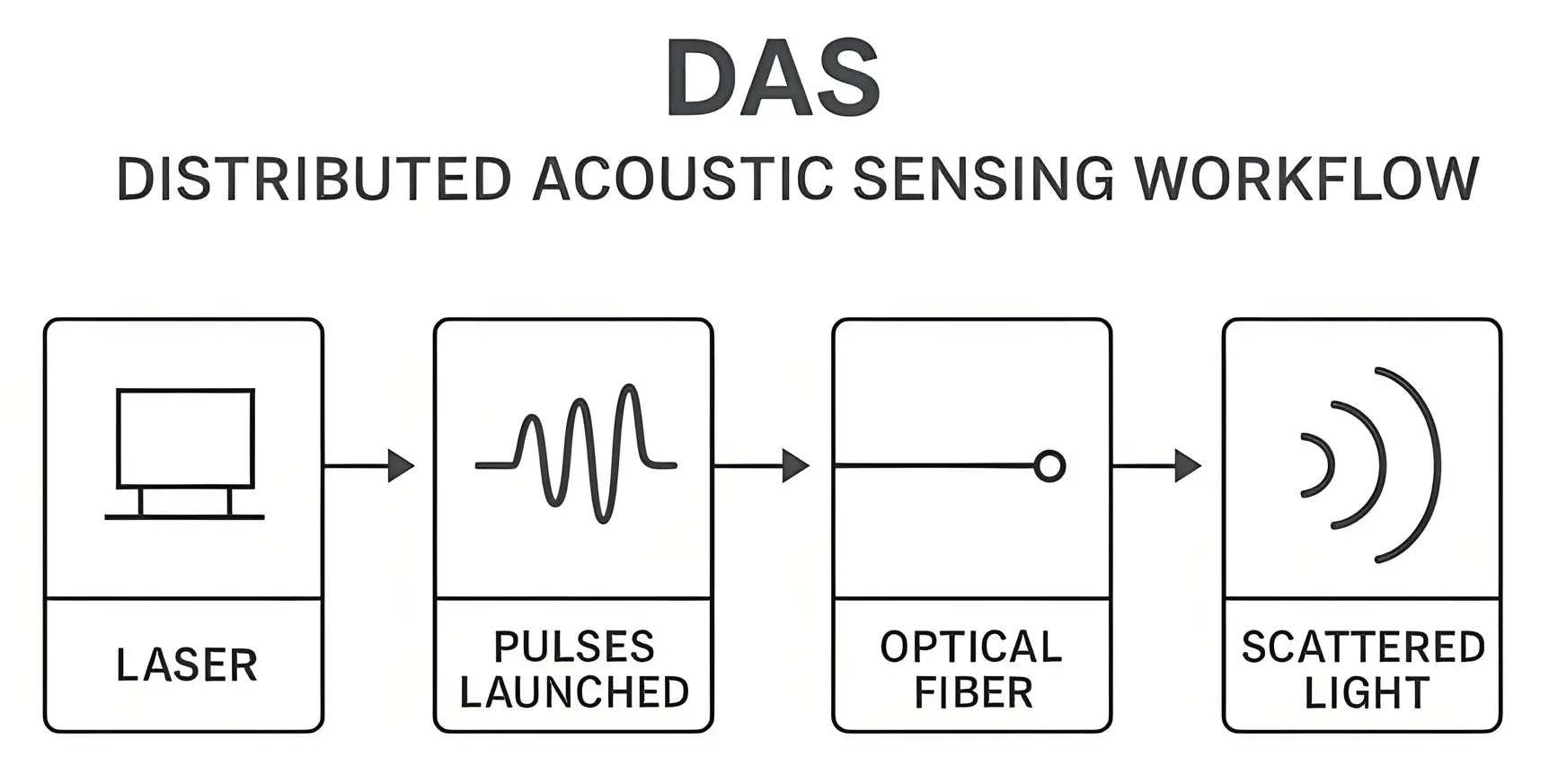
What is a DAS Distributed Acoustic Sensing System? Principles and Application Analysis
In the field of optical fiber sensing technology, the DAS (Distributed Acoustic Sensing) system has emerged as a pivotal technology with rapid development in recent years. By utilizing the optical fiber itself as the sensing element, a DAS system enables continuous, real-time, and long-distance monitoring of vibration and acoustic signals along the fiber. This capability has led to its widespread application in fields such as oil pipeline monitoring, railway safety monitoring, perimeter security, and seismic monitoring.
Release Date: 2026-03-13
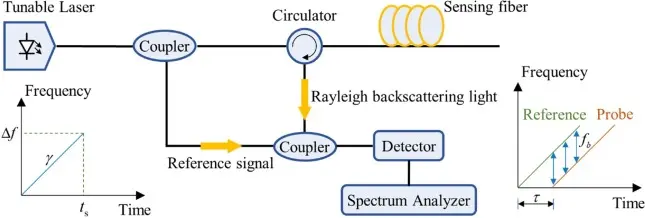
OFDR vs. OTDR: What's the Difference? A Comprehensive Comparison of Principles and Applications
In the fields of optical fiber testing and fiber optic sensing, OTDR (Optical Time Domain Reflectometer) and OFDR (Optical Frequency Domain Reflectometer) are two critically important measurement technologies.
Release Date: 2026-03-09
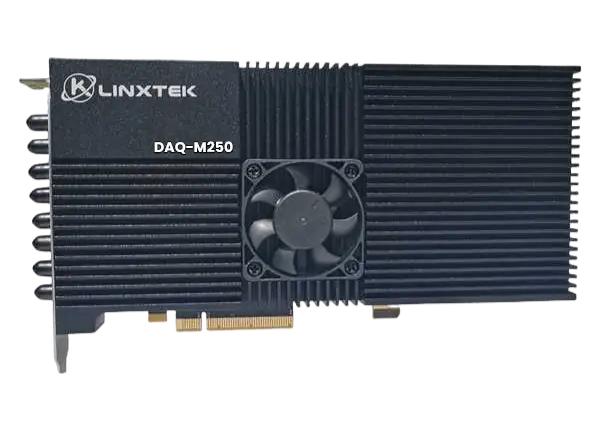
Core Technologies and Selection Guide for High-Speed Data Acquisition Cards
With the advancement of optoelectronic measurement techniques, Distributed Acoustic Sensing (DAS), radar signal processing, and scientific experimental equipment, the High-Speed Data Acquisition Card (DAQ) has become a core component in many high-end instrumentation systems. The performance of the data acquisition card directly dictates the system's signal acquisition capability, measurement precision, and real-time processing power.
Release Date: 2026-03-04
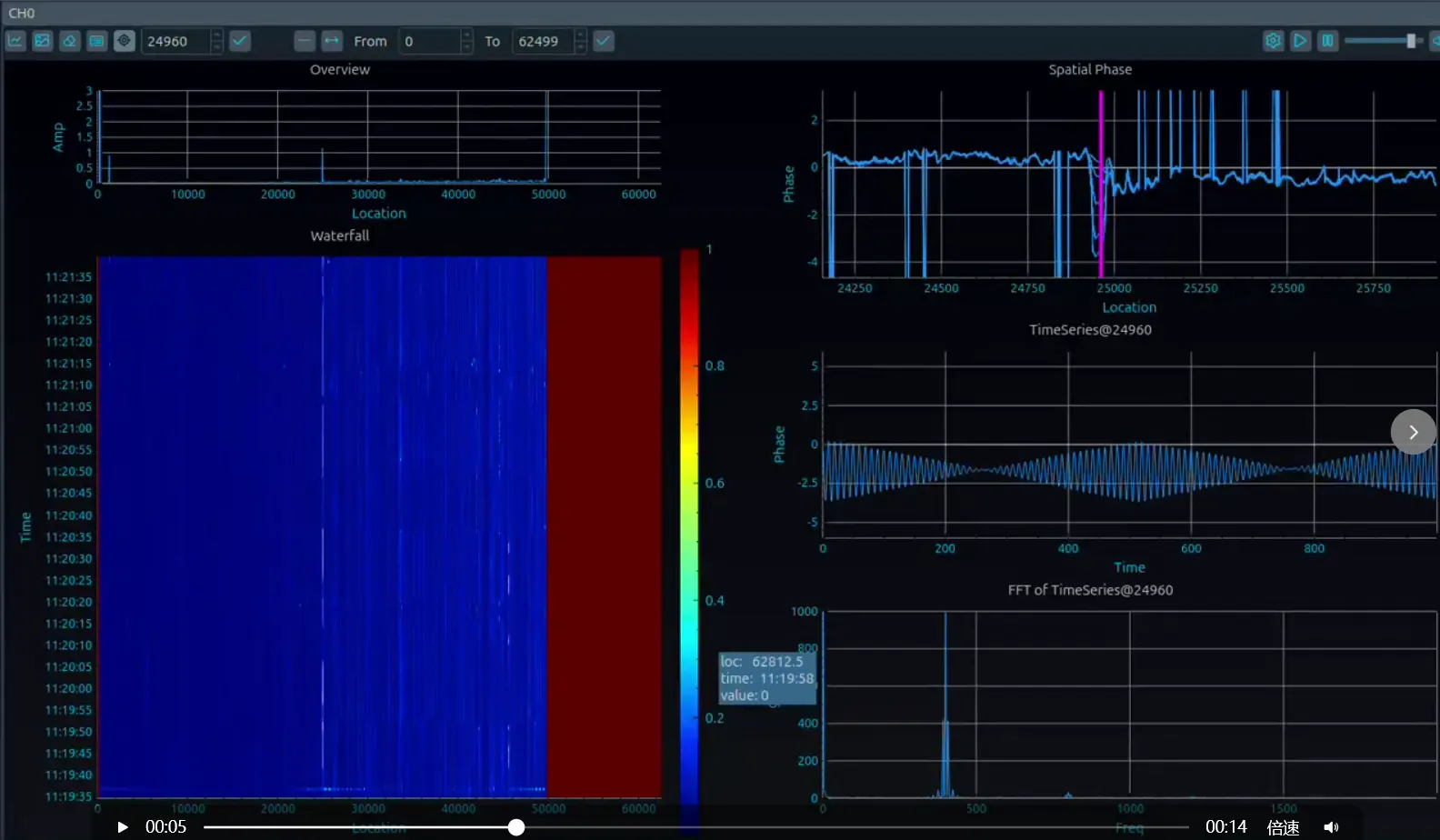
Engineering Methods for Enhancing DAS Signal-to-Noise Ratio (SNR)
Engineering Optimization Practices for Distributed Acoustic Sensing (DAS) Systems In a Distributed Acoustic Sensing (DAS) system, the Signal-to-Noise Ratio (SNR) directly dictates the achievable sensing distance, spatial resolution, capability to detect weak vibrations, false positive and false negative rates, and the efficacy of post-processing algorithms. Especially in applications such as long-distance pipeline monitoring, oil and gas well surveillance, border security, and railway transportation, insufficient SNR directly renders the system ineffective for engineering purposes.
Release Date: 2026-02-28

Engineering Practice of DAS in Utility Tunnel Vibration Monitoring
As the scale of urban underground utility tunnels continues to expand, achieving 24/7 online monitoring of structural integrity, external construction disturbances, and unauthorized intrusion has emerged as a critical challenge in the development of smart cities.
Release Date: 2026-02-25
Causes and Solutions for DAS Polarization Fading
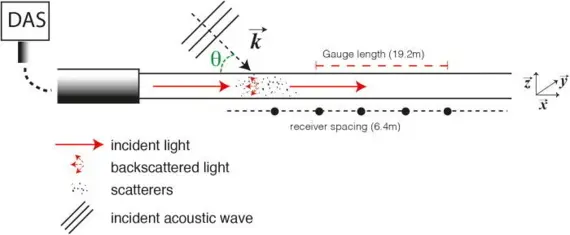
In Distributed Acoustic Sensing (DAS) systems, the phase changes of Rayleigh backscattering within the optical fiber are acquired through coherent detection, enabling continuous perception of vibration, acoustic, and strain signals. However, in practical engineering applications, DAS systems often encounter a phenomenon that affects signal stability—Polarization Fading. Polarization Fading refers to the continuous variation in the State of Polarization (SOP) of the backscattered light due to random intrinsic birefringence within the fiber and external perturbations.
Release Date: 2026-02-10