
 Follow Official WeChat


Causes and Solutions for DAS Polarization Fading
I. What is DAS Polarization Fading?
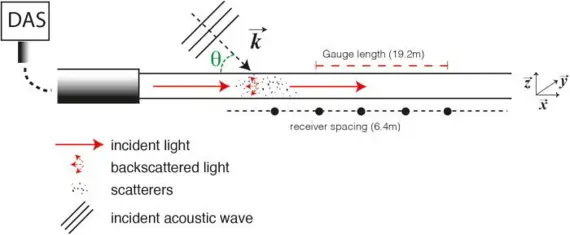
In a Distributed Acoustic Sensing (DAS) system, the system acquires phase changes of Rayleigh backscattering within the optical fiber through coherent detection, enabling continuous sensing of vibration, acoustic, and strain signals.
However, in practical engineering applications, DAS systems often encounter a phenomenon affecting signal stability — Polarization Fading.
Polarization Fading refers to the continuous change in the state of polarization (SOP) of the backscattered light due to random intrinsic birefringence in the fiber and external perturbations, leading to:
- Polarization mismatch between the
local oscillator (LO) light and the backscattered light
- Decreased interference efficiency
- Random reduction or even complete
fading of the detected signal amplitude
In long-distance, high-sensitivity DAS systems, polarization fading is the second major core stability challenge, following coherent fading.
II. Causes of DAS Polarization Fading
1️⃣ Intrinsic Fiber Birefringence
Standard single-mode fiber is not an ideal isotropic medium. Manufacturing stress, micro-bends, and cladding non-uniformity introduce random birefringence, causing continuous rotation of the light's SOP during propagation.
As distance increases:
- SOP becomes randomly distributed
- Backscattered light polarization
becomes unpredictable
This is the fundamental physical origin of polarization fading.
2️⃣ Environmental Perturbation-Induced Polarization Drift
In practical deployments, optical fibers are subjected to:
- Temperature fluctuations
- Soil pressure
- Vibration and shock
- Pipeline stress
which continuously alter the SOP, causing DAS signal fluctuations over time.
3️⃣ High Sensitivity of Coherent Detection to Polarization
DAS employs a coherent detection structure:
Backscattered light × Local Oscillator light → Interference signal
When their polarizations are misaligned, interference efficiency drops, the equivalent detection gain decreases, thus creating "fading zones".
III. Engineering Impacts of Polarization Fading on DAS Systems
If left unmitigated, polarization fading directly leads to:
- Spatial signal blind spots
- Random sensitivity fluctuations
- Decreased long-distance monitoring
stability
- Increased false alarm rate in AI
event identification
In continuous monitoring scenarios such as rail transit, oil & gas pipelines, and perimeter security, such uncertainty is unacceptable.
IV. Mainstream Mitigation Solutions for DAS Polarization Fading
✅ Solution 1: Polarization Diversity Reception
Simultaneously acquiring the backscattered signal through dual orthogonal polarization channels:
- One channel for X-polarization
- One channel for Y-polarization
Followed by digital synthesis:
S_total = sqrt(Sx² + Sy²)
Achieving polarization-insensitive detection.
This is currently the most mature and reliable engineering solution.
✅ Solution 2: Polarization Scrambling (Averaging)
Utilizing a high-speed polarization scrambler to rapidly alter the incident light's SOP, allowing the system to sample across multiple polarization states, statistically reducing the probability of fading.
However, this method sacrifices some real-time performance.
✅ Solution 3: Polarization-Maintaining Optical Path (Higher Cost)
Constructing a full-link stable system using PM fiber and polarization-maintaining components. However, implementation cost is extremely high for kilometer-scale DAS, limiting engineering feasibility.
✅ Solution 4: Digital Signal Layer Polarization Compensation Algorithms
Introducing at the FPGA/DSP layer:
- Adaptive gain equalization
- State of polarization estimation
- Multi-channel fusion algorithms
To further eliminate residual fading.
V. Combined Coherent Fading + Polarization Fading Suppression: A Hallmark of High-End DAS
It is important to note:
A truly engineering-grade DAS system must simultaneously address:
- Coherent fading
- Polarization fading
Suppressing only one still cannot guarantee full-range stability.
Therefore, high-end DAS architectures typically employ:
- Multi-frequency probing + Coherent
fading suppression
- Dual-polarization reception +
Polarization fading suppression
- FPGA real-time fusion algorithms
Forming a comprehensive anti-fading system.
VI. Shanghai Kunlian Technology's DAS Polarization Fading Solutions
Shanghai Kunlian Technology has integrated the following into its professional and ultimate-grade DAS systems (e.g., DAS-P250, DAS-U250 series):
- Dual-polarization synchronous
acquisition architecture
- FPGA real-time polarization fusion
processing
- Combined coherent + polarization
suppression algorithms
- 250 MSPS high-speed ADC ensuring
complete transient capture
This design enables, in long-distance complex environments:
- Continuous stable sensing
- Blind-spot-free coverage
- High signal-to-noise ratio output
Making it widely suitable for:
- Metro and rail transit
- Oil & gas pipelines
- Perimeter security
- Seismic and micro-vibration
monitoring
- UAV acoustic fingerprint sensing and other applications.
More Blog Videos
What is a DAS Distributed Acoustic Sensing System? Principles and Application Analysis
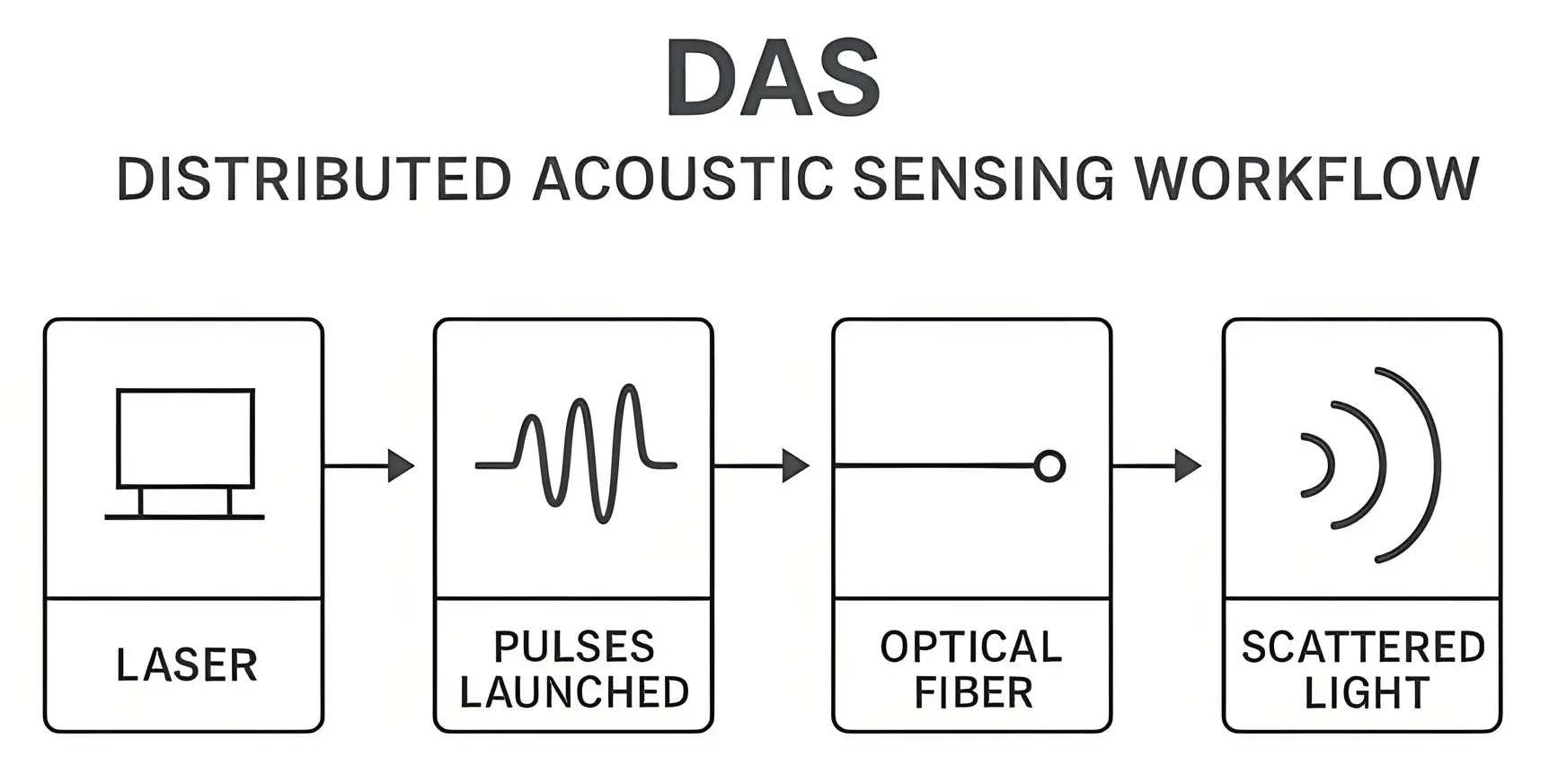
In the field of optical fiber sensing technology, the DAS (Distributed Acoustic Sensing) system has emerged as a pivotal technology with rapid development in recent years. By utilizing the optical fiber itself as the sensing element, a DAS system enables continuous, real-time, and long-distance monitoring of vibration and acoustic signals along the fiber. This capability has led to its widespread application in fields such as oil pipeline monitoring, railway safety monitoring, perimeter security, and seismic monitoring.
Release Date: 2026-03-13
OFDR vs. OTDR: What's the Difference? A Comprehensive Comparison of Principles and Applications
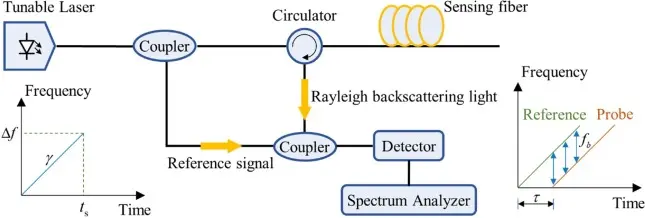
In the fields of optical fiber testing and fiber optic sensing, OTDR (Optical Time Domain Reflectometer) and OFDR (Optical Frequency Domain Reflectometer) are two critically important measurement technologies.
Release Date: 2026-03-09
Core Technologies and Selection Guide for High-Speed Data Acquisition Cards
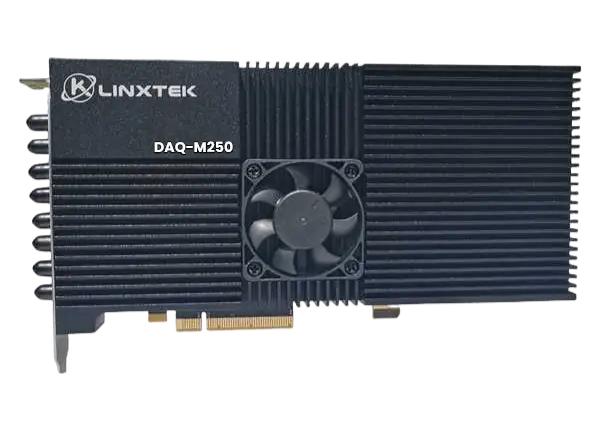
With the advancement of optoelectronic measurement techniques, Distributed Acoustic Sensing (DAS), radar signal processing, and scientific experimental equipment, the High-Speed Data Acquisition Card (DAQ) has become a core component in many high-end instrumentation systems. The performance of the data acquisition card directly dictates the system's signal acquisition capability, measurement precision, and real-time processing power.
Release Date: 2026-03-04
Engineering Methods for Enhancing DAS Signal-to-Noise Ratio (SNR)
Engineering Optimization Practices for Distributed Acoustic Sensing (DAS) Systems In a Distributed Acoustic Sensing (DAS) system, the Signal-to-Noise Ratio (SNR) directly dictates the achievable sensing distance, spatial resolution, capability to detect weak vibrations, false positive and false negative rates, and the efficacy of post-processing algorithms. Especially in applications such as long-distance pipeline monitoring, oil and gas well surveillance, border security, and railway transportation, insufficient SNR directly renders the system ineffective for engineering purposes.
Release Date: 2026-02-28

Engineering Practice of DAS in Utility Tunnel Vibration Monitoring
As the scale of urban underground utility tunnels continues to expand, achieving 24/7 online monitoring of structural integrity, external construction disturbances, and unauthorized intrusion has emerged as a critical challenge in the development of smart cities.
Release Date: 2026-02-25
Comparison of DAS and FBG Vibration Monitoring Technologies
With the widespread adoption of fiber optic sensing technology in fields such as rail transit, pipeline security, perimeter intrusion detection, and structural health monitoring, Distributed Acoustic Sensing (DAS) and Fiber Bragg Grating (FBG) based vibration monitoring have emerged as the two most frequently compared solutions by end-users.
Release Date: 2026-02-14