
 Follow Official WeChat


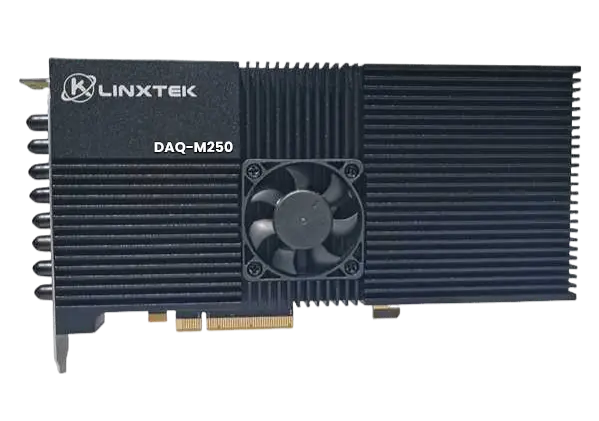
DAS-U250 Ultimate Edition Demodulation Card
DAS-U250 Ultimate Edition Demodulation Card
Product Details
Product Overview
The DAS-U250 Ultimate Edition Distributed Acoustic Sensing (DAS) system integrates years of proprietary R&D achievements, achieving comprehensive upgrades in system architecture, signal processing, algorithm optimization, and anti-interference capabilities. The system employs an ultra-coherent narrow-linewidth laser source and a high-speed, high-precision acquisition platform, coupled with proprietary fiber optic demodulation algorithms and an FPGA hardware acceleration platform. It is specifically engineered to meet the ultimate requirements for spatial resolution, sensitivity, and stability in extreme environments.
One of the core highlights is the breakthrough Coherence Fading and Polarization Fading noise suppression technology. Traditional DAS systems are susceptible to coherence fluctuations and polarization state perturbations in complex environments, leading to degraded signal-to-noise ratio (SNR) and increased false detection rates. This system significantly mitigates the impact of interference signals on the main channel through multi-channel phase fusion, adaptive polarization control, and time-window dynamic filtering techniques, achieving truly stable and high-fidelity acoustic signal reconstruction and ensuring reliable operation in long-distance, high-dynamic-range monitoring scenarios.
Regarding spatial precision, the system achieves a spatial resolution better than 5 meters, enabling high-density point monitoring along tens of kilometers of fiber optic cable paths and accurately capturing every minute disturbance. The system features a 250 MSPS high sampling rate, 4-channel synchronous acquisition capability, and supports 2-channel 500 MSPS DAC feedback for real-time data generation and simulation response. It is suitable for various application scenarios such as oil and gas pipeline monitoring, perimeter security, high-speed rail track monitoring, and structural health monitoring.
Features:
Supports multiple user-defined expansion IO
FPGA-open high-speed data acquisition card
FPGA supports user-defined logic development
PCIe x8 Gen3 data transfer interface with a continuous transfer rate of 8GB/s
Customer Value:
250 MSPS high sampling rate
4-channel synchronous acquisition
2-channel synchronous output
High-speed 16-bit
acquisition card with on-board
FPGA
real-time signal processing
capability
Supports DC offset control, improving acquisition accuracy for unipolar and bipolar high-frequency pulse signals
Real-time transmission of acquired data via a fast PCIe
bus, with
DMA
timed upload function specifically optimized for scanning
systems
Flexible configuration options
Large-capacity on-board memory
Reduces development time, accelerates time-to-market
Customizable advanced triggering functions
Can integrate real-time signal processing modules suitable for OEM
applications: such as accumulation, peak detection,
DDC,
and
FFT,
etc.
Application Fields:
Radar acquisition systems; LiDAR systems; Fiber optic sensing systems; Photomultiplier tube acquisition systems; Scanning acquisition systems; Lightning location systems; Other related fields…
More Blog Videos
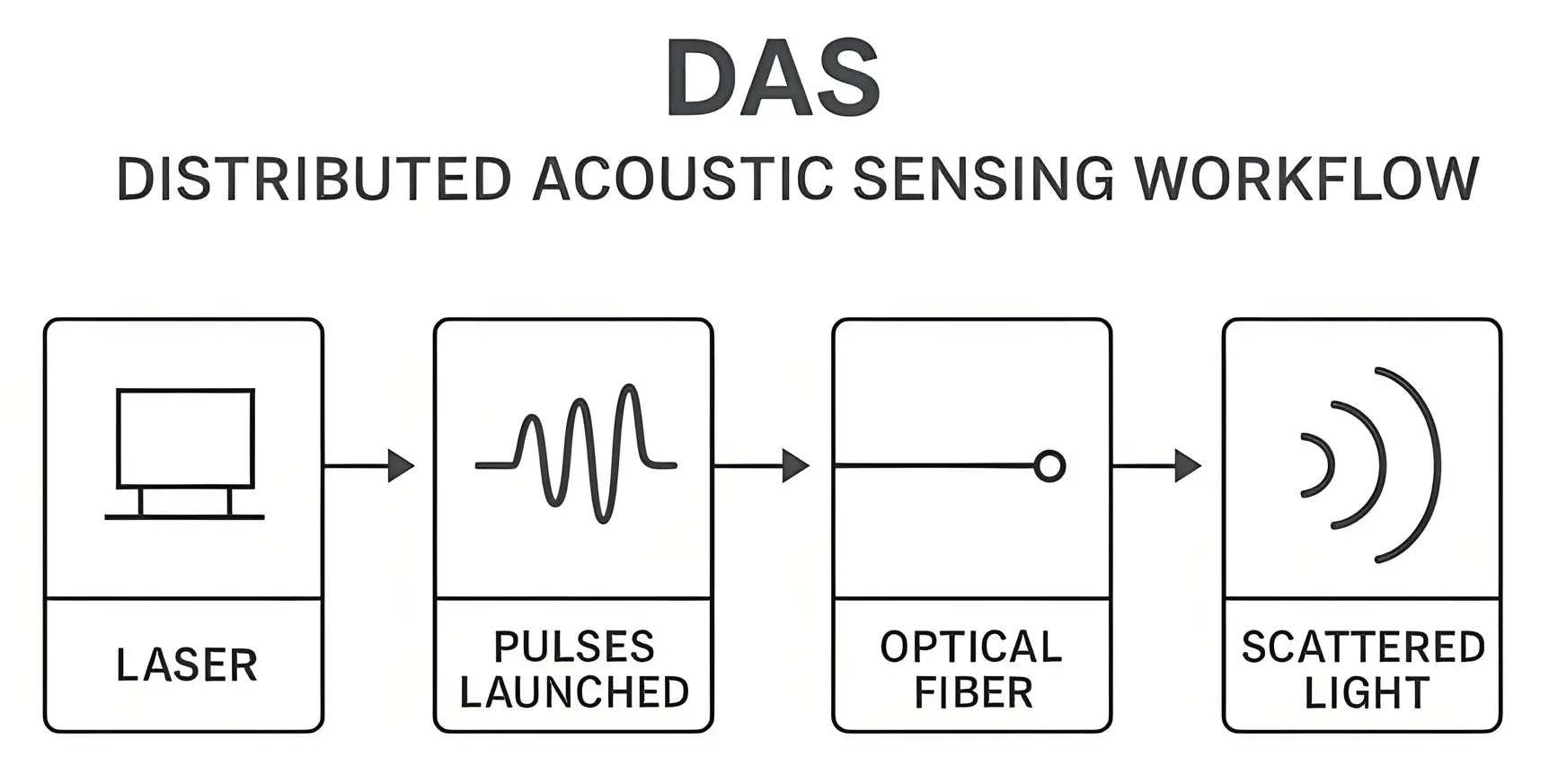
What is a DAS Distributed Acoustic Sensing System? Principles and Application Analysis
In the field of optical fiber sensing technology, the DAS (Distributed Acoustic Sensing) system has emerged as a pivotal technology with rapid development in recent years. By utilizing the optical fiber itself as the sensing element, a DAS system enables continuous, real-time, and long-distance monitoring of vibration and acoustic signals along the fiber. This capability has led to its widespread application in fields such as oil pipeline monitoring, railway safety monitoring, perimeter security, and seismic monitoring.
Release Date: 2026-03-13
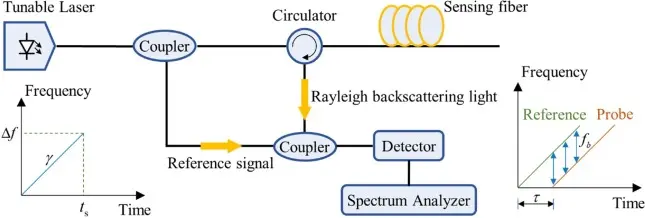
OFDR vs. OTDR: What's the Difference? A Comprehensive Comparison of Principles and Applications
In the fields of optical fiber testing and fiber optic sensing, OTDR (Optical Time Domain Reflectometer) and OFDR (Optical Frequency Domain Reflectometer) are two critically important measurement technologies.
Release Date: 2026-03-09
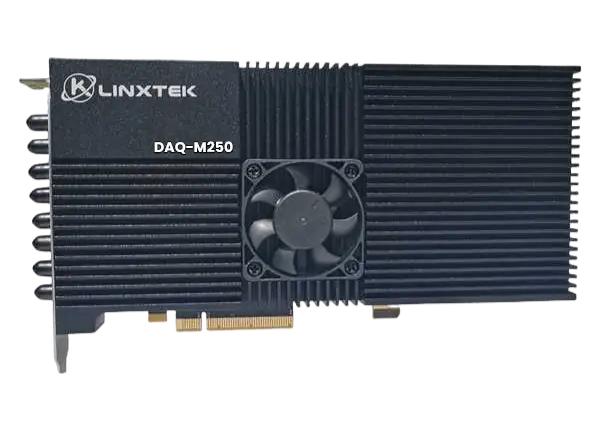
Core Technologies and Selection Guide for High-Speed Data Acquisition Cards
With the advancement of optoelectronic measurement techniques, Distributed Acoustic Sensing (DAS), radar signal processing, and scientific experimental equipment, the High-Speed Data Acquisition Card (DAQ) has become a core component in many high-end instrumentation systems. The performance of the data acquisition card directly dictates the system's signal acquisition capability, measurement precision, and real-time processing power.
Release Date: 2026-03-04
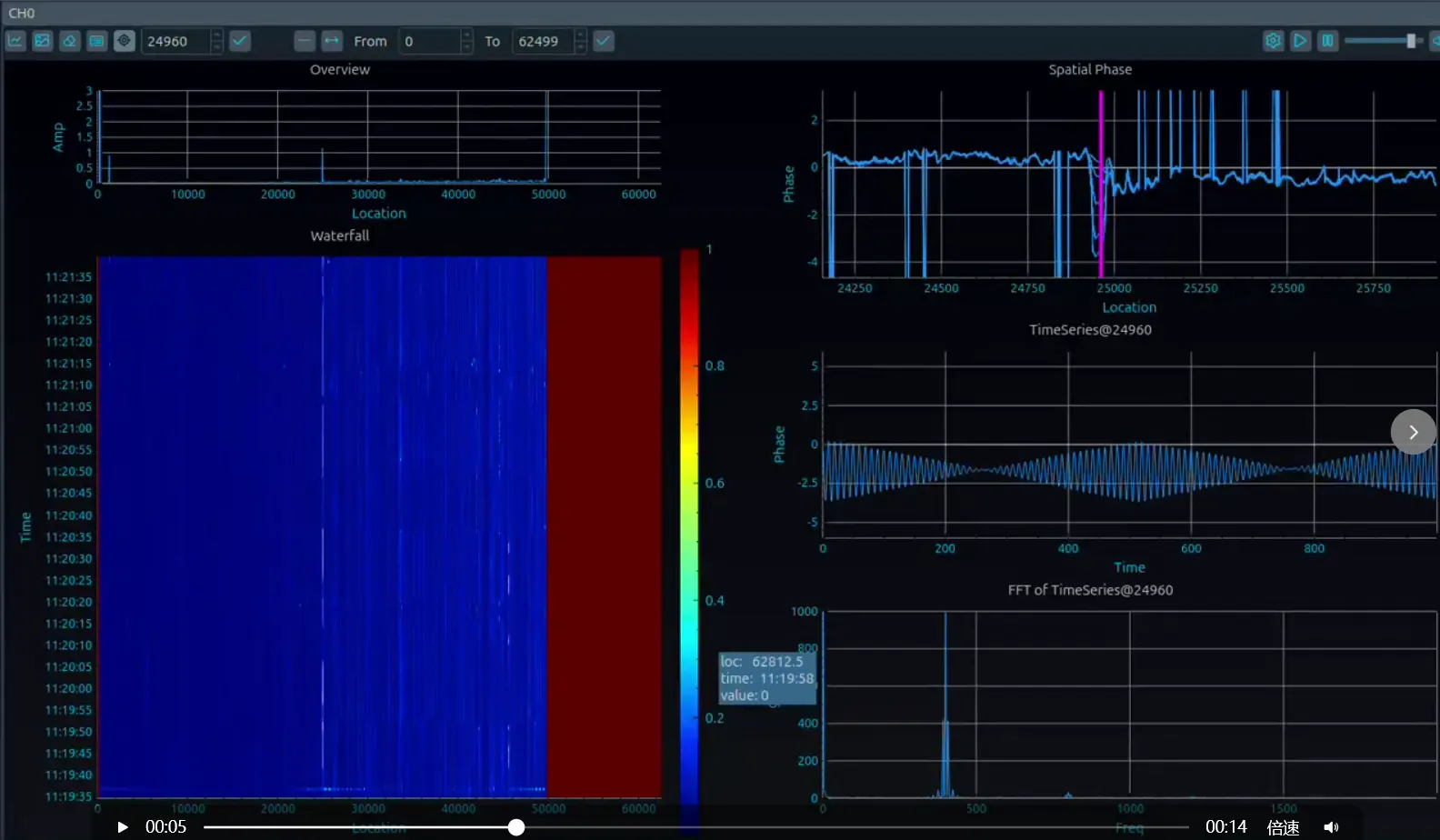
Engineering Methods for Enhancing DAS Signal-to-Noise Ratio (SNR)
Engineering Optimization Practices for Distributed Acoustic Sensing (DAS) Systems In a Distributed Acoustic Sensing (DAS) system, the Signal-to-Noise Ratio (SNR) directly dictates the achievable sensing distance, spatial resolution, capability to detect weak vibrations, false positive and false negative rates, and the efficacy of post-processing algorithms. Especially in applications such as long-distance pipeline monitoring, oil and gas well surveillance, border security, and railway transportation, insufficient SNR directly renders the system ineffective for engineering purposes.
Release Date: 2026-02-28

Engineering Practice of DAS in Utility Tunnel Vibration Monitoring
As the scale of urban underground utility tunnels continues to expand, achieving 24/7 online monitoring of structural integrity, external construction disturbances, and unauthorized intrusion has emerged as a critical challenge in the development of smart cities.
Release Date: 2026-02-25
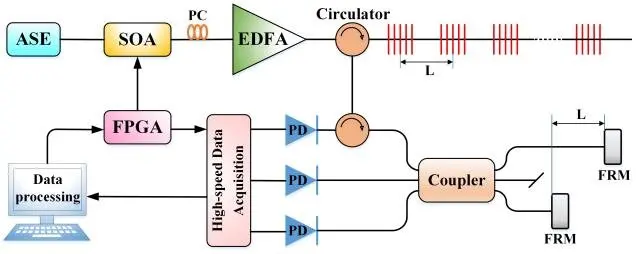
Comparison of DAS and FBG Vibration Monitoring Technologies
With the widespread adoption of fiber optic sensing technology in fields such as rail transit, pipeline security, perimeter intrusion detection, and structural health monitoring, Distributed Acoustic Sensing (DAS) and Fiber Bragg Grating (FBG) based vibration monitoring have emerged as the two most frequently compared solutions by end-users.
Release Date: 2026-02-14