
 Follow Official WeChat


Is 250MSPS DAS Sufficient for Metro Monitoring Applications?
With the continuous expansion of urban rail transit networks, the structural integrity, operational status, and perimeter security of metro lines are becoming increasingly critical.
Distributed Acoustic Sensing (DAS) systems, owing to their advantages such as long-range coverage, continuous spatial resolution, immunity to electromagnetic interference, and covert deployment, have become a pivotal technological approach for metro safety monitoring.
However, in practical projects, clients frequently inquire:
For metro monitoring, is a DAS system with a 250 MSPS sampling rate truly sufficient?
As a manufacturer with extensive experience in Distributed Optical Fiber Sensing system R&D, Shanghai Kunlian Technology provides a definitive technical conclusion based on substantial engineering practice.

1. First, Clarify a Core Question: What Does Metro DAS Truly Need to Monitor?
The primary monitoring targets for DAS in metro scenarios include:
- Train-induced vibrations
- Rail structure anomalies
- Trackbed settlement
- External construction intrusion
- Personnel intrusion
- Perimeter breach
- Equipment abnormal noise
The common characteristic of these signals is:
👉 Effective frequency spectrum concentrated within the 0–5 kHz range
👉 Rarely exceeding 10 kHz
This is crucial.
Metro monitoring is not ultrasonic imaging, nor is it a GHz radar system; it is a typical low-frequency mechanical vibration coupled with acoustic wave signals.
2. What is the Real Role of 250 MSPS?
A common misconception:
“A higher sampling rate always equates to better DAS performance.”
This is not necessarily true.
In DAS systems, sampling rate primarily affects:
The main influences of sampling rate are:
- Spatial resolution
- Phase recovery accuracy
- Coherent demodulation stability
It does not directly determine the "ability to detect metro vibrations."
Theoretical spatial resolution calculation:
Speed of light (in fiber) is approximately:
c = 2×10⁸ m/s (in optical fiber)
250 MSPS corresponds to a sampling period of:
T = 4 ns
Spatial length per sampling point:
Δz = c × T / 2 ≈ 0.4 m
This means:
👉 250 MSPS enables sub-meter level spatial resolution capability
In metro engineering:
- Sleeper spacing: 0.6 m
- Effective coupling bandwidth limit of cable installation: ≈1–2 m
Therefore:
250 MSPS already significantly exceeds the practical physical limits on-site.
Further increasing the sampling rate would only result in:
- Exponential growth in data volume
- Reduced real-time performance
- Increased FPGA load
- Higher system cost
Without delivering perceivable engineering benefits.
More Blog Videos
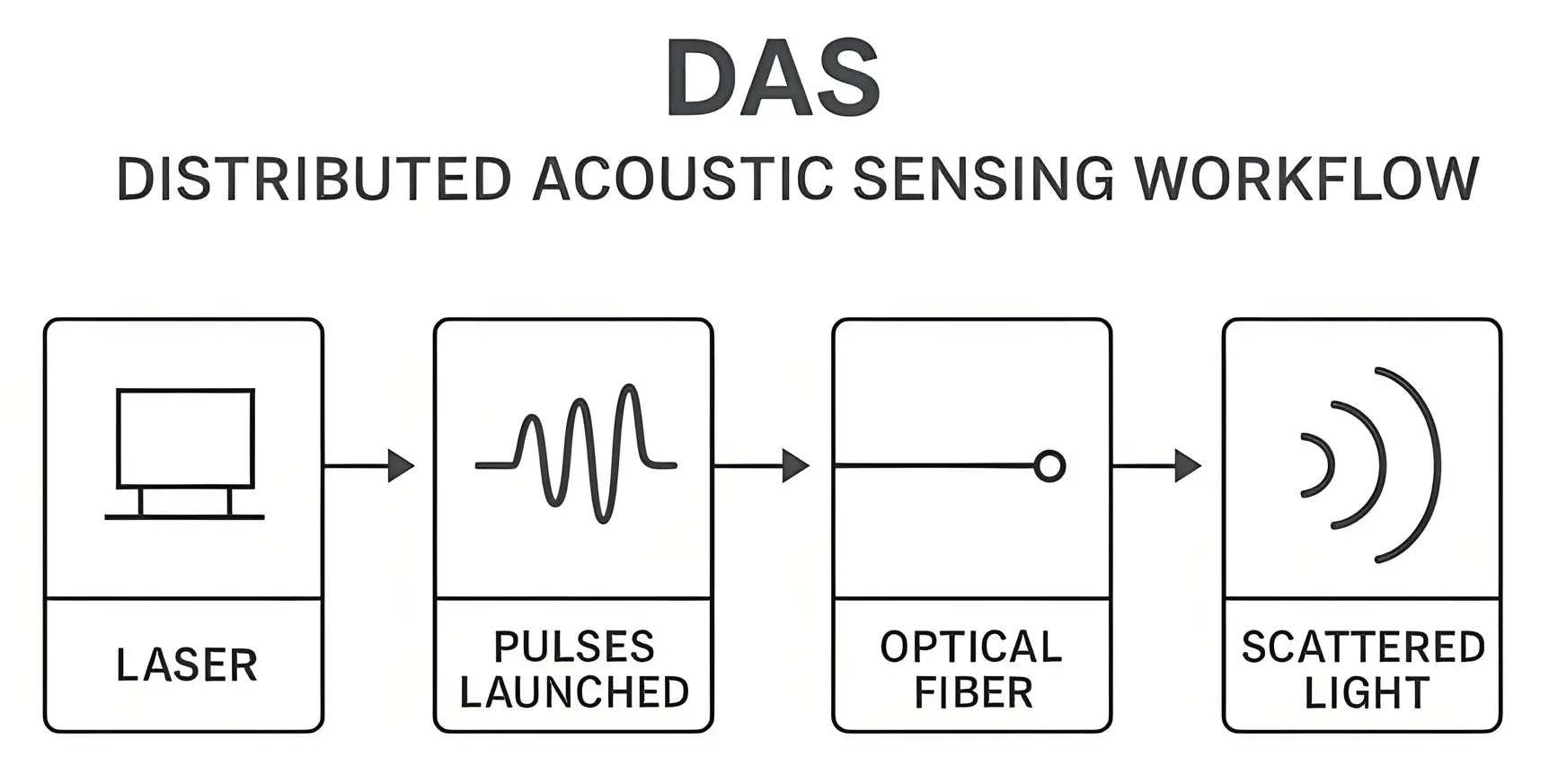
What is a DAS Distributed Acoustic Sensing System? Principles and Application Analysis
In the field of optical fiber sensing technology, the DAS (Distributed Acoustic Sensing) system has emerged as a pivotal technology with rapid development in recent years. By utilizing the optical fiber itself as the sensing element, a DAS system enables continuous, real-time, and long-distance monitoring of vibration and acoustic signals along the fiber. This capability has led to its widespread application in fields such as oil pipeline monitoring, railway safety monitoring, perimeter security, and seismic monitoring.
Release Date: 2026-03-13
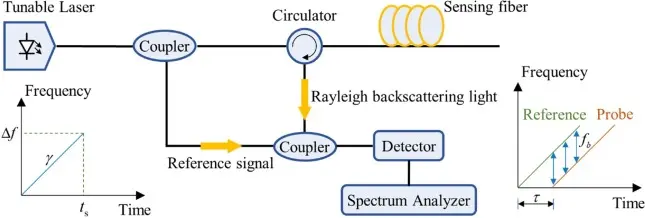
OFDR vs. OTDR: What's the Difference? A Comprehensive Comparison of Principles and Applications
In the fields of optical fiber testing and fiber optic sensing, OTDR (Optical Time Domain Reflectometer) and OFDR (Optical Frequency Domain Reflectometer) are two critically important measurement technologies.
Release Date: 2026-03-09

Core Technologies and Selection Guide for High-Speed Data Acquisition Cards
With the advancement of optoelectronic measurement techniques, Distributed Acoustic Sensing (DAS), radar signal processing, and scientific experimental equipment, the High-Speed Data Acquisition Card (DAQ) has become a core component in many high-end instrumentation systems. The performance of the data acquisition card directly dictates the system's signal acquisition capability, measurement precision, and real-time processing power.
Release Date: 2026-03-04
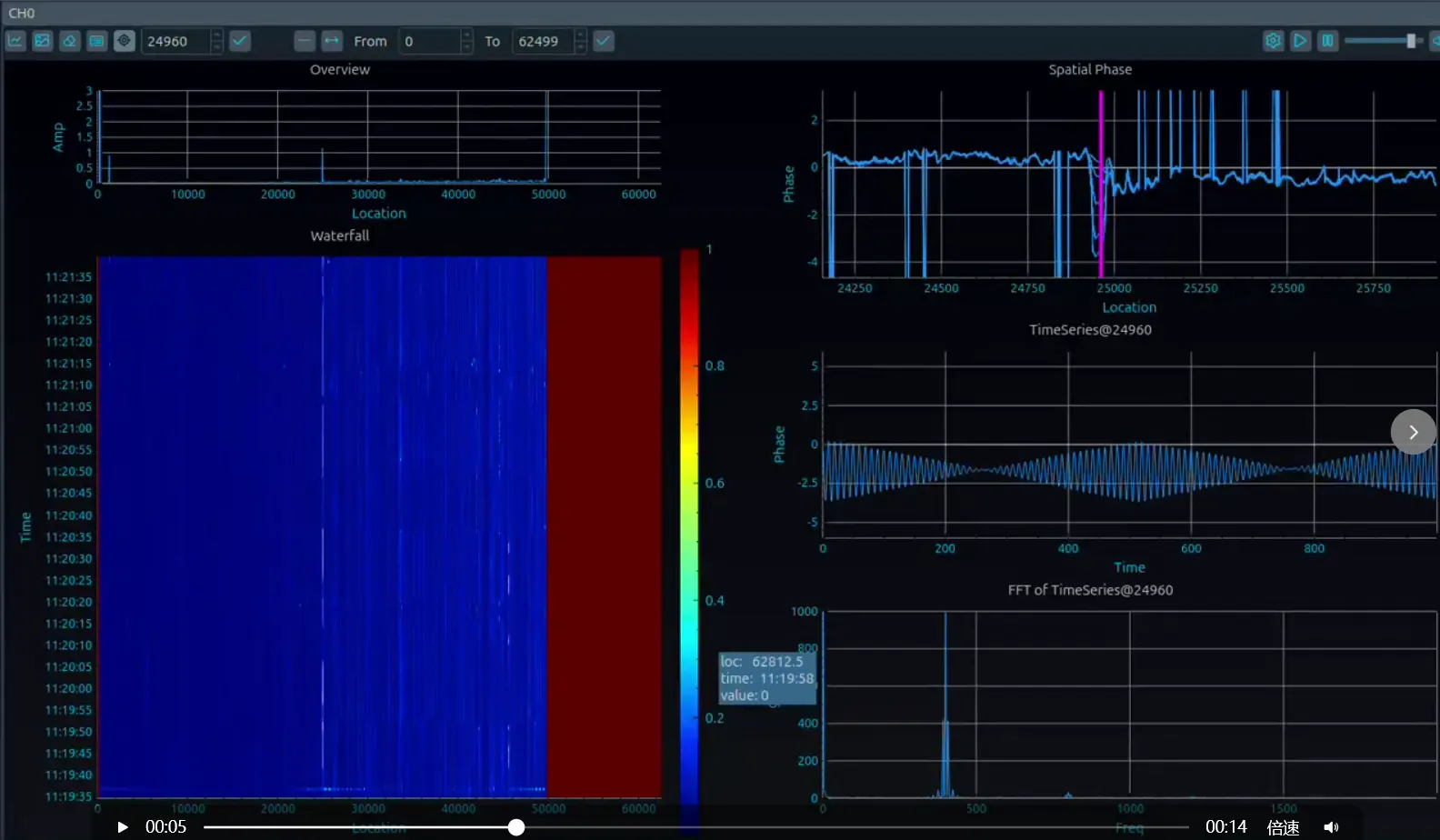
Engineering Methods for Enhancing DAS Signal-to-Noise Ratio (SNR)
Engineering Optimization Practices for Distributed Acoustic Sensing (DAS) Systems In a Distributed Acoustic Sensing (DAS) system, the Signal-to-Noise Ratio (SNR) directly dictates the achievable sensing distance, spatial resolution, capability to detect weak vibrations, false positive and false negative rates, and the efficacy of post-processing algorithms. Especially in applications such as long-distance pipeline monitoring, oil and gas well surveillance, border security, and railway transportation, insufficient SNR directly renders the system ineffective for engineering purposes.
Release Date: 2026-02-28

Engineering Practice of DAS in Utility Tunnel Vibration Monitoring
As the scale of urban underground utility tunnels continues to expand, achieving 24/7 online monitoring of structural integrity, external construction disturbances, and unauthorized intrusion has emerged as a critical challenge in the development of smart cities.
Release Date: 2026-02-25
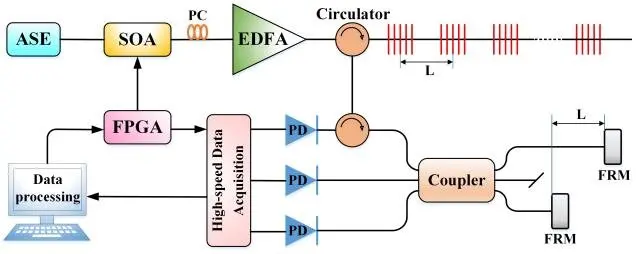
Comparison of DAS and FBG Vibration Monitoring Technologies
With the widespread adoption of fiber optic sensing technology in fields such as rail transit, pipeline security, perimeter intrusion detection, and structural health monitoring, Distributed Acoustic Sensing (DAS) and Fiber Bragg Grating (FBG) based vibration monitoring have emerged as the two most frequently compared solutions by end-users.
Release Date: 2026-02-14