
 Follow Official WeChat


How to Mitigate the Coherent Fading Issue in DAS Systems?
I. What is Coherent Fading in DAS Systems?
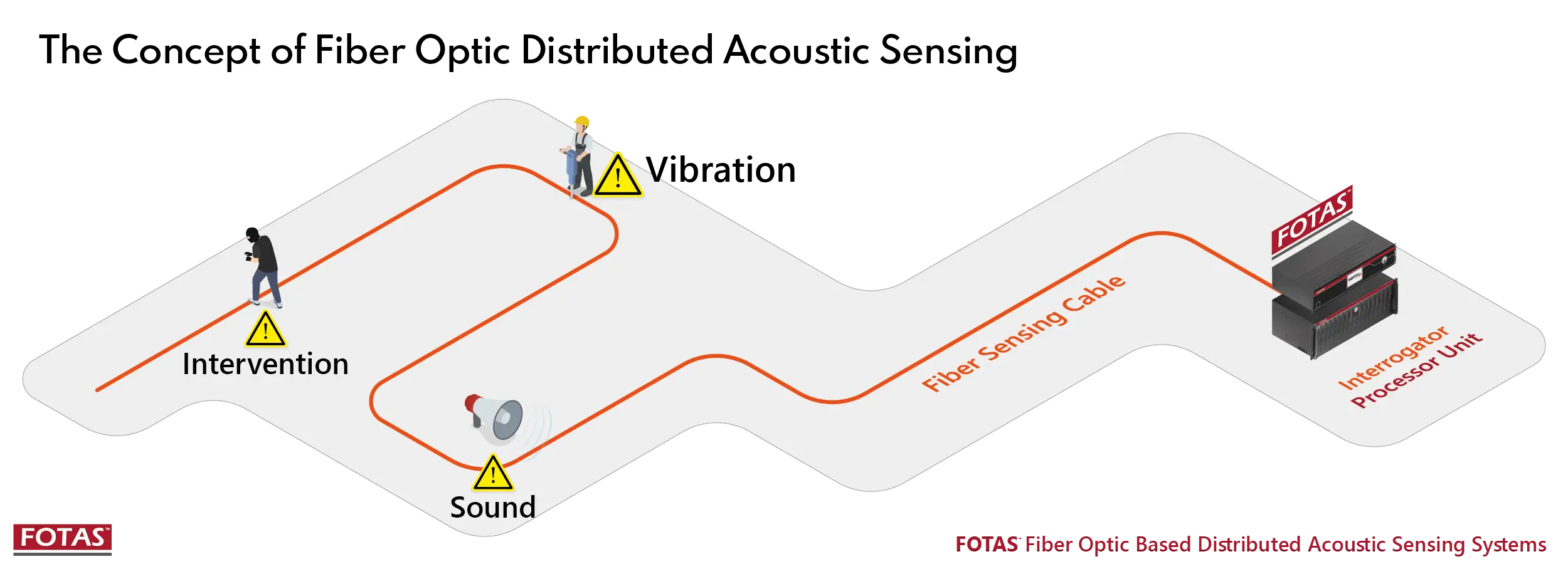
Distributed Acoustic Sensing (DAS) systems are based on the principle of coherent Rayleigh scattering. They emit narrow-linewidth coherent light pulses into an optical fiber and receive the backscattered Rayleigh signals from various locations along the fiber. By demodulating the phase or intensity variations of these signals, DAS achieves distributed sensing of external disturbances such as vibrations and acoustic waves.
However, in practical applications, DAS systems commonly encounter a critical issue—Coherent Fading.
Coherent fading refers to:
The phenomenon where, due to the random distribution of a multitude of scattering points within the fiber, light from different scatterers undergoes coherent superposition at the receiver. This results in the amplitude of the echo signal at certain spatial locations becoming extremely weak or even approaching zero.
These locations are typically referred to as **"fading points" or "blind spots"**.
II. Impact of Coherent Fading on DAS Systems
Coherent fading adversely affects various aspects of DAS system performance, primarily including:
1. Sharp Decline in Signal-to-Noise Ratio (SNR)
Near fading points, the amplitude of the echo signal is significantly reduced, causing the relative contribution of system noise to increase and potentially drowning out the effective signal.
2. Inhomogeneous Monitoring Sensitivity
Sensitivity along the fiber exhibits significant fluctuations, with some locations being "highly responsive" and others "nearly unresponsive."
3. Event Missed Detection and Localization Errors
In applications such as railway monitoring, oil and gas pipeline surveillance, and perimeter security, coherent fading can lead to missed detection of vibration events and may even impair spatial localization accuracy.
4. Decreased System Stability
The positions of fading points can drift slowly due to temperature variations, stress, and environmental changes, posing challenges to the long-term operational stability and consistency of the system.
Therefore, coherent fading is one of the core technical challenges constraining the engineering implementation and highly reliable application of DAS systems.
III. Root Causes of Coherent Fading
From a physical mechanism perspective, coherent fading primarily stems from the following aspects:
- Random Distribution of Rayleigh Scattering Points
The fiber contains a multitude of microscopic refractive index inhomogeneities, resulting in random phases of scattered light. - Coherent Superposition Effect
Light returning from multiple scattering points undergoes coherent interference at the receiver, which can lead to either constructive or destructive interference. - Single-Polarization, Single-Frequency Detection
If the system relies solely on a single polarization state or a single optical frequency for demodulation, deep fading is prone to occur at specific spatial locations.
IV. Mainstream Technical Approaches to Mitigate Coherent Fading
In addressing coherent fading, the industry has developed various solution approaches, primarily falling into the following categories:
1. Frequency Diversity
By introducing multiple frequency points or frequency-swept light sources, the fading positions at different frequencies do not completely overlap. Subsequently, signals from multiple frequencies are fused, thereby reducing the overall probability of fading.
Advantages:
- Clear principle
- Requires minimal modifications to system architecture
Limitations:
- Higher requirements for light sources and modulation systems
- Increased system complexity and cost
2. Polarization Diversity
This approach leverages the differences in scattering characteristics under different polarization states within the fiber. By simultaneously receiving and processing multiple polarization components, it mitigates deep fading caused by a single polarization state.
Advantages:
- Effectively mitigates polarization-induced fading
- Particularly effective for long-distance systems
Limitations:
- Complex optical and electronic implementation
- High difficulty in polarization state control and demodulation algorithms
3. Spatial Averaging and Signal Fusion Algorithms
By performing weighted averaging, correlation analysis, or adaptive fusion of signals within a defined spatial window, the impact of local fading points is attenuated.
Advantages:
- Flexible algorithm implementation
- Relatively lower dependence on hardware
Limitations:
- May compromise spatial resolution to some extent
- Limited improvement for very strong fading points
4. FPGA-Level Real-Time Anti-Fading Algorithms (Key to Engineering)
During the high-speed acquisition and demodulation phase, anti-coherent-fading algorithms are deeply integrated into FPGA hardware. Through real-time multi-channel data fusion, adaptive weight adjustment, and signal quality assessment, dynamic suppression of fading points is achieved.
Key advantages include:
- High real-time performance, suitable for online monitoring
- Independent of post-processing, ensuring high system stability
- Facilitates long-term operation in industrial and engineering scenarios
V. Integrated Solutions in Engineered DAS Systems
In practical engineering applications, a single technical approach is often insufficient to completely eliminate coherent fading. Mature DAS systems typically employ a combination of multiple techniques, for example:
- Narrow-linewidth coherent light sources to enhance phase stability
- Multi-channel synchronous high-speed acquisition to increase signal redundancy
- Co-design of coherent fading suppression algorithms and polarization characteristics
- FPGA-based real-time signal quality assessment and adaptive compensation
- Intelligent event recognition and confidence judgment at the backend software level
Only through system-level optimization integrating **"Optical Design + Hardware Architecture + Real-time Algorithms + Software Fusion"** can the impact of coherent fading be effectively mitigated in long-distance, high-sensitivity applications.
More Blog Videos
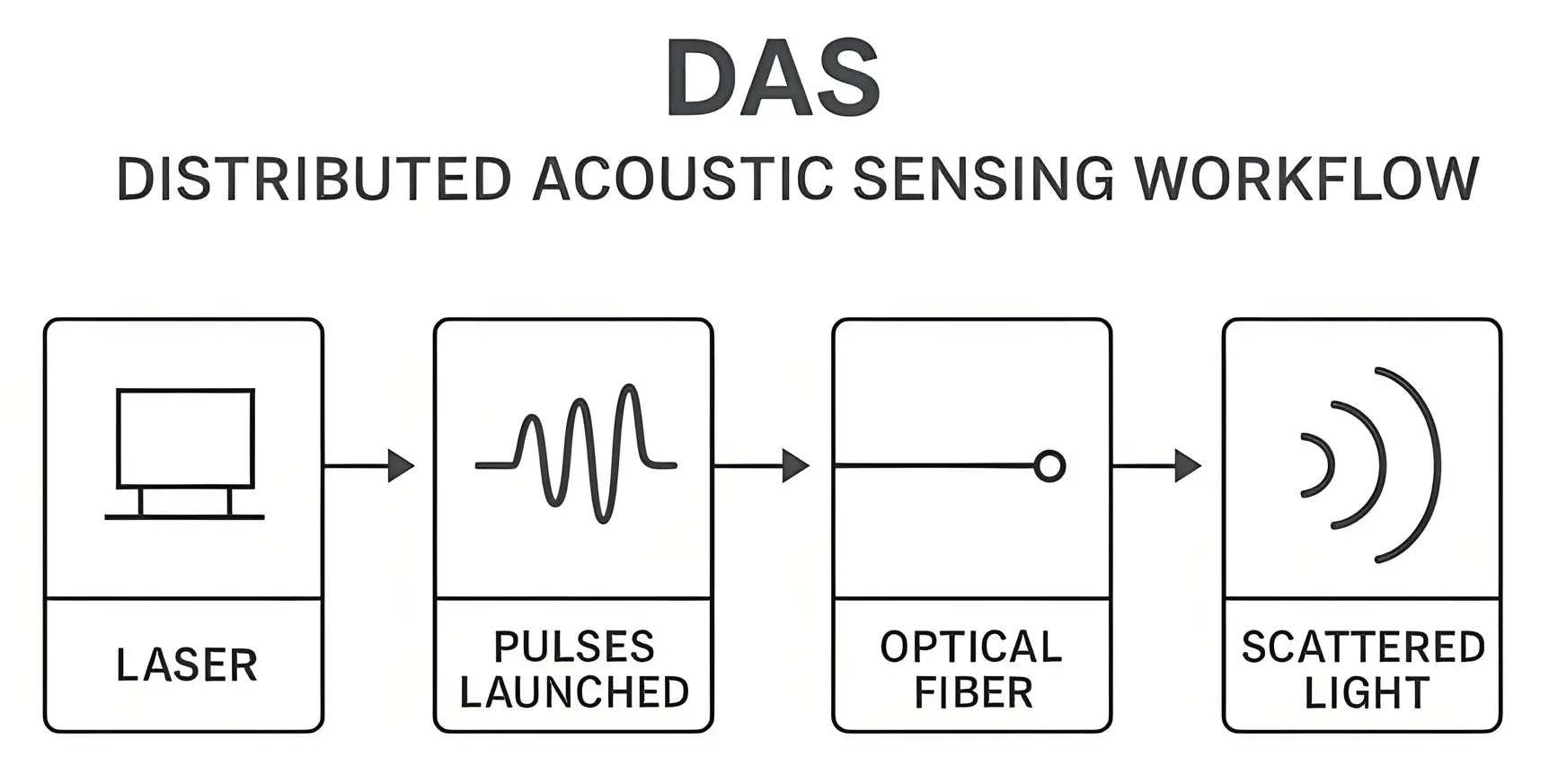
What is a DAS Distributed Acoustic Sensing System? Principles and Application Analysis
In the field of optical fiber sensing technology, the DAS (Distributed Acoustic Sensing) system has emerged as a pivotal technology with rapid development in recent years. By utilizing the optical fiber itself as the sensing element, a DAS system enables continuous, real-time, and long-distance monitoring of vibration and acoustic signals along the fiber. This capability has led to its widespread application in fields such as oil pipeline monitoring, railway safety monitoring, perimeter security, and seismic monitoring.
Release Date: 2026-03-13
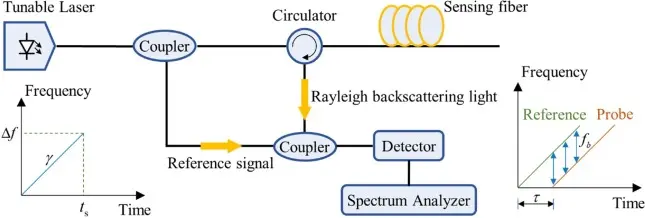
OFDR vs. OTDR: What's the Difference? A Comprehensive Comparison of Principles and Applications
In the fields of optical fiber testing and fiber optic sensing, OTDR (Optical Time Domain Reflectometer) and OFDR (Optical Frequency Domain Reflectometer) are two critically important measurement technologies.
Release Date: 2026-03-09
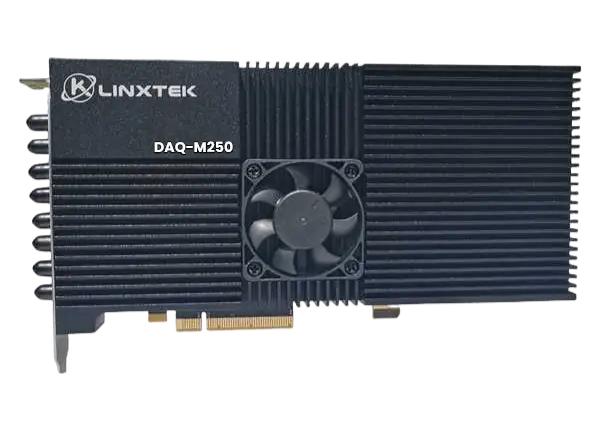
Core Technologies and Selection Guide for High-Speed Data Acquisition Cards
With the advancement of optoelectronic measurement techniques, Distributed Acoustic Sensing (DAS), radar signal processing, and scientific experimental equipment, the High-Speed Data Acquisition Card (DAQ) has become a core component in many high-end instrumentation systems. The performance of the data acquisition card directly dictates the system's signal acquisition capability, measurement precision, and real-time processing power.
Release Date: 2026-03-04
Engineering Methods for Enhancing DAS Signal-to-Noise Ratio (SNR)
Engineering Optimization Practices for Distributed Acoustic Sensing (DAS) Systems In a Distributed Acoustic Sensing (DAS) system, the Signal-to-Noise Ratio (SNR) directly dictates the achievable sensing distance, spatial resolution, capability to detect weak vibrations, false positive and false negative rates, and the efficacy of post-processing algorithms. Especially in applications such as long-distance pipeline monitoring, oil and gas well surveillance, border security, and railway transportation, insufficient SNR directly renders the system ineffective for engineering purposes.
Release Date: 2026-02-28

Engineering Practice of DAS in Utility Tunnel Vibration Monitoring
As the scale of urban underground utility tunnels continues to expand, achieving 24/7 online monitoring of structural integrity, external construction disturbances, and unauthorized intrusion has emerged as a critical challenge in the development of smart cities.
Release Date: 2026-02-25
Comparison of DAS and FBG Vibration Monitoring Technologies
With the widespread adoption of fiber optic sensing technology in fields such as rail transit, pipeline security, perimeter intrusion detection, and structural health monitoring, Distributed Acoustic Sensing (DAS) and Fiber Bragg Grating (FBG) based vibration monitoring have emerged as the two most frequently compared solutions by end-users.
Release Date: 2026-02-14