
 Follow Official WeChat


Unmanned Aerial Vehicle (UAV) Intrusion Detection Technology and Applications Based on Distributed Acoustic Sensing (DAS)
I. Background Overview
With the proliferation of unmanned aerial vehicle (UAV) technology, which plays a positive role in areas such as aerial photography, inspection, and logistics, it also introduces security risks such as "low-altitude intrusion" and "illegal flight". At critical sites like airports, military installations, energy infrastructure, and key industrial parks, traditional monitoring methods—such as radar, video, or radio frequency surveillance—still have certain limitations when dealing with low-altitude, stealthy, and small-target scenarios.
Distributed Acoustic Sensing (DAS) systems, as a passive, long-range, continuous-monitoring sensing technology, offer a new technical approach for UAV intrusion early warning.
II. Fundamental Principles of DAS in UAV Intrusion Monitoring
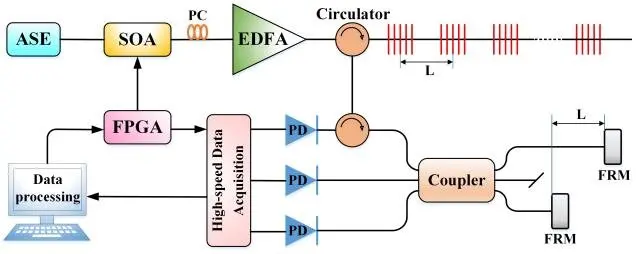
DAS systems leverage the Coherent Optical Time-Domain Reflectometry (C-OTDR) principle, transforming standard telecommunications optical fiber into a continuous, distributed array of vibration and acoustic sensing units along its length. When a UAV performs low-altitude flight, takeoff/landing, or hovering in a target area, it generates detectable physical disturbances in the ground and surrounding structures, including:
-
Micro-vibrations in the ground induced by rotor downwash.
-
Impact and resonance during UAV takeoff and landing.
-
Distinctive acoustic wave signatures produced by low-altitude flight.
These signals are transmitted via the optical fiber to the DAS interrogation unit. Through high-speed data acquisition and digital signal processing, real-time sensing and precise localization can be achieved.
III. DAS Monitoring Modes for UAV Intrusion Scenarios
1. Perimeter and Key Area Low-Altitude Intrusion Monitoring
In areas such as airport perimeters, military restricted zones, substations, and along oil/gas pipelines, optical fiber can be deployed along fences, underground, or within existing conduits.
When a UAV enters the monitored zone, the DAS system can:
-
Real-time detection of anomalous vibrations and acoustic signatures.
-
Localize the UAV activity zone along the fiber length.
-
Temporally and spatially log intrusion events.
Compared to video surveillance, DAS is independent of lighting conditions and has no field-of-view blind spots.
2. UAV Takeoff and Landing Behavior Recognition
Illegal UAVs often need to execute takeoff or landing maneuvers near the target area.
DAS is particularly sensitive to such scenarios, enabling the following through analysis of signal characteristics:
-
Identification of takeoff/landing vibration patterns.
-
Capture of short-duration, high-energy acoustic-vibration signals.
-
Effective discrimination from other events like personnel walking or vehicle movement.
This capability is highly valuable for scenarios involving "rapid takeoff – short-duration reconnaissance – swift撤离 (withdrawal)".
3. Integrated Application with Counter-UAS Systems
DAS itself does not actively emit any signals, offering high covertness. It can serve as the front-end sensing layer for Counter-Unmanned Aircraft Systems (C-UAS):
-
DAS provides early passive warning.
-
It guides radar, electro-optical, or UAV jamming/disruption systems for directional tracking.
-
Reduces the workload and false alarm rate of active detection systems.
Through multi-system integration, the overall reliability of the C-UAS can be significantly enhanced.
IV. Technical Advantages of DAS in UAV Intrusion Monitoring
-
Passive Monitoring, Secure and Covert
The system generates no electromagnetic emissions, making it suitable for deployment in high-security scenarios. -
Long-Range, Continuous Coverage
A single system can achieve continuous sensing over tens of kilometers, suitable for large-scale protected areas. -
High Spatial Localization Accuracy
Meter-level positioning capability provides precise coordinate information for subsequent response actions. -
Strong Resilience to Complex Environments
Unaffected by factors such as rain, fog, darkness, or electromagnetic interference. -
Algorithms Can Be Optimized for UAV Signatures
Through spectral analysis, time-frequency feature extraction, and pattern recognition, a UAV signature database can be progressively built, improving identification accuracy.
V. Engineering Implementation and System Capabilities
In practical engineering applications, DAS systems typically require high sampling rates, high dynamic range, and real-time processing capabilities to adapt to the rapidly changing characteristics of UAV-related signals.
Taking the Distributed Acoustic Sensing system provided by Shanghai Kunlian Technology as an example, its hardware platform and algorithmic architecture are optimized for high-frequency vibration and weak signal detection. It can meet the requirements for continuous monitoring and real-time analysis in complex scenarios, providing a stable data foundation for UAV intrusion awareness.
VI. Development Trends and Outlook
With the increasing demand for low-altitude security, single detection methods are insufficient to meet the requirements of complex scenarios.
In the future, DAS will be more deeply integrated with:
-
Radar systems
-
Electro-optical identification systems
-
AI-powered intelligent analysis platforms
forming a comprehensive counter-UAV solution characterized by "passive sensing + active identification + intelligent decision-making".
Within this framework, DAS will continue to play a stable and reliable role as a fundamental sensing layer, providing solid support for low-altitude security protection.
More Blog Videos
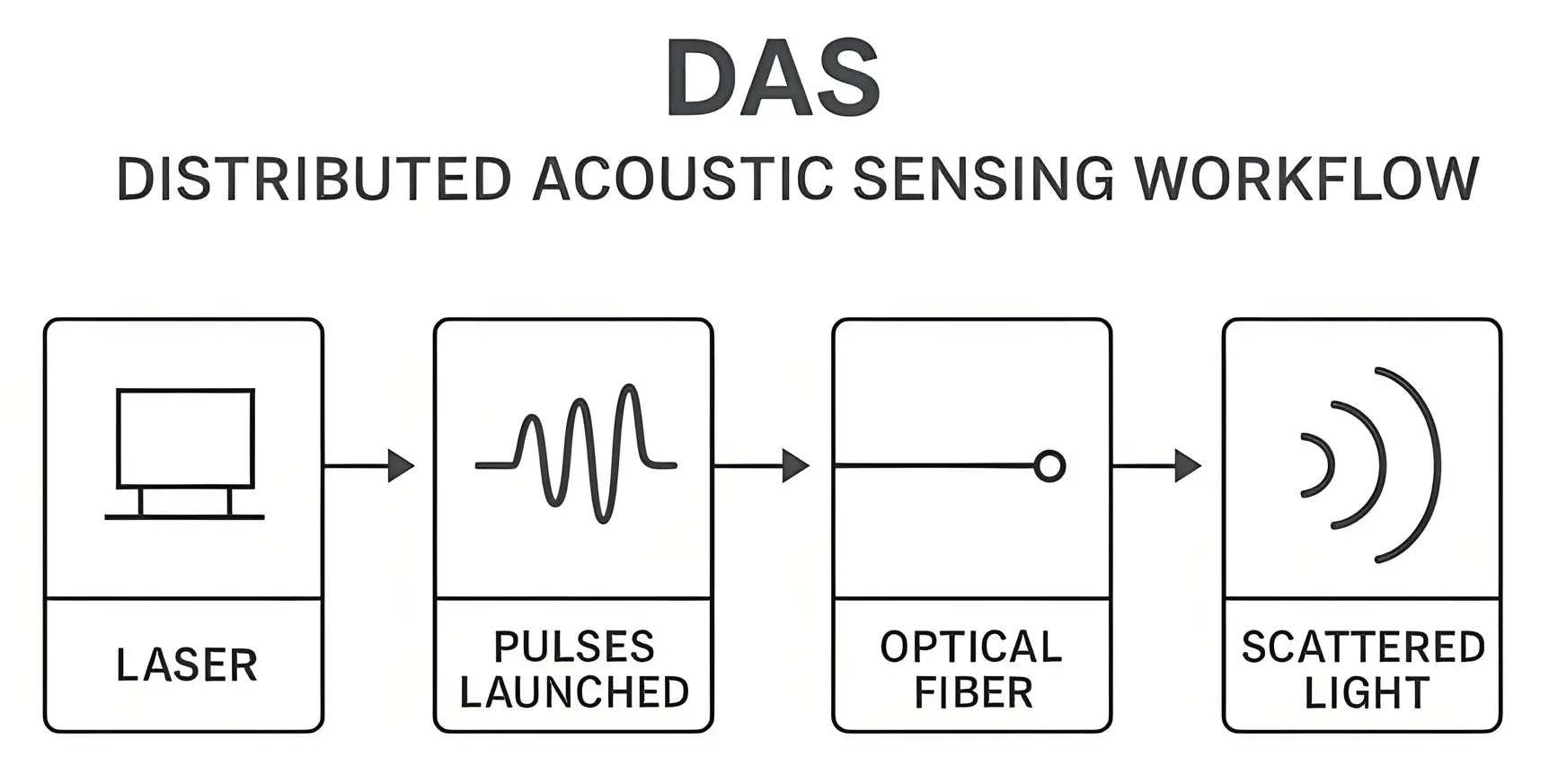
What is a DAS Distributed Acoustic Sensing System? Principles and Application Analysis
In the field of optical fiber sensing technology, the DAS (Distributed Acoustic Sensing) system has emerged as a pivotal technology with rapid development in recent years. By utilizing the optical fiber itself as the sensing element, a DAS system enables continuous, real-time, and long-distance monitoring of vibration and acoustic signals along the fiber. This capability has led to its widespread application in fields such as oil pipeline monitoring, railway safety monitoring, perimeter security, and seismic monitoring.
Release Date: 2026-03-13
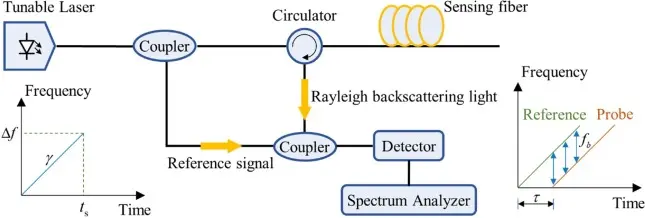
OFDR vs. OTDR: What's the Difference? A Comprehensive Comparison of Principles and Applications
In the fields of optical fiber testing and fiber optic sensing, OTDR (Optical Time Domain Reflectometer) and OFDR (Optical Frequency Domain Reflectometer) are two critically important measurement technologies.
Release Date: 2026-03-09
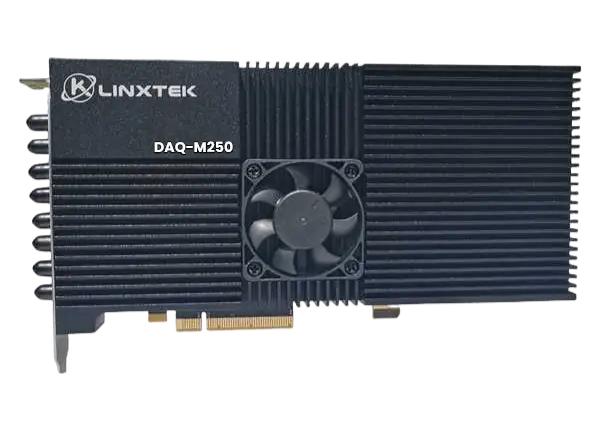
Core Technologies and Selection Guide for High-Speed Data Acquisition Cards
With the advancement of optoelectronic measurement techniques, Distributed Acoustic Sensing (DAS), radar signal processing, and scientific experimental equipment, the High-Speed Data Acquisition Card (DAQ) has become a core component in many high-end instrumentation systems. The performance of the data acquisition card directly dictates the system's signal acquisition capability, measurement precision, and real-time processing power.
Release Date: 2026-03-04
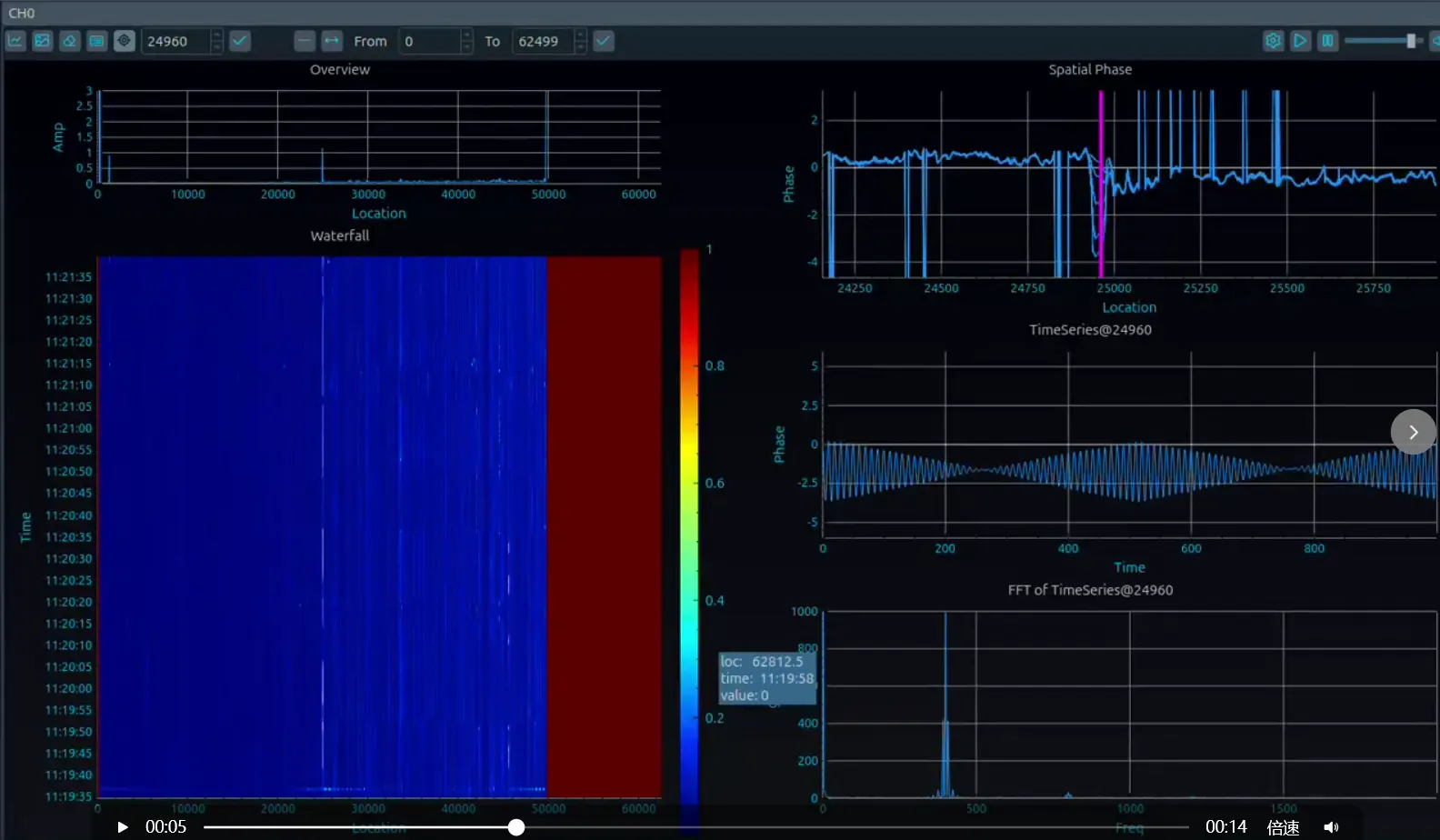
Engineering Methods for Enhancing DAS Signal-to-Noise Ratio (SNR)
Engineering Optimization Practices for Distributed Acoustic Sensing (DAS) Systems In a Distributed Acoustic Sensing (DAS) system, the Signal-to-Noise Ratio (SNR) directly dictates the achievable sensing distance, spatial resolution, capability to detect weak vibrations, false positive and false negative rates, and the efficacy of post-processing algorithms. Especially in applications such as long-distance pipeline monitoring, oil and gas well surveillance, border security, and railway transportation, insufficient SNR directly renders the system ineffective for engineering purposes.
Release Date: 2026-02-28

Engineering Practice of DAS in Utility Tunnel Vibration Monitoring
As the scale of urban underground utility tunnels continues to expand, achieving 24/7 online monitoring of structural integrity, external construction disturbances, and unauthorized intrusion has emerged as a critical challenge in the development of smart cities.
Release Date: 2026-02-25
Comparison of DAS and FBG Vibration Monitoring Technologies
With the widespread adoption of fiber optic sensing technology in fields such as rail transit, pipeline security, perimeter intrusion detection, and structural health monitoring, Distributed Acoustic Sensing (DAS) and Fiber Bragg Grating (FBG) based vibration monitoring have emerged as the two most frequently compared solutions by end-users.
Release Date: 2026-02-14