
 Follow Official WeChat


Analysis of the Technical Principles and Advantages of Chirped DAS Technology
Distributed Acoustic Sensing (DAS) is a distributed sensing technology that utilizes optical fiber as the sensing medium. This technique involves injecting laser pulses into the fiber and analyzing variations in the Rayleigh backscattered signal to achieve real-time monitoring of vibration, strain, and acoustic signals along the entire fiber length.
Since optical fiber can serve as a natural long-distance sensing element, DAS is widely applied in fields such as oil and gas pipeline monitoring, perimeter security, seismic monitoring, traffic monitoring, and structural health monitoring.
As application scenarios demand ever-higher levels of sensitivity, stability, and sensing range, traditional DAS architectures have gradually revealed limitations such as insufficient signal-to-noise ratio (SNR) and severe coherent fading. In response, chirped-pulse DAS technology has emerged. As one of the leading companies in distributed optical fiber sensing technology in China, Shanghai Kunlian Technology has long been committed to the research, development, and engineering application of high-performance DAS systems, actively driving technological innovation and industrial deployment.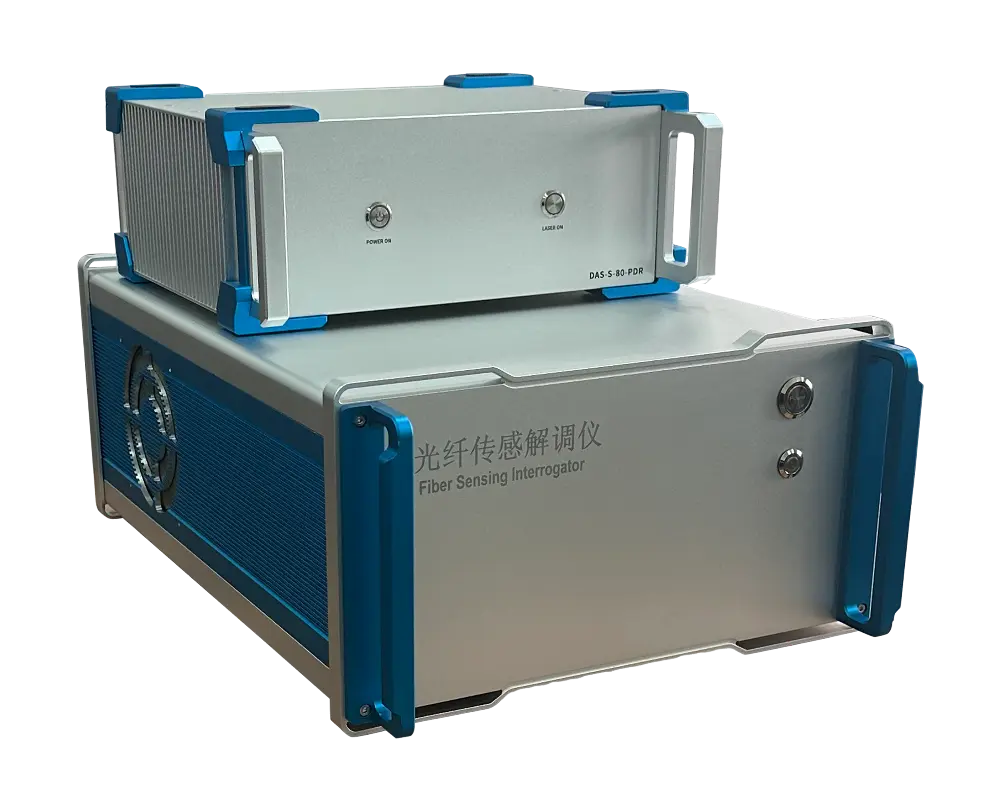
I. Key Technical Challenges Facing Traditional DAS
In traditional DAS systems, narrow-linewidth, fixed-frequency laser pulses are typically used as the probe light source. The main issues include:
1. Pronounced Coherent Fading
The random superposition of phases from numerous randomly distributed scattering centers within the fiber leads to extremely low signal amplitude or even "blind spots" at certain locations.
2. Limited Signal-to-Noise Ratio (SNR)
The inherently weak Rayleigh backscattered signal in long-distance or weak-vibration scenarios, coupled with insufficient system noise immunity, restricts the SNR.
3. System Stability Dependent on Laser Performance
Extremely high requirements for laser linewidth and frequency stability result in limited overall system robustness.
These issues are particularly pronounced in complex environments and high-precision applications, constraining the further advancement of DAS technology.
II. Fundamental Principles of Chirped-Pulse DAS
To overcome the aforementioned technical bottlenecks, Shanghai Kunlian Technology has proposed and implemented a DAS system based on Linear Frequency-Modulated (LFM) Chirped Pulses (hereafter referred to as "Chirped DAS"). The core of this technology is:
During the laser pulse emission phase, modulating the instantaneous frequency of the light linearly, causing different temporal portions of the pulse to correspond to different frequency components.
After the chirped pulse propagates through the fiber and generates Rayleigh backscattering, algorithms such as digital demodulation and matched filtering can map the frequency variation information into high-precision phase and strain information, thereby achieving more stable and higher-sensitivity distributed vibration detection.
III. Core Technical Advantages of Chirped DAS
1. Suppression of Coherent Fading, Enhanced Signal Reliability
Chirp modulation introduces frequency diversity. By analyzing the superposition of different frequency components, the fading or blind spots that occur at certain spatial positions in traditional DAS can be significantly reduced.
2. Enhanced Overall Signal-to-Noise Ratio (SNR)
Chirped signals possess processing gain during demodulation, significantly improving the system's detection sensitivity for weak vibration signals, offering distinct advantages especially in long-distance and weak-signal scenarios.
3. Improved System Stability and Consistency
Compared to fixed-frequency pulses, chirp modulation reduces dependence on laser phase noise, enabling higher system stability during long-term operation and in complex environments.
4. Adaptability to Longer Distances and High-Resolution Requirements
By integrating high-performance data acquisition and FPGA-based digital signal processing capabilities, Shanghai Kunlian Technology's Chirped DAS can achieve greater monitoring depth while maintaining spatial resolution, meeting the high-standard requirements of pipeline, border, and infrastructure monitoring.
IV. Typical Applications of Chirped DAS
Shanghai Kunlian Technology has widely applied Chirped DAS technology across numerous practical engineering scenarios:
-
Oil & Gas Pipeline Leakage and Third-Party Interference Monitoring
The system can identify abnormal events such as leak sounds, excavation disturbances, and impact activities in real-time, offering low false alarm rates and high-reliability judgment capabilities. -
Seismic and Microseismic Monitoring
In geological monitoring applications, Chirped DAS exhibits higher sensitivity to low-frequency, weak vibration signals, facilitating continuous, all-weather seismic monitoring. -
Border Security and Perimeter Intrusion Detection
Leveraging high SNR and multi-frequency information processing capabilities, the system effectively improves the accuracy of anomaly detection in noisy and complex environments. -
Rail Transit and Infrastructure Health Monitoring
The system provides continuous monitoring support for track vibration and bridge health conditions, offering data support for safety assessment and operational maintenance.
Chirped DAS represents a significant innovation in Distributed Acoustic Sensing technology. By employing linear frequency-modulated chirp techniques and digital signal processing methods, it fundamentally addresses the limitations of traditional DAS in terms of coherent fading, SNR, and stability. As a leading enterprise driving the advancement of DAS technology, Shanghai Kunlian Technology continues to optimize Chirped DAS technology and implement it across more engineering application fields, providing industry clients with high-performance, reliable distributed optical fiber sensing solutions.
More Blog Videos
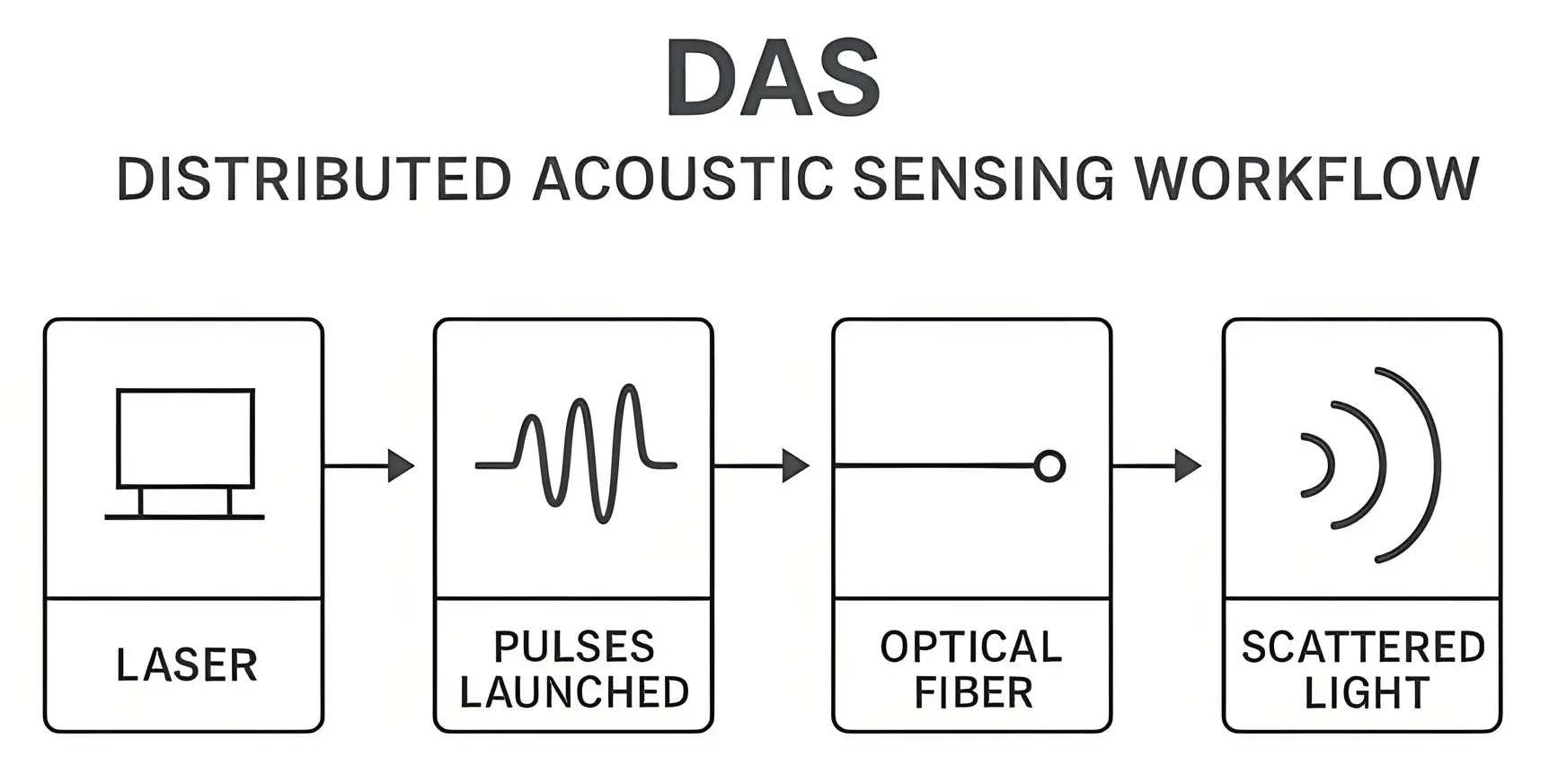
What is a DAS Distributed Acoustic Sensing System? Principles and Application Analysis
In the field of optical fiber sensing technology, the DAS (Distributed Acoustic Sensing) system has emerged as a pivotal technology with rapid development in recent years. By utilizing the optical fiber itself as the sensing element, a DAS system enables continuous, real-time, and long-distance monitoring of vibration and acoustic signals along the fiber. This capability has led to its widespread application in fields such as oil pipeline monitoring, railway safety monitoring, perimeter security, and seismic monitoring.
Release Date: 2026-03-13
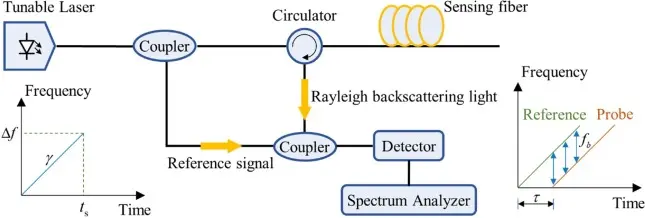
OFDR vs. OTDR: What's the Difference? A Comprehensive Comparison of Principles and Applications
In the fields of optical fiber testing and fiber optic sensing, OTDR (Optical Time Domain Reflectometer) and OFDR (Optical Frequency Domain Reflectometer) are two critically important measurement technologies.
Release Date: 2026-03-09
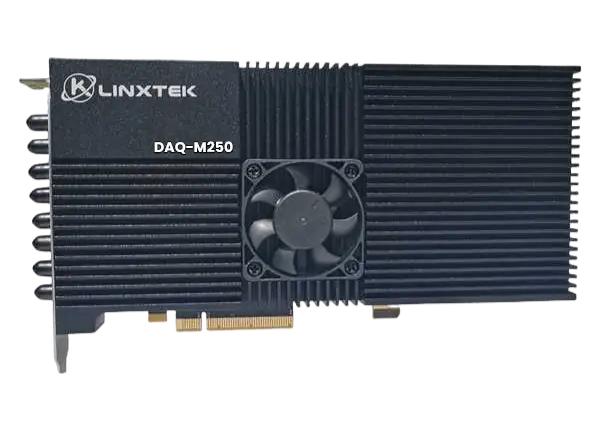
Core Technologies and Selection Guide for High-Speed Data Acquisition Cards
With the advancement of optoelectronic measurement techniques, Distributed Acoustic Sensing (DAS), radar signal processing, and scientific experimental equipment, the High-Speed Data Acquisition Card (DAQ) has become a core component in many high-end instrumentation systems. The performance of the data acquisition card directly dictates the system's signal acquisition capability, measurement precision, and real-time processing power.
Release Date: 2026-03-04
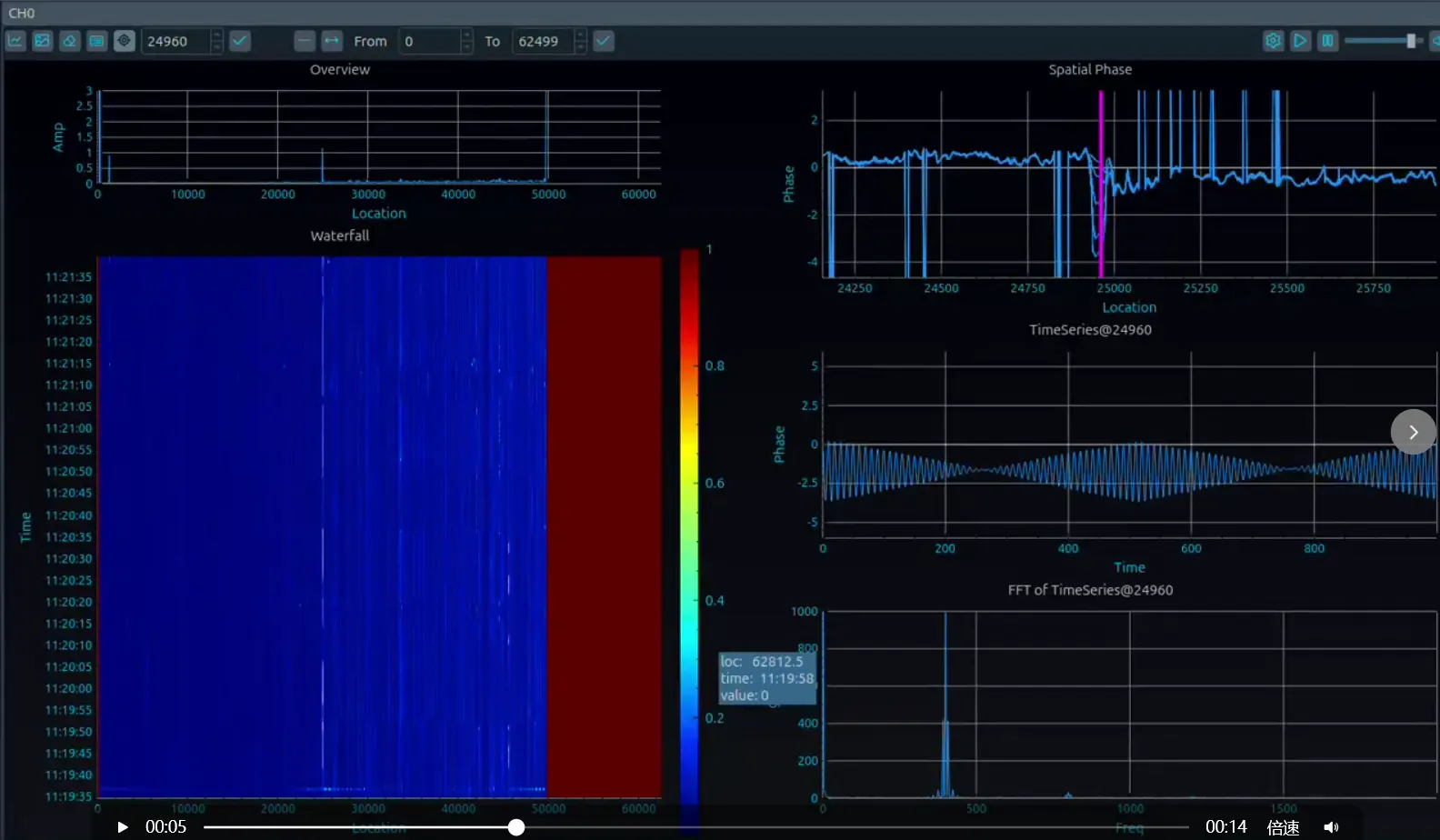
Engineering Methods for Enhancing DAS Signal-to-Noise Ratio (SNR)
Engineering Optimization Practices for Distributed Acoustic Sensing (DAS) Systems In a Distributed Acoustic Sensing (DAS) system, the Signal-to-Noise Ratio (SNR) directly dictates the achievable sensing distance, spatial resolution, capability to detect weak vibrations, false positive and false negative rates, and the efficacy of post-processing algorithms. Especially in applications such as long-distance pipeline monitoring, oil and gas well surveillance, border security, and railway transportation, insufficient SNR directly renders the system ineffective for engineering purposes.
Release Date: 2026-02-28

Engineering Practice of DAS in Utility Tunnel Vibration Monitoring
As the scale of urban underground utility tunnels continues to expand, achieving 24/7 online monitoring of structural integrity, external construction disturbances, and unauthorized intrusion has emerged as a critical challenge in the development of smart cities.
Release Date: 2026-02-25
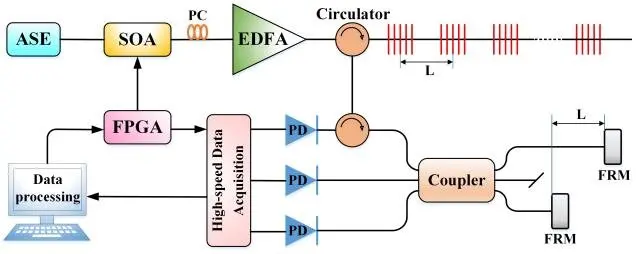
Comparison of DAS and FBG Vibration Monitoring Technologies
With the widespread adoption of fiber optic sensing technology in fields such as rail transit, pipeline security, perimeter intrusion detection, and structural health monitoring, Distributed Acoustic Sensing (DAS) and Fiber Bragg Grating (FBG) based vibration monitoring have emerged as the two most frequently compared solutions by end-users.
Release Date: 2026-02-14