
 Follow Official WeChat


Future Security: Intelligent Coordinated Operations Integrating DAS, UAVs, and Railways
In the era of digital security, the coordinated operations of **Distributed Acoustic Sensing (DAS)**, **Intelligent Unmanned Aerial Vehicles (UAVs)**, and **Railway Systems** are redefining track security protection. This is more than a simple layering of technologies; it constitutes a closed-loop security ecosystem of **Real-time Perception → Precise Localization → Intelligent Response**.
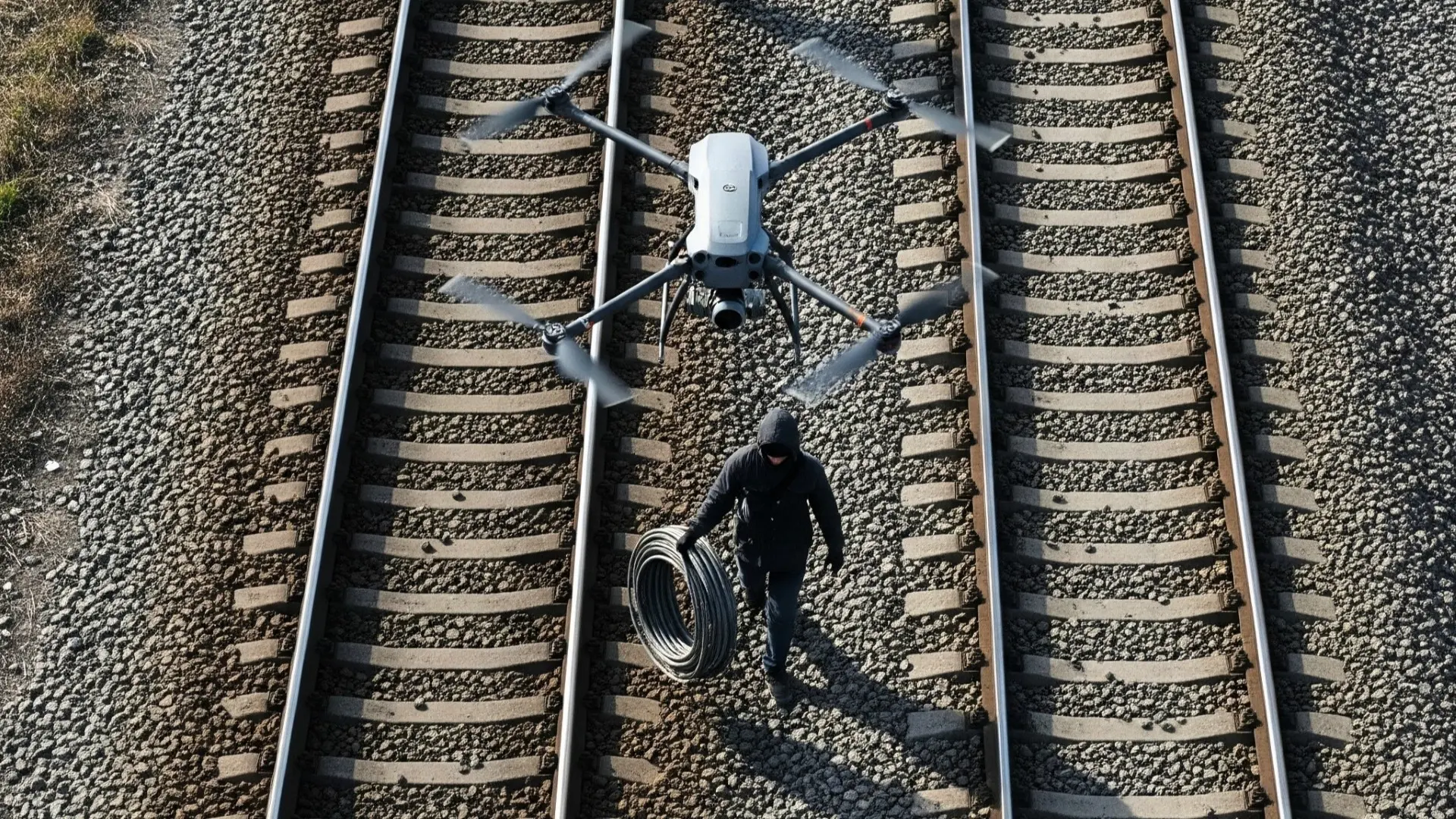
DAS: The Railway's "Neural Sensory Network"
Traditional railway security relies on manual patrols and fixed cameras, leaving inevitable blind spots across thousands of kilometers of track. DAS technology transforms **existing communication fiber optic cables** into tens of thousands of "virtual sensors," turning the entire railway line into an intelligent entity capable of "hearing" and "sensing" threats:
-
Sub-meter Localization: Analyzes acoustic vibrations to accurately identify intrusions, cable cutting, track sabotage, and other activities, with localization precision reaching ±10 meters.
-
All-Weather, 24/7 Monitoring: Unaffected by light or weather conditions, providing continuous, round-the-clock listening for anomalies along the track.
-
Multi-Threat Identification: Capable of detecting not only intruder footsteps but also analyzing the acoustic signatures of diverse activities like digging, cutting, and climbing.
UAVs: The Aerial Rapid Response Unit
Upon DAS threat detection, the **Intelligent UAV System** activates immediately, creating a seamless "detect–respond" linkage:
-
Automatic Deployment: UAVs autonomously navigate to the target coordinates provided by DAS (capable of Beyond-Visual-Line-of-Sight (BVLOS) flight where regulations permit).
-
Multi-Modal Reconnaissance: Equipped with high-definition optical and thermal imaging cameras to acquire clear footage day and night, with AI-powered real-time situational analysis.
-
Active Deterrence: Supports audio announcements and spotlight warnings to psychologically deter intruders and prevent escalation.
The Future of Railway Security: Intelligent Coordinated Operations
Future railway security will no longer consist of isolated systems but an intelligent network integrating **DAS Perception + UAV Response + Railway Dispatch Center Coordination**:
-
DAS Early Warning: Detects abnormal track vibrations, instantly pinpoints the location, and classifies the threat type (e.g., "Cable cutting activity detected at K253+500").
-
UAV Dispatch: Dispatches the nearest UAV from its hangar, arriving on-site within 2 minutes and transmitting live footage.
-
Intelligent Assessment: AI analyzes the footage to determine if it's theft, vandalism, or accidental trespass and automatically recommends response actions.
-
Multi-Agency Coordination: Simultaneously alerts railway dispatch, security teams, and law enforcement, triggering train speed reduction or stoppage if necessary.
Beyond Defense: Proactive Security
This system not only enables **post-incident investigation** but also facilitates **pre-incident warning** and **real-time intervention**:
-
If suspicious individuals are loitering, UAVs can issue early warnings to deter them.
-
Upon detecting foreign objects on the track, the train control system can be triggered to adjust speed immediately.
-
In emergencies (e.g., a person on the tracks), UAVs can deploy lifesaving equipment or guide rescue operations.
More Blog Videos
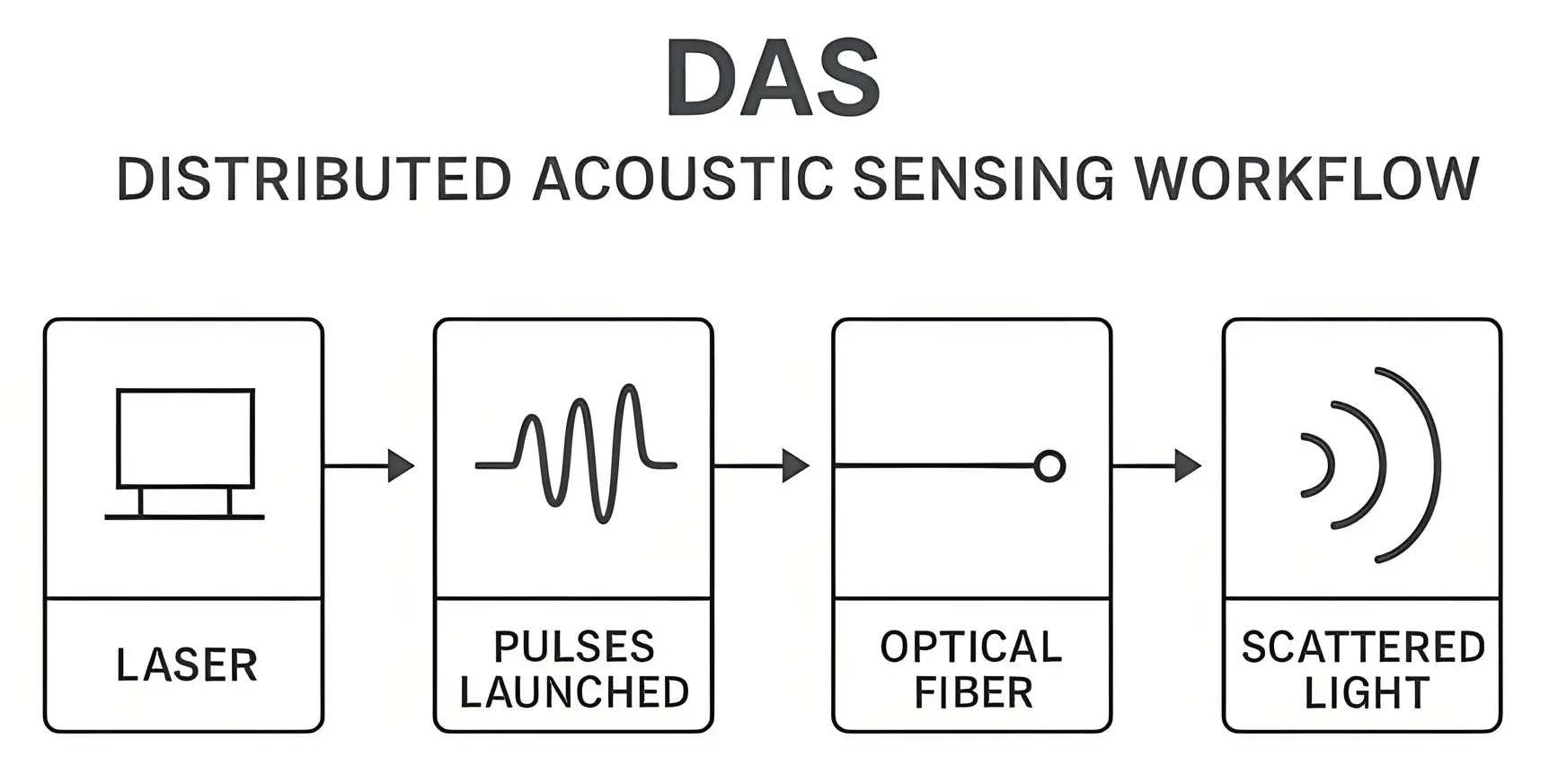
What is a DAS Distributed Acoustic Sensing System? Principles and Application Analysis
In the field of optical fiber sensing technology, the DAS (Distributed Acoustic Sensing) system has emerged as a pivotal technology with rapid development in recent years. By utilizing the optical fiber itself as the sensing element, a DAS system enables continuous, real-time, and long-distance monitoring of vibration and acoustic signals along the fiber. This capability has led to its widespread application in fields such as oil pipeline monitoring, railway safety monitoring, perimeter security, and seismic monitoring.
Release Date: 2026-03-13
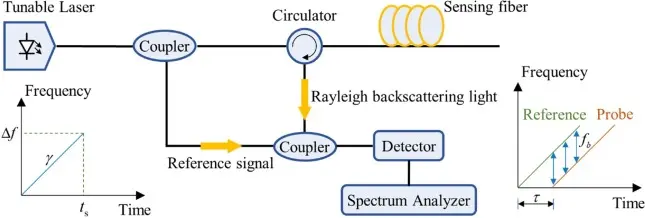
OFDR vs. OTDR: What's the Difference? A Comprehensive Comparison of Principles and Applications
In the fields of optical fiber testing and fiber optic sensing, OTDR (Optical Time Domain Reflectometer) and OFDR (Optical Frequency Domain Reflectometer) are two critically important measurement technologies.
Release Date: 2026-03-09
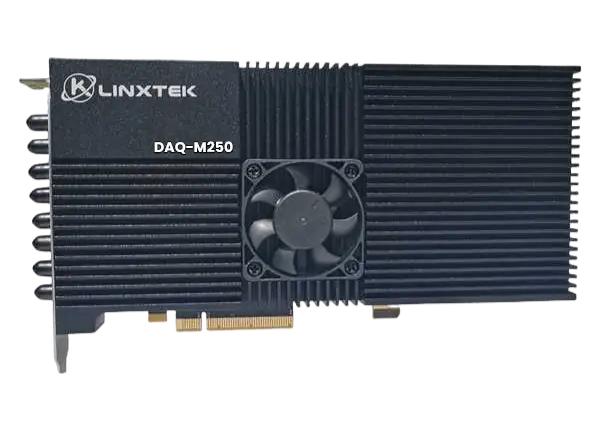
Core Technologies and Selection Guide for High-Speed Data Acquisition Cards
With the advancement of optoelectronic measurement techniques, Distributed Acoustic Sensing (DAS), radar signal processing, and scientific experimental equipment, the High-Speed Data Acquisition Card (DAQ) has become a core component in many high-end instrumentation systems. The performance of the data acquisition card directly dictates the system's signal acquisition capability, measurement precision, and real-time processing power.
Release Date: 2026-03-04
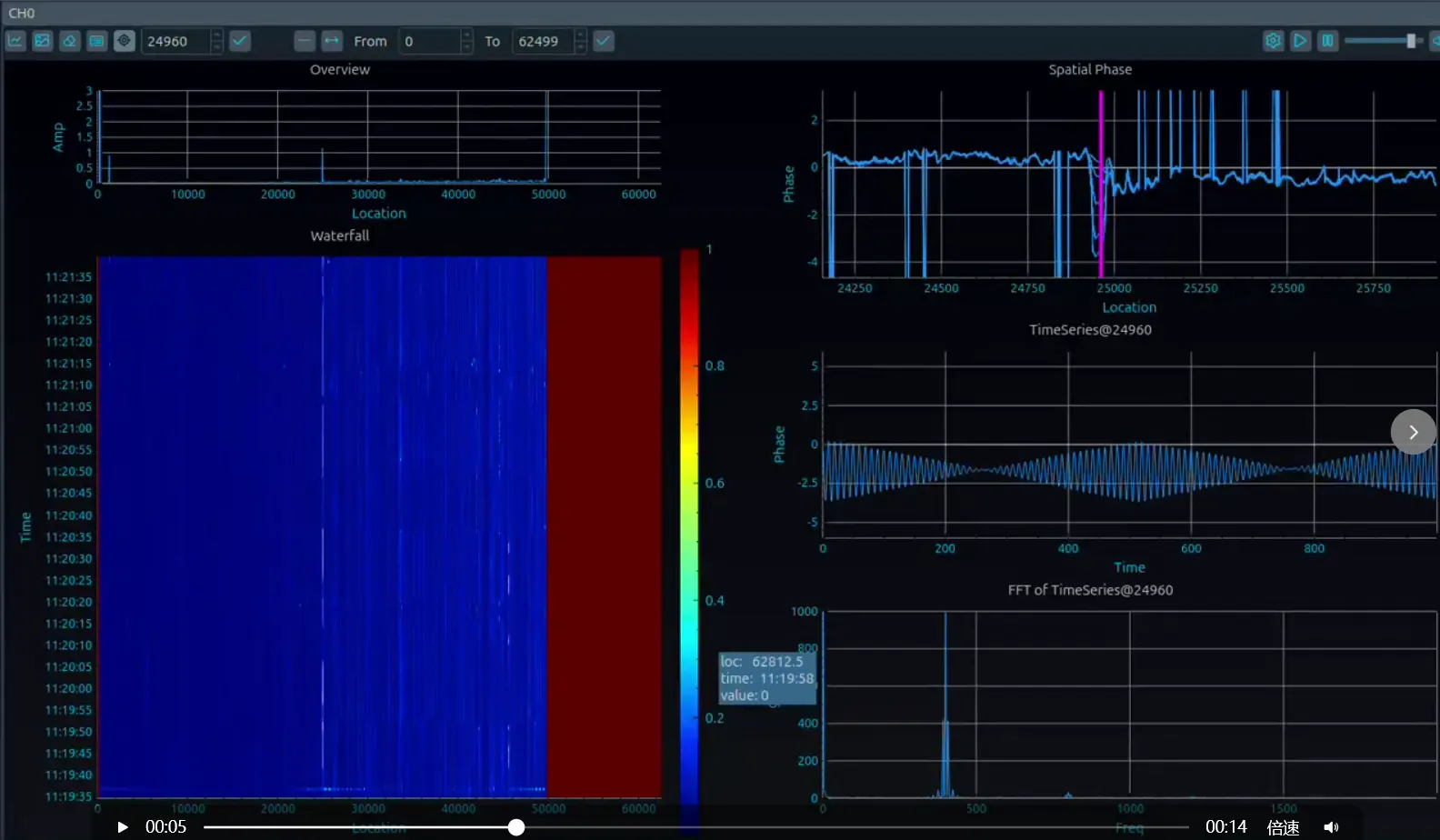
Engineering Methods for Enhancing DAS Signal-to-Noise Ratio (SNR)
Engineering Optimization Practices for Distributed Acoustic Sensing (DAS) Systems In a Distributed Acoustic Sensing (DAS) system, the Signal-to-Noise Ratio (SNR) directly dictates the achievable sensing distance, spatial resolution, capability to detect weak vibrations, false positive and false negative rates, and the efficacy of post-processing algorithms. Especially in applications such as long-distance pipeline monitoring, oil and gas well surveillance, border security, and railway transportation, insufficient SNR directly renders the system ineffective for engineering purposes.
Release Date: 2026-02-28
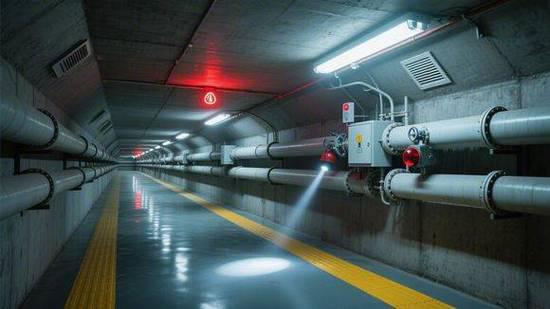
Engineering Practice of DAS in Utility Tunnel Vibration Monitoring
As the scale of urban underground utility tunnels continues to expand, achieving 24/7 online monitoring of structural integrity, external construction disturbances, and unauthorized intrusion has emerged as a critical challenge in the development of smart cities.
Release Date: 2026-02-25
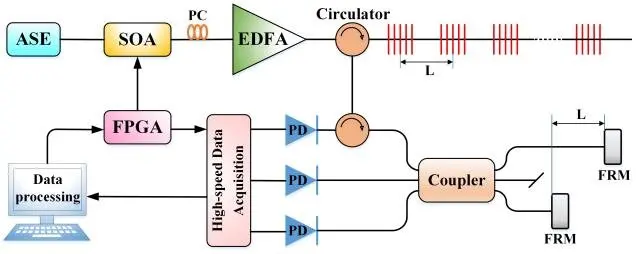
Comparison of DAS and FBG Vibration Monitoring Technologies
With the widespread adoption of fiber optic sensing technology in fields such as rail transit, pipeline security, perimeter intrusion detection, and structural health monitoring, Distributed Acoustic Sensing (DAS) and Fiber Bragg Grating (FBG) based vibration monitoring have emerged as the two most frequently compared solutions by end-users.
Release Date: 2026-02-14