
 Follow Official WeChat


DAS-U1000 Extreme Edition Demodulation Card
Product Details
Product Overview
The DAS-U1000 Distributed Acoustic Sensing Demodulation Card, independently developed by Shanghai Kunlian Technology, is a flagship DAS demodulation system specifically designed for extreme environmental monitoring and high-precision sensing applications. The system is configured with 4 channels of 1000 MSPS sampling rate, 16-bit ADCs and a single channel 2500 MSPS 14-bit DAC. It supports external reference clock input, achieving an exceptional balance between long distance, high dynamic range, and high spatial resolution to meet stringent engineering-grade monitoring requirements.
The core technological highlight of the DAS-U1000 lies in its systematic resolution of the inherent coupling constraints among spatial resolution, sensing range, and dynamic range—a first in distributed optical fiber sensing systems. Through a new-generation coherent noise modeling algorithm and a polarization state adaptive compensation mechanism, it effectively suppresses signal degradation caused by coherent fading and polarization randomness. This enables the system to maintain spatial resolution better than 1 meter and high signal-to-noise ratio detection capability even over tens of kilometers of transmission distance.
Core Technical Advantages
✅ Dual Noise Suppression Mechanism:
Integrated coherent fading and polarization fading suppression algorithms, significantly improving the accuracy of weak event signal identification.
✅ Breakthrough in Triple Constraint Limitations:
Enables relatively independent optimization of the three key parameters: spatial resolution, sensing range, and dynamic range.
✅ Advanced FPGA Algorithm:
Implements parallel signal processing and efficient analysis through embedded FPGA algorithms, greatly enhancing the identification efficiency and analytical capability for acoustic wave events.
✅ External Clock Synchronization Support:
Can interface with high-stability reference clocks, enhancing system stability and precision in multi-channel, long-distance cooperative monitoring scenarios.
✅ 4-Channel 1000MSPS High-Speed Sampling:
Supports large bandwidth and synchronous acquisition, capturing high-frequency vibration and transient acoustic signals to meet extreme environment monitoring demands.
✅ Spatial Resolution Better Than 0.5 Meters:
Utilizes a high-precision time-domain demodulation structure, supporting sub-meter acoustic vibration localization, particularly suitable for monitoring structural detail responses.
Performance Specifications
| Parameter | Specification |
|---|---|
| Analog Input Channels | 4 channels |
| Maximum Sensing Distance | 60 km (Max) |
| Spatial Resolution | 1 m (Min) |
| Sampling Rate | 1000MSPS / per channel |
| Response Frequency | 1 Hz ~ 20 kHz |
| Dynamic Range | ≥ 95 dB @ 10 Hz |
| Coupling Mode | DC Coupling |
| Input Voltage Range | 2Vpp |
| Analog Bandwidth | 0 ~ 100 MHz |
| Offset Adjustment | ±1V Adjustable |
| SFDR (Spurious-Free Dynamic Range) | Up to 88dBc |
| Internal Memory | 2 sets of DDR4 memory: 1 set 16-bit 4GByte, 1 set 32-bit 2GByte |
| Interface Type | PCIe 3.0 x8 Interface |
| Operating Temperature Range | -20 ℃ ~ 50 ℃ |
| Demodulation Algorithm | Built-in I/Q phase demodulation; can output raw or demodulated data |
| Trigger Output | Supports synchronous pulse output |
| System Compatibility | Windows / Linux |
Application Fields
✅ Oil & Gas and Subsurface Pipeline Integrity Monitoring: Rapid identification of anomalies such as leaks, impacts, and third-party interference.
✅ Seismic and Geological Activity Detection: High-precision tracking of microseismic events and rock mass movements.
✅ Large-Scale Infrastructure Health Sensing: For detecting structural fatigue, cracks, and resonance in bridges, dams, high-speed rail tracks, etc.
✅ Underwater and Perimeter Security Monitoring: Suitable for intrusion detection and potential target identification in complex environments.
✅ Industrial Rotating Machinery Monitoring: Identifies abnormal vibrations to support predictive maintenance.
More Blog Videos
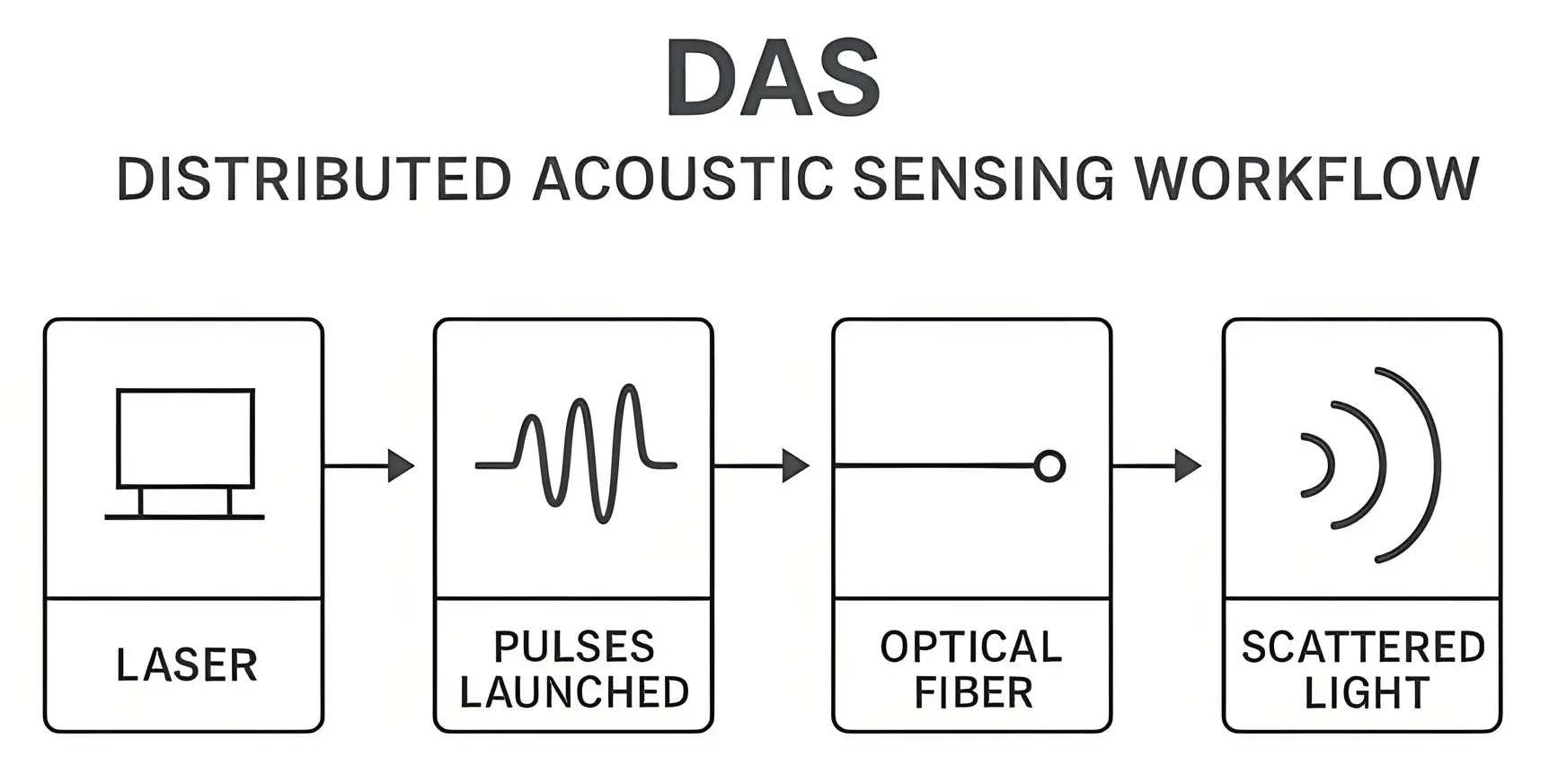
What is a DAS Distributed Acoustic Sensing System? Principles and Application Analysis
In the field of optical fiber sensing technology, the DAS (Distributed Acoustic Sensing) system has emerged as a pivotal technology with rapid development in recent years. By utilizing the optical fiber itself as the sensing element, a DAS system enables continuous, real-time, and long-distance monitoring of vibration and acoustic signals along the fiber. This capability has led to its widespread application in fields such as oil pipeline monitoring, railway safety monitoring, perimeter security, and seismic monitoring.
Release Date: 2026-03-13
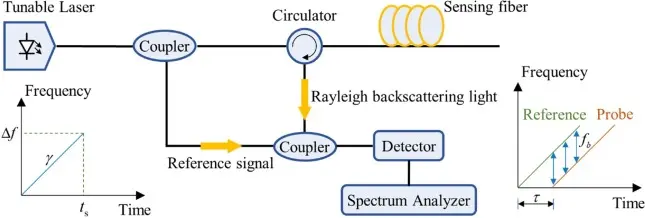
OFDR vs. OTDR: What's the Difference? A Comprehensive Comparison of Principles and Applications
In the fields of optical fiber testing and fiber optic sensing, OTDR (Optical Time Domain Reflectometer) and OFDR (Optical Frequency Domain Reflectometer) are two critically important measurement technologies.
Release Date: 2026-03-09
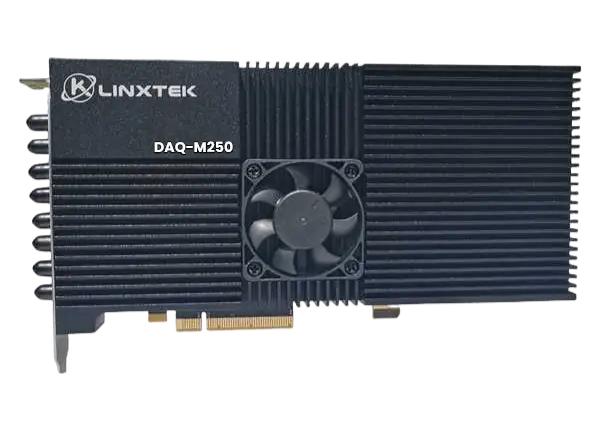
Core Technologies and Selection Guide for High-Speed Data Acquisition Cards
With the advancement of optoelectronic measurement techniques, Distributed Acoustic Sensing (DAS), radar signal processing, and scientific experimental equipment, the High-Speed Data Acquisition Card (DAQ) has become a core component in many high-end instrumentation systems. The performance of the data acquisition card directly dictates the system's signal acquisition capability, measurement precision, and real-time processing power.
Release Date: 2026-03-04
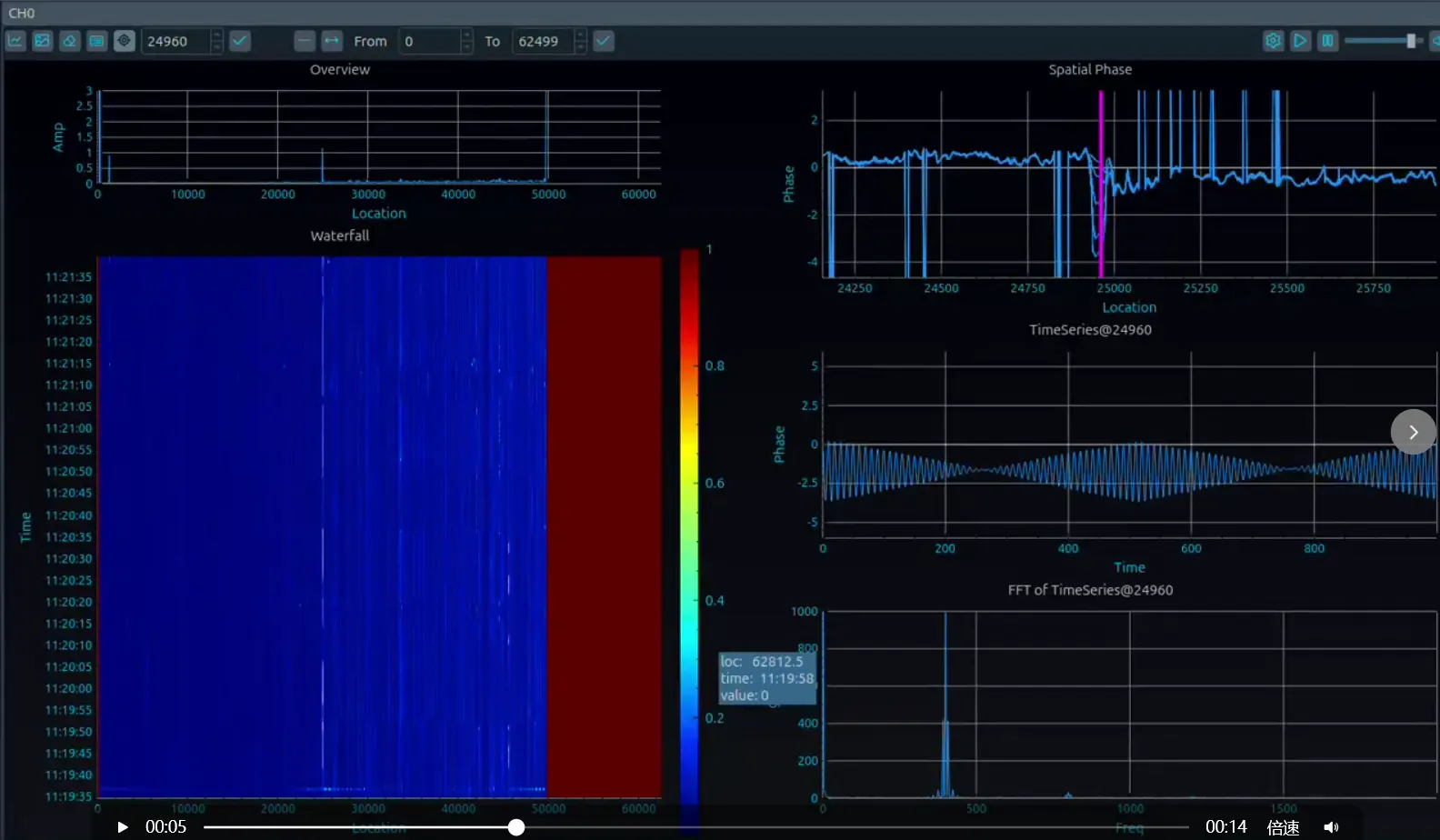
Engineering Methods for Enhancing DAS Signal-to-Noise Ratio (SNR)
Engineering Optimization Practices for Distributed Acoustic Sensing (DAS) Systems In a Distributed Acoustic Sensing (DAS) system, the Signal-to-Noise Ratio (SNR) directly dictates the achievable sensing distance, spatial resolution, capability to detect weak vibrations, false positive and false negative rates, and the efficacy of post-processing algorithms. Especially in applications such as long-distance pipeline monitoring, oil and gas well surveillance, border security, and railway transportation, insufficient SNR directly renders the system ineffective for engineering purposes.
Release Date: 2026-02-28

Engineering Practice of DAS in Utility Tunnel Vibration Monitoring
As the scale of urban underground utility tunnels continues to expand, achieving 24/7 online monitoring of structural integrity, external construction disturbances, and unauthorized intrusion has emerged as a critical challenge in the development of smart cities.
Release Date: 2026-02-25
Comparison of DAS and FBG Vibration Monitoring Technologies
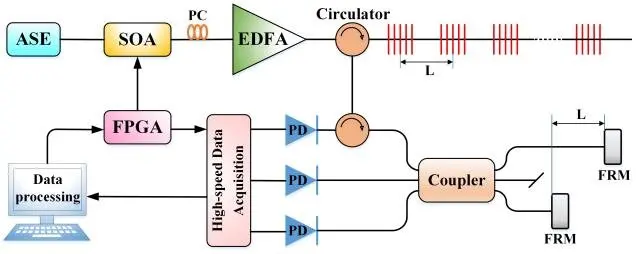
With the widespread adoption of fiber optic sensing technology in fields such as rail transit, pipeline security, perimeter intrusion detection, and structural health monitoring, Distributed Acoustic Sensing (DAS) and Fiber Bragg Grating (FBG) based vibration monitoring have emerged as the two most frequently compared solutions by end-users.
Release Date: 2026-02-14