
 Follow Official WeChat


Impact and Suppression Applications of Coherent Fading in Distributed Acoustic Sensing (DAS) Systems
I. What is Coherent Fading?
In a Distributed Acoustic Sensing (DAS) system, the system achieves distributed perception of vibration or acoustic information along the optical fiber by injecting narrow-linewidth coherent laser pulses into the fiber, receiving the backscattered signals from a multitude of Rayleigh scattering points within the fiber, and demodulating their phase or intensity variations.
Coherent Fading is one of the most typical and critical performance-limiting factors in DAS systems.
Its fundamental cause lies in:
-
The presence of a large number of randomly distributed Rayleigh scattering points within the fiber;
-
The backscattered light from each scattering point exhibits coherence from the same light source;
-
The random superposition of phases from different scattering points leads to, at certain spatial locations:
-
Constructive Interference → Signal Enhancement
-
Destructive Interference → Signal Becomes Extremely Weak or Even "Disappears"
-
This phenomenon of random signal amplitude fluctuations caused by coherent interference is termed Coherent Fading.
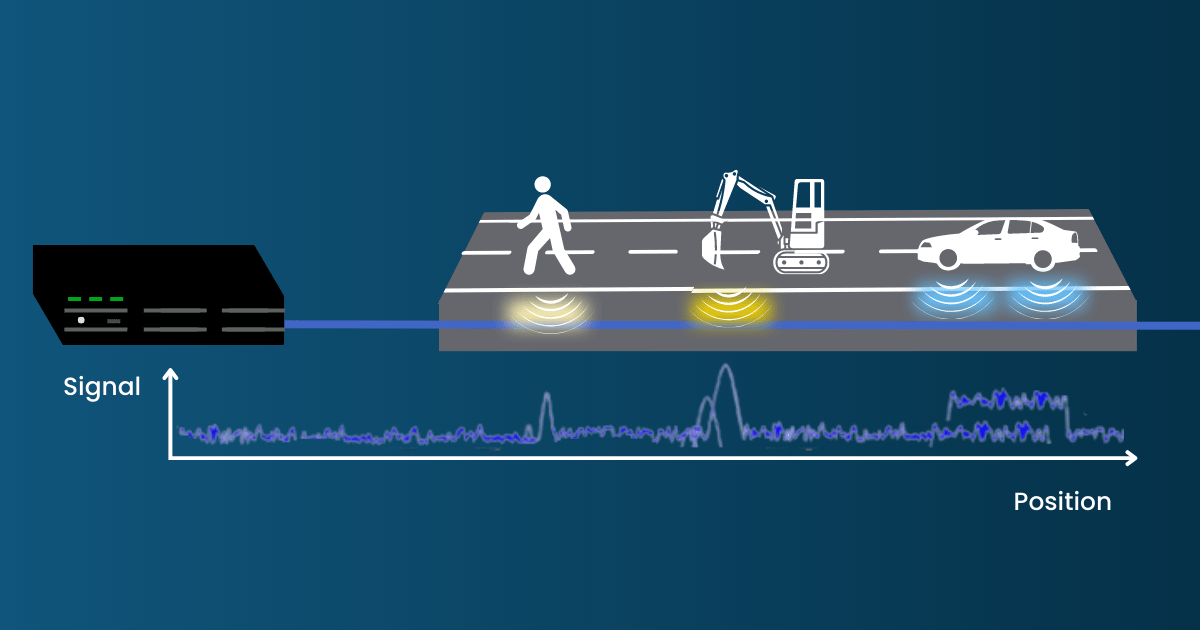
II. Impact of Coherent Fading on DAS Systems
In engineering applications, coherent fading directly affects the stability, sensitivity, and reliability of DAS systems, primarily manifested in the following aspects:
1. Limited Effective Detection Range
When severe coherent fading occurs at a specific spatial location, the backscattered signal amplitude approaches the noise floor, rendering the effective extraction of phase or vibration information impossible at that location, forming so-called "blind zones".
2. Degraded Spatial Consistency
Coherent fading exhibits a random distribution along the fiber, leading to significant variations in the signal-to-noise ratio (SNR) at different positions and consequently degrading the response uniformity of the entire fiber link.
3. Reduced Detection Capability for Weak Events
In applications such as oil/gas pipeline leak detection, perimeter intrusion detection, and seismic microtremor monitoring, the target signals are often very weak. If the target location coincides with a coherent fading region, it is highly susceptible to being淹没 by system noise.
4. Constraints on System Parameter Optimization
To mitigate coherent fading, conventional systems often need to compromise between:
-
Spatial Resolution
-
Detection Range
-
Dynamic Range
making it difficult to achieve optimal performance in all aspects simultaneously.
III. Physical Mechanism of Coherent Fading
From a physical perspective, coherent fading originates from the coherent superposition of multiple scattering centers:
-
A single resolution cell contains numerous Rayleigh scattering points;
-
The reflection amplitude and phase from each scattering point are random;
-
The receiver obtains the vector sum of the complex amplitudes from all scattering points;
Deep fading occurs when the phase distribution of these scattering points恰好满足 the condition for destructive interference.
It is noteworthy that:
-
Coherent fading is independent of the inherent quality of the fiber;
-
Even an ideal fiber cannot avoid it;
-
The fading locations shift with changes in the light source's wavelength and polarization state.
IV. Typical Mitigation Approaches for Coherent Fading in DAS Systems
Addressing the issue of coherent fading, the industry and engineering practice have primarily developed the following categories of mitigation approaches:
1. Multi-Frequency / Multi-Wavelength Averaging
By varying the center wavelength or frequency of the transmitted light, the locations of coherent fading shift. Subsequently, averaging multiple measurement results reduces the probability of fading.
Advantages:
-
Clear principle
-
Significant mitigation effect
Limitations:
-
Increased system complexity
-
Limited real-time capability
-
Not ideal for high-speed dynamic signals
2. Polarization Diversity Techniques
Since Rayleigh scattering is sensitive to polarization state, the locations of coherent fading are not entirely consistent under different polarization states.
Through:
-
Polarization multiplexing
-
Polarization diversity reception
-
Polarization decorrelation processing
The problem of signal nulls caused by coherent fading can be alleviated to a certain extent.
3. Phase Demodulation and Algorithmic Compensation
Coherent fading primarily manifests as amplitude reduction, but the phase information is not completely lost in all cases.
Via:
-
High dynamic range ADC
-
Precise phase demodulation algorithms
-
Noise-adaptive modeling
Effective information can be recovered from weak signals to a certain degree.
4. System-Level Anti-Coherent-Fading Architecture Design (Key for Engineering Applications)
In practical high-performance DAS systems, coherent fading mitigation is often not a single technique but a system-level comprehensive design, including:
-
Light source stability and linewidth optimization
-
Dynamic range design of transmission and reception chains
-
High-speed, high-precision ADC/DAC configuration
-
Real-time anti-fading algorithms in FPGA
-
Multi-dimensional signal fusion and statistical enhancement
This type of system-level design is a key differentiator between experimental DAS systems and industrial-grade DAS products.
V. The Value of Coherent Fading Mitigation in Engineering Applications
In scenarios such as oil & gas, security, and infrastructure monitoring, the coherent fading mitigation capability directly determines whether a system is "usable":
-
Oil/Gas Pipeline Monitoring: Reduces the risk of missed detection along the pipeline
-
Perimeter Security: Avoids intrusion blind zones
-
Seismic and Microtremor Monitoring: Enhances the ability to identify weak seismic events
-
Long-Distance Link Monitoring: Ensures consistency and stability along the entire link
Especially in ultra-long distance, high sensitivity, and complex environment applications, anti-coherent-fading capability has become one of the core competitive advantages of high-end DAS systems.
More Blog Videos
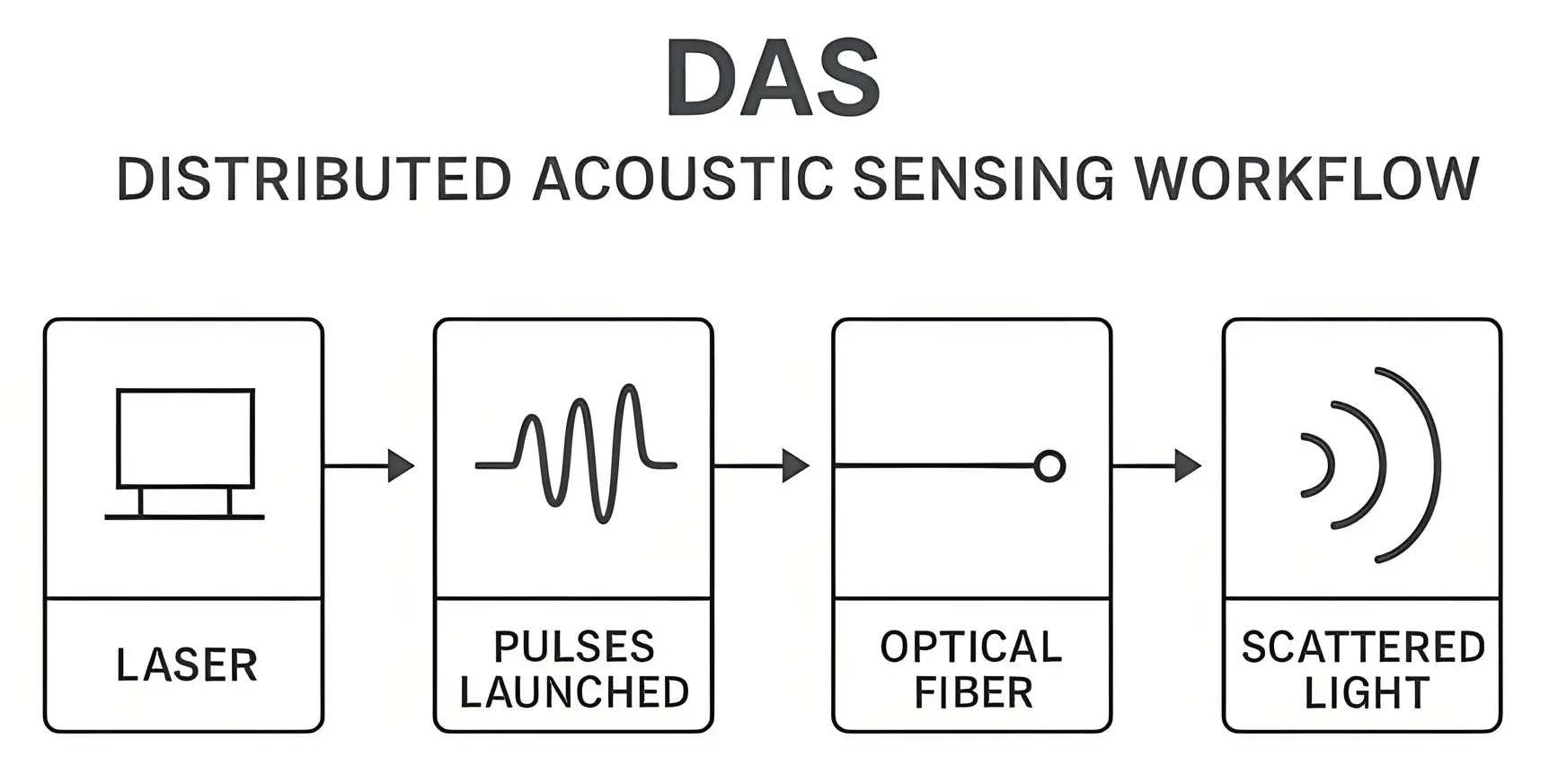
What is a DAS Distributed Acoustic Sensing System? Principles and Application Analysis
In the field of optical fiber sensing technology, the DAS (Distributed Acoustic Sensing) system has emerged as a pivotal technology with rapid development in recent years. By utilizing the optical fiber itself as the sensing element, a DAS system enables continuous, real-time, and long-distance monitoring of vibration and acoustic signals along the fiber. This capability has led to its widespread application in fields such as oil pipeline monitoring, railway safety monitoring, perimeter security, and seismic monitoring.
Release Date: 2026-03-13
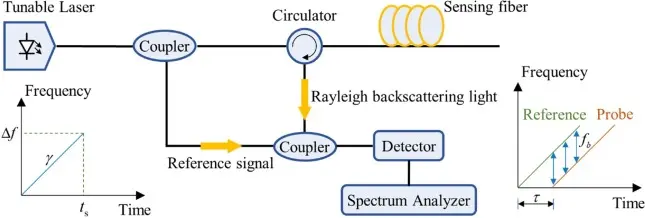
OFDR vs. OTDR: What's the Difference? A Comprehensive Comparison of Principles and Applications
In the fields of optical fiber testing and fiber optic sensing, OTDR (Optical Time Domain Reflectometer) and OFDR (Optical Frequency Domain Reflectometer) are two critically important measurement technologies.
Release Date: 2026-03-09
Core Technologies and Selection Guide for High-Speed Data Acquisition Cards
With the advancement of optoelectronic measurement techniques, Distributed Acoustic Sensing (DAS), radar signal processing, and scientific experimental equipment, the High-Speed Data Acquisition Card (DAQ) has become a core component in many high-end instrumentation systems. The performance of the data acquisition card directly dictates the system's signal acquisition capability, measurement precision, and real-time processing power.
Release Date: 2026-03-04
Engineering Methods for Enhancing DAS Signal-to-Noise Ratio (SNR)
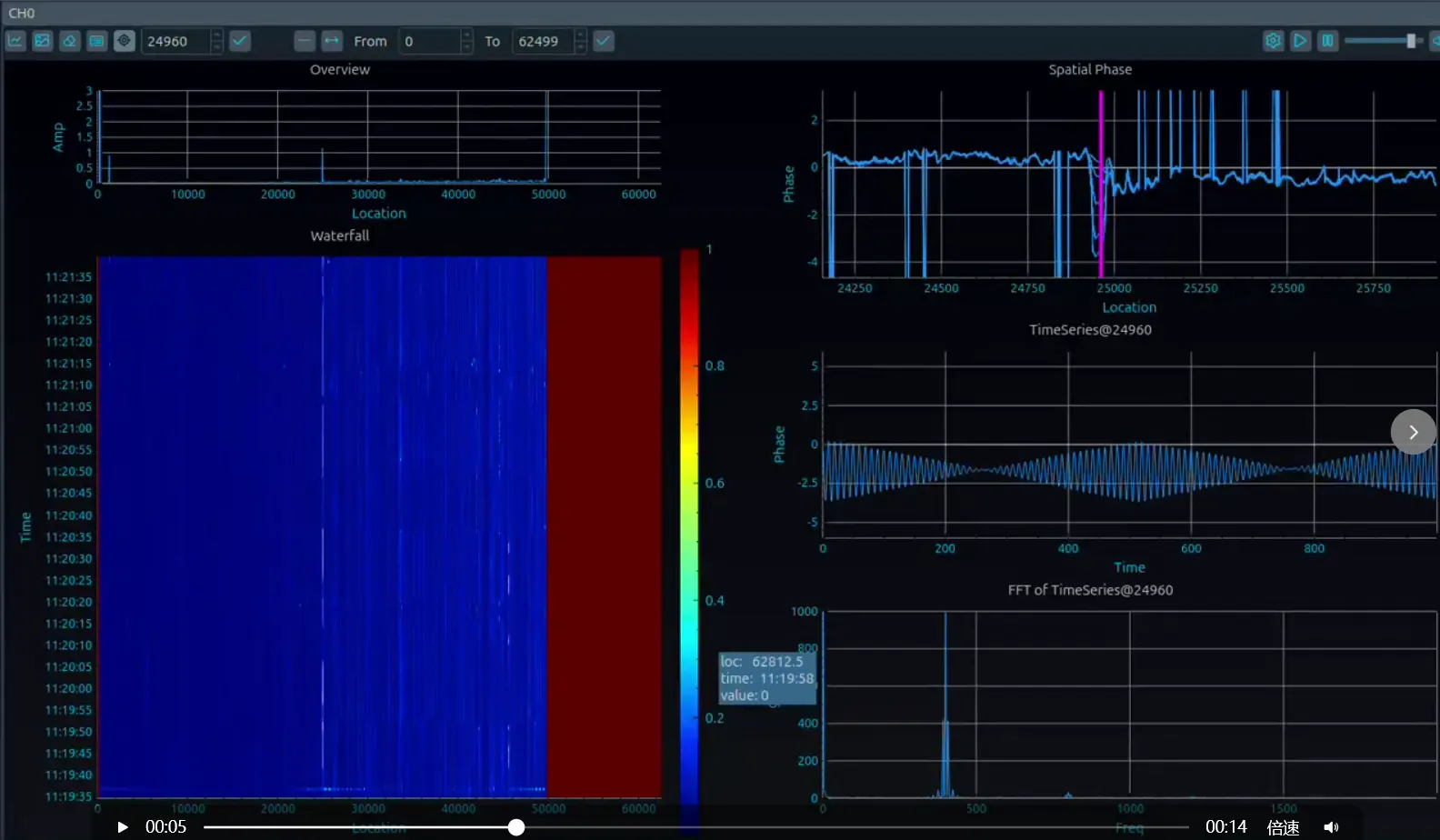
Engineering Optimization Practices for Distributed Acoustic Sensing (DAS) Systems In a Distributed Acoustic Sensing (DAS) system, the Signal-to-Noise Ratio (SNR) directly dictates the achievable sensing distance, spatial resolution, capability to detect weak vibrations, false positive and false negative rates, and the efficacy of post-processing algorithms. Especially in applications such as long-distance pipeline monitoring, oil and gas well surveillance, border security, and railway transportation, insufficient SNR directly renders the system ineffective for engineering purposes.
Release Date: 2026-02-28

Engineering Practice of DAS in Utility Tunnel Vibration Monitoring
As the scale of urban underground utility tunnels continues to expand, achieving 24/7 online monitoring of structural integrity, external construction disturbances, and unauthorized intrusion has emerged as a critical challenge in the development of smart cities.
Release Date: 2026-02-25
Comparison of DAS and FBG Vibration Monitoring Technologies
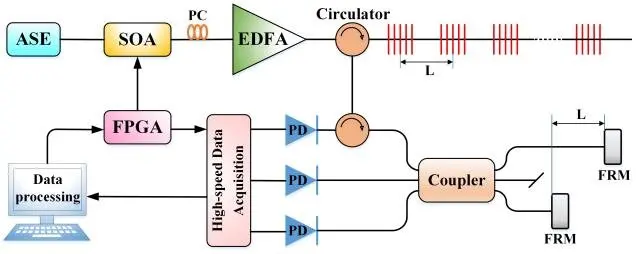
With the widespread adoption of fiber optic sensing technology in fields such as rail transit, pipeline security, perimeter intrusion detection, and structural health monitoring, Distributed Acoustic Sensing (DAS) and Fiber Bragg Grating (FBG) based vibration monitoring have emerged as the two most frequently compared solutions by end-users.
Release Date: 2026-02-14