
 Follow Official WeChat


Integrated DAS Optical Module
Product Details
Product Overview
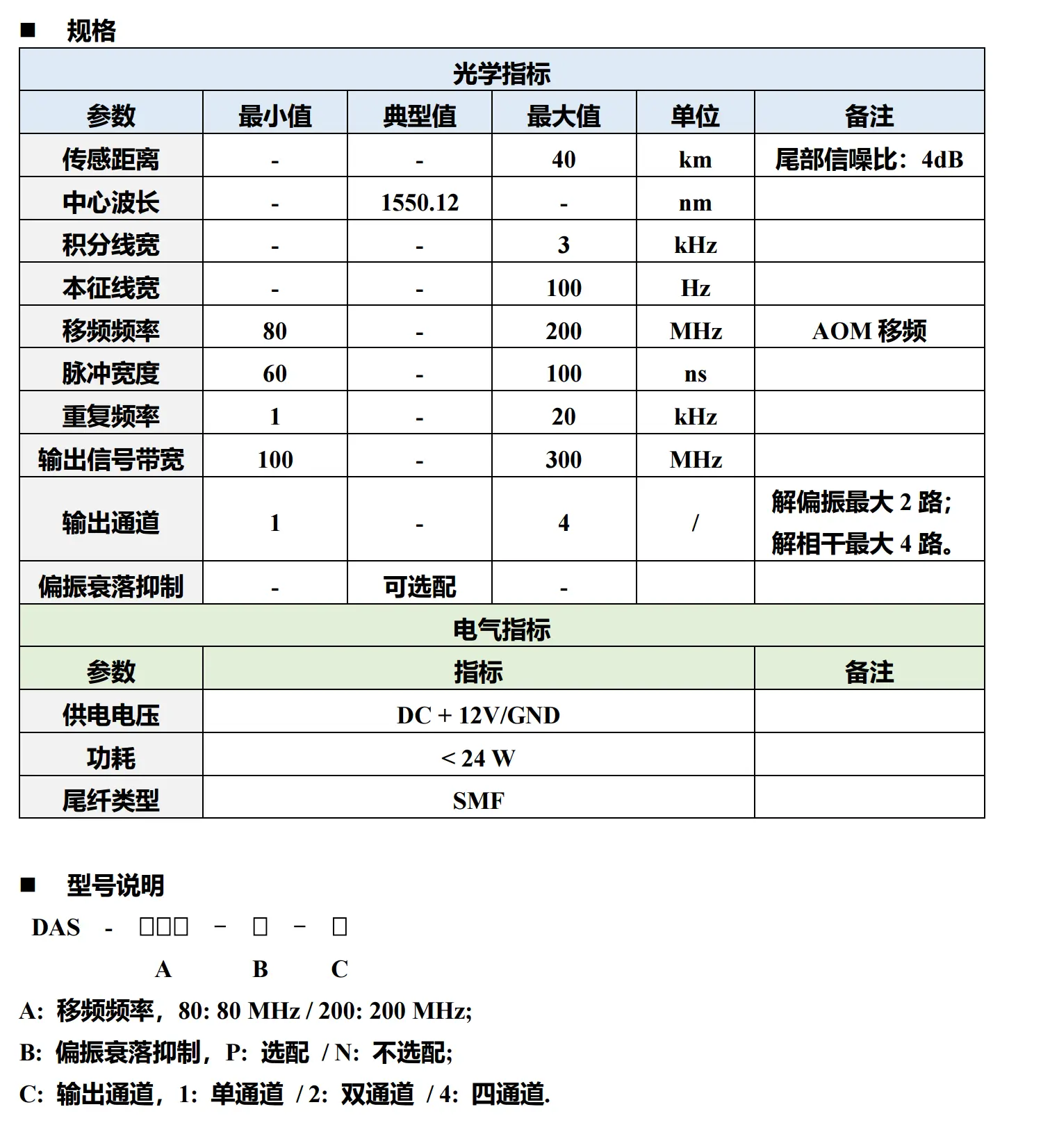
To facilitate researchers, system developers, and product engineers in the field of optical fiber sensing to more conveniently build their own Distributed Acoustic Sensing (DAS) systems, Shanghai Kunlian Technology introduces the All-in-One DAS Module. This module integrates key optoelectronic components from traditional DAS systems—such as complex light sources, modulation units, amplifiers, and control circuits—into a compact structure roughly the size of a "thick book," significantly simplifying the system setup process.
Users only need to pair it with a high-speed data acquisition card installed in an industrial PC (or standard PC) to complete all hardware preparations for the DAS system. Subsequent development efforts can then focus on implementing the host computer software, signal processing algorithms, and system application logic. Shanghai Kunlian Technology also provides complimentary technical support services to assist you in rapidly validating and integrating the DAS system.
Target Users
Optical Fiber Sensing System Manufacturers: Those with existing DAS or DVS product lines who wish to reduce hardware costs, achieve system redesign, or optimization while ensuring performance.
System Integrators and Solution Providers: Organizations with industry expertise, implementation resources, and software development capabilities, aiming to transition from procuring others' products to launching their own branded DAS systems.
Universities and Research Institutions: Entities with algorithm and signal processing expertise, in the process of building distributed optical fiber sensing experimental platforms, seeking to implement a complete system within a constrained budget.
Other Developers and Innovation Teams:
Those needing to rapidly validate concepts or prototype systems, seeking a plug-and-play DAS core module as
a starting point for R&D.
Product Features
✅ High Integration, One-Stop Solution
The module internally integrates key components of a DAS system, including:
High-Coherence Laser (Narrow Linewidth Laser)
Acousto-Optic Modulator (AOM)
Erbium-Doped Fiber Amplifier (EDFA)
Optional Raman Amplification Module (Raman)
Control Logic and Synchronization Interface
All components are designed for professional system integration. Internal optical paths, power control, and temperature control systems are precisely calibrated to ensure stable operation out of the box.
✅ Modular Design for Flexible Adaptation to Various Scenarios
To meet performance requirements such as sensing distance and signal-to-noise ratio (SNR) for different application scenarios (e.g., urban monitoring, oil & gas pipelines, high-speed rail lines), the DAS module supports multiple configuration options and customization:
Long-Range Mode (paired with high-gain EDFA and Raman amplifier)
Short/Medium-Range Cost-Effective Mode
Multi-Channel Synchronous Emission Mode
✅ Multiple Control Methods for Easy Integration
Supports standardized communication interfaces (e.g., TTL, RS232, Ethernet control). Provided with accompanying APIs and control protocol documentation for easy host computer integration and secondary development.
✅ Stable and Reliable, Adaptable to Harsh Environments
All optical components are selected from industrial-grade original manufacturer parts, suitable for wide-temperature and wide-input-voltage power environments.
High-stability packaging suitable for industrial settings with vibration, dust, and temperature variations.
The system features self-diagnostic functions such as automatic power adjustment, temperature control protection, and status monitoring.
More Blog Videos
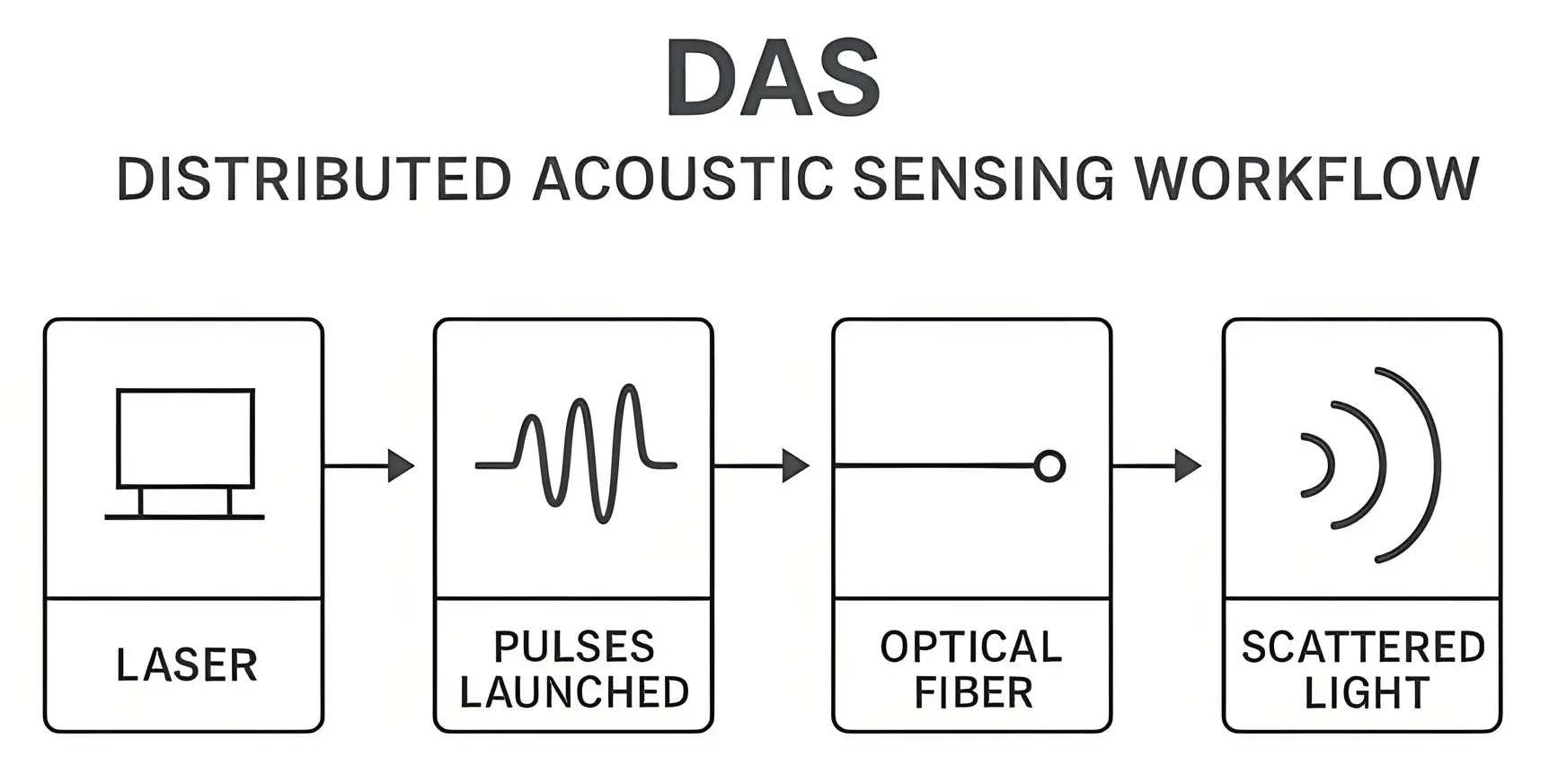
What is a DAS Distributed Acoustic Sensing System? Principles and Application Analysis
In the field of optical fiber sensing technology, the DAS (Distributed Acoustic Sensing) system has emerged as a pivotal technology with rapid development in recent years. By utilizing the optical fiber itself as the sensing element, a DAS system enables continuous, real-time, and long-distance monitoring of vibration and acoustic signals along the fiber. This capability has led to its widespread application in fields such as oil pipeline monitoring, railway safety monitoring, perimeter security, and seismic monitoring.
Release Date: 2026-03-13
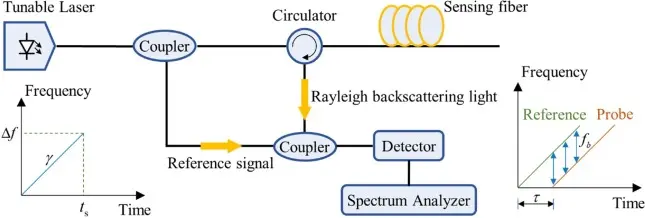
OFDR vs. OTDR: What's the Difference? A Comprehensive Comparison of Principles and Applications
In the fields of optical fiber testing and fiber optic sensing, OTDR (Optical Time Domain Reflectometer) and OFDR (Optical Frequency Domain Reflectometer) are two critically important measurement technologies.
Release Date: 2026-03-09
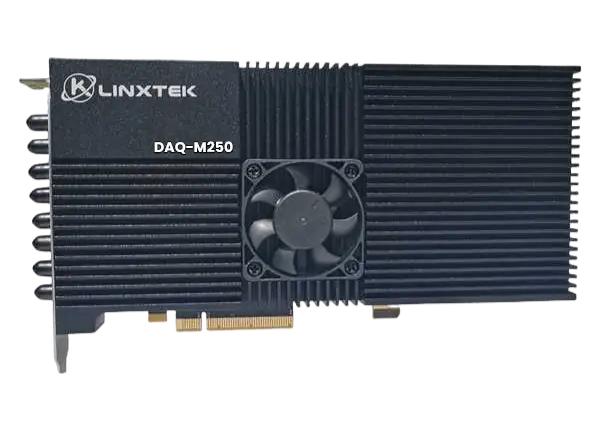
Core Technologies and Selection Guide for High-Speed Data Acquisition Cards
With the advancement of optoelectronic measurement techniques, Distributed Acoustic Sensing (DAS), radar signal processing, and scientific experimental equipment, the High-Speed Data Acquisition Card (DAQ) has become a core component in many high-end instrumentation systems. The performance of the data acquisition card directly dictates the system's signal acquisition capability, measurement precision, and real-time processing power.
Release Date: 2026-03-04
Engineering Methods for Enhancing DAS Signal-to-Noise Ratio (SNR)
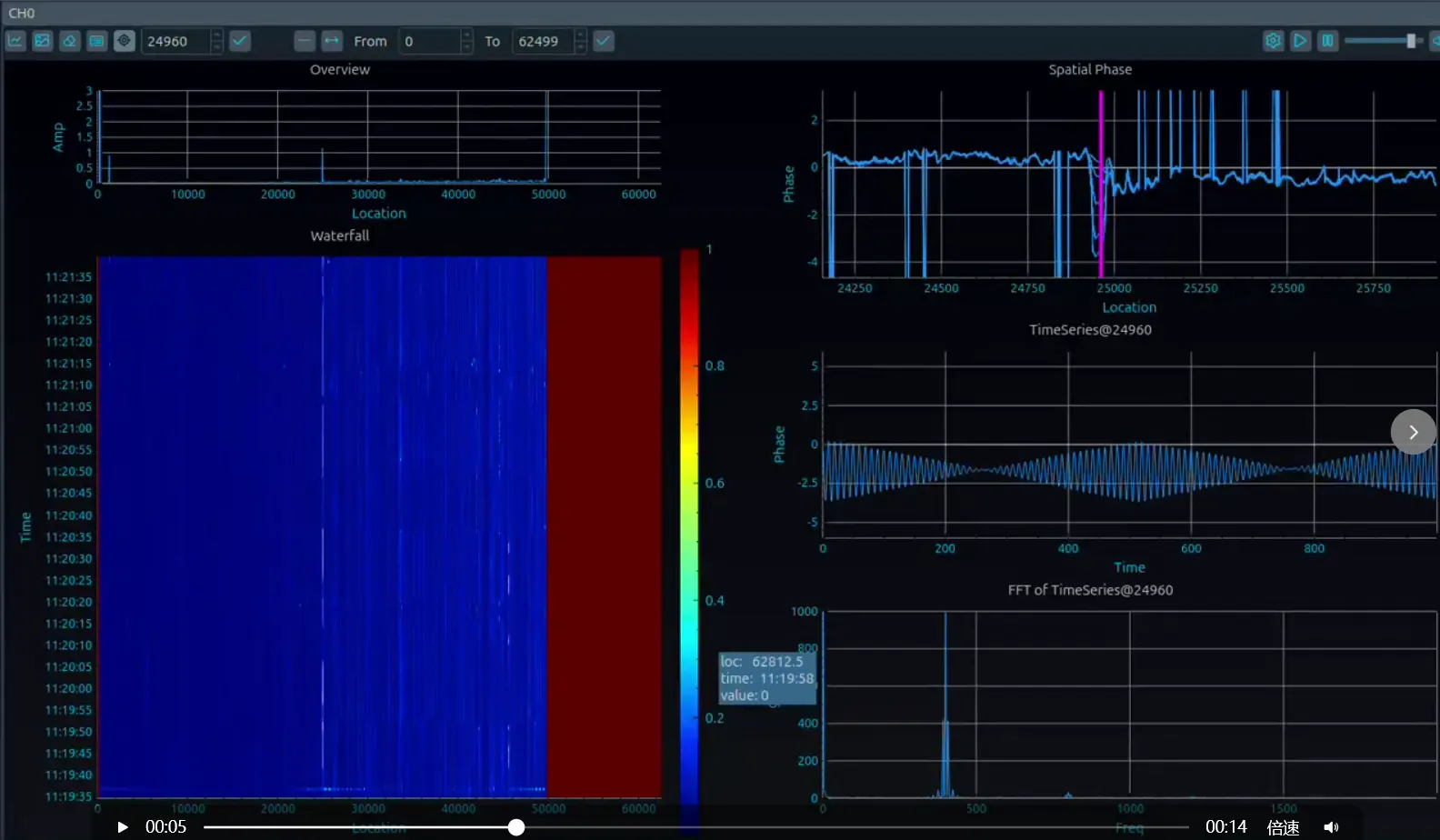
Engineering Optimization Practices for Distributed Acoustic Sensing (DAS) Systems In a Distributed Acoustic Sensing (DAS) system, the Signal-to-Noise Ratio (SNR) directly dictates the achievable sensing distance, spatial resolution, capability to detect weak vibrations, false positive and false negative rates, and the efficacy of post-processing algorithms. Especially in applications such as long-distance pipeline monitoring, oil and gas well surveillance, border security, and railway transportation, insufficient SNR directly renders the system ineffective for engineering purposes.
Release Date: 2026-02-28

Engineering Practice of DAS in Utility Tunnel Vibration Monitoring
As the scale of urban underground utility tunnels continues to expand, achieving 24/7 online monitoring of structural integrity, external construction disturbances, and unauthorized intrusion has emerged as a critical challenge in the development of smart cities.
Release Date: 2026-02-25
Comparison of DAS and FBG Vibration Monitoring Technologies
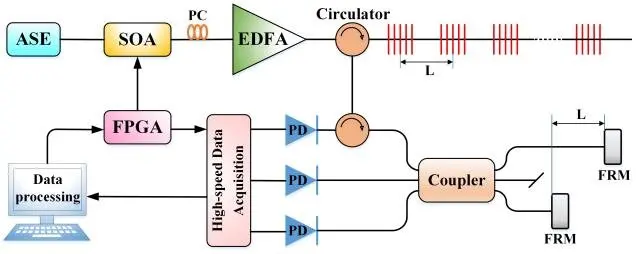
With the widespread adoption of fiber optic sensing technology in fields such as rail transit, pipeline security, perimeter intrusion detection, and structural health monitoring, Distributed Acoustic Sensing (DAS) and Fiber Bragg Grating (FBG) based vibration monitoring have emerged as the two most frequently compared solutions by end-users.
Release Date: 2026-02-14