
 Follow Official WeChat


Application of Distributed Acoustic Sensing (DAS) in New Factory Renovation Projects
Application of DAS (Distributed Acoustic Sensing) in New Factory Building Renovation
1. Background Overview
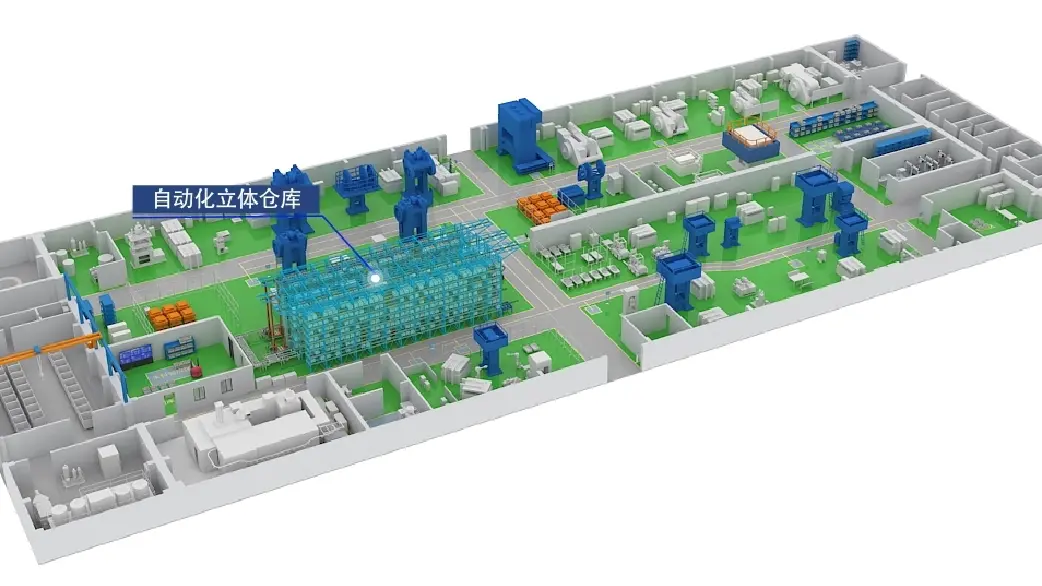
During the construction of new factory buildings or the renovation of existing ones, characteristics such as complex construction vibrations, densely packed pipelines, stringent structural safety requirements, and tight construction schedules are often present. Particularly in industries like high-end manufacturing, electronics and semiconductors, energy and chemical engineering, and biopharmaceuticals, new factory buildings typically integrate numerous underground utility tunnels, pressure pipelines, cable trays, and precision equipment. This imposes higher demands for monitoring vibrations, abnormal intrusions, and structural safety during the construction process.
Traditional monitoring methods (such as point-type vibration sensors, manual inspections, or video surveillance) suffer from issues like limited coverage, high installation and maintenance costs, and insufficient real-time capability, making it difficult to meet the needs of large-scale, continuous, and detailed monitoring.
The Distributed Acoustic Sensing (DAS) system, utilizing the optical fiber itself as the sensing medium, provides a comprehensive, real-time, and long-term online monitoring solution for new factory building renovations.
2. Brief Overview of DAS Technical Principle
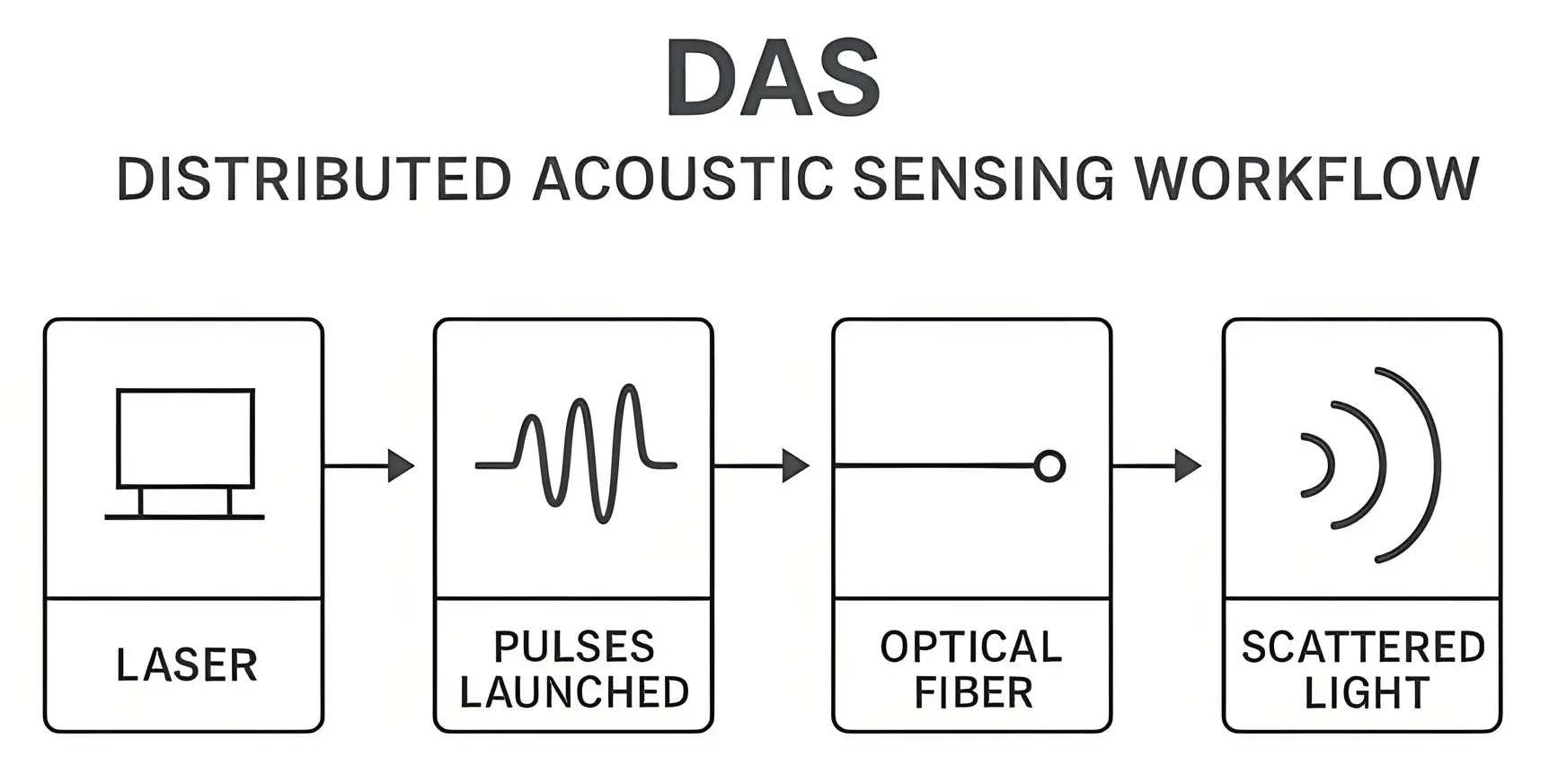
The DAS system is based on the principle of coherent Rayleigh scattering. It injects narrow-linewidth laser pulses into standard single-mode optical fiber and collects the backscattered signals from all points along the fiber. When external vibrations, impacts, or acoustic waves occur, they induce local strain changes in the fiber, which in turn alter the phase or intensity of the scattered signal.
Through high-speed data acquisition and signal processing algorithms, the DAS system transforms the entire fiber into a continuously distributed "virtual sensor array", enabling precise localization and characteristic identification of vibration events.
Its core advantages include:
✅ A single fiber can achieve continuous monitoring over several to tens of kilometers
✅ Spatial resolution can reach meter-level or higher
✅ Supports all-weather, maintenance-free, real-time monitoring
✅ Suitable for complex environments and harsh operating conditions
3. Typical Application Scenarios in New Factory Building Renovation
3.1 Construction Vibration Monitoring and Structural Safety Assessment
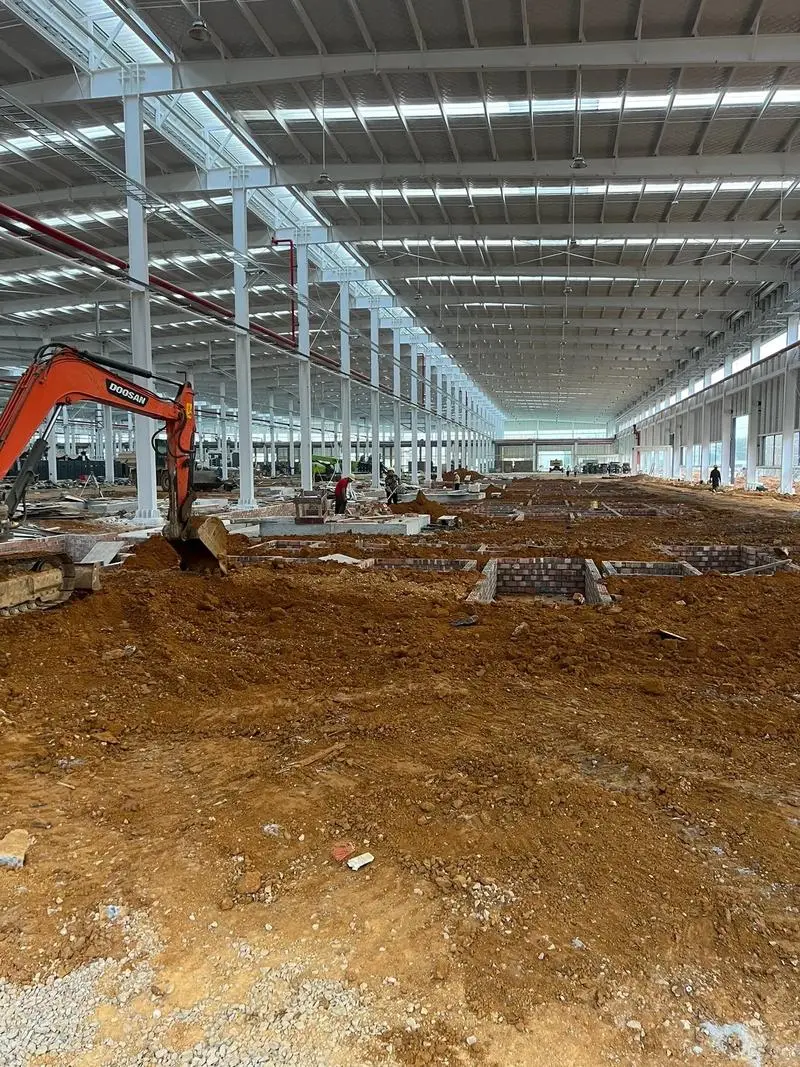
During factory renovation, construction activities such as piling, demolition, cutting, and drilling generate continuous or transient vibrations that may impact existing structures, equipment foundations, or adjacent buildings.
By deploying optical fiber along building foundations, floor slabs, or key structural components, the DAS system enables:
✅ Real-time monitoring of construction vibration intensity and spectral characteristics
✅ Spatial localization and temporal recording of vibration events
✅ Automatic alarm triggering for abnormal vibrations
✅ This provides reliable data support for risk assessment, construction process optimization, and responsibility attribution during the construction phase.
3.2 Safety Monitoring for Underground Pipelines and Utility Tunnels
New factory buildings often contain numerous underground water supply and drainage pipelines, gas pipelines, process piping, and utility tunnels. Accidental excavation, impact, or leakage during renovation poses serious safety hazards.
The DAS system, with fiber deployed along pipelines or within tunnels, enables:
✅ Detection of construction machinery proximity and abnormal excavation activities
✅ Monitoring of abnormal pipeline vibrations and impacts
✅ Early warning for events like leaks or ruptures
Compared to traditional point-sensing solutions, DAS offers the significant advantage of long-distance, gap-free coverage.
3.3 Perimeter and Construction Zone Intrusion Monitoring
During factory renovation, construction areas often face challenges such as complex personnel traffic and difficult management. By deploying fiber on fences, walls, or ground surfaces, DAS can achieve real-time monitoring and alarm generation for:
✅ Unauthorized climbing or scaling
✅ Nocturnal abnormal intrusion
✅ Illegal entry into restricted construction zones
This effectively enhances safety management during the construction phase.
3.4 Protection of Precision Equipment and Sensitive Areas
For factories involved in semiconductors, precision manufacturing, or laboratories, certain equipment is highly sensitive to vibration. The DAS system can perform high-sensitivity vibration monitoring around critical equipment for:
✅ Construction impact assessment
✅ Equipment operating environment monitoring
✅ Vibration limit exceedance alarms
This assists users in achieving parallel operation of construction and production safety during the renovation process.
4. Core Advantages of Applying DAS in Factory Building Renovation
✅ Construction-Friendly: Can utilize existing communication fiber or be installed concurrently, offering flexible deployment with minimal disruption to construction.
✅ Full-Lifecycle Monitoring: Applicable during the construction phase and extendable to long-term operational monitoring after the factory becomes operational.
✅ High Reliability: Fiber is passive and intrinsically safe, suitable for environments with strong electromagnetic interference or flammable/explosive hazards.
✅ High Data Value: Supports raw data and demodulated data output, facilitating in-depth analysis and system integration.
5. Application Value and Future Outlook
As new industrial facilities evolve towards intelligent, digital, and unmanned operations, DAS is gradually transitioning from an "auxiliary monitoring tool" to a fundamental sensing infrastructure.
In the context of new factory building renovation, DAS not only enhances construction safety and management efficiency but also lays a solid data foundation for future plant operation, asset management, and intelligent maintenance, offering significant economic and social value.
In the future, combined with AI-powered intelligent recognition algorithms, digital twin platforms, and multi-sensor fusion technologies, the application potential of DAS in the industrial facility domain will be further unlocked.
More Blog Videos
What is a DAS Distributed Acoustic Sensing System? Principles and Application Analysis
In the field of optical fiber sensing technology, the DAS (Distributed Acoustic Sensing) system has emerged as a pivotal technology with rapid development in recent years. By utilizing the optical fiber itself as the sensing element, a DAS system enables continuous, real-time, and long-distance monitoring of vibration and acoustic signals along the fiber. This capability has led to its widespread application in fields such as oil pipeline monitoring, railway safety monitoring, perimeter security, and seismic monitoring.
Release Date: 2026-03-13
OFDR vs. OTDR: What's the Difference? A Comprehensive Comparison of Principles and Applications
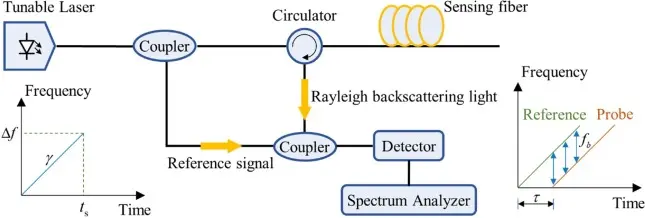
In the fields of optical fiber testing and fiber optic sensing, OTDR (Optical Time Domain Reflectometer) and OFDR (Optical Frequency Domain Reflectometer) are two critically important measurement technologies.
Release Date: 2026-03-09

Core Technologies and Selection Guide for High-Speed Data Acquisition Cards
With the advancement of optoelectronic measurement techniques, Distributed Acoustic Sensing (DAS), radar signal processing, and scientific experimental equipment, the High-Speed Data Acquisition Card (DAQ) has become a core component in many high-end instrumentation systems. The performance of the data acquisition card directly dictates the system's signal acquisition capability, measurement precision, and real-time processing power.
Release Date: 2026-03-04
Engineering Methods for Enhancing DAS Signal-to-Noise Ratio (SNR)
Engineering Optimization Practices for Distributed Acoustic Sensing (DAS) Systems In a Distributed Acoustic Sensing (DAS) system, the Signal-to-Noise Ratio (SNR) directly dictates the achievable sensing distance, spatial resolution, capability to detect weak vibrations, false positive and false negative rates, and the efficacy of post-processing algorithms. Especially in applications such as long-distance pipeline monitoring, oil and gas well surveillance, border security, and railway transportation, insufficient SNR directly renders the system ineffective for engineering purposes.
Release Date: 2026-02-28
Engineering Practice of DAS in Utility Tunnel Vibration Monitoring
As the scale of urban underground utility tunnels continues to expand, achieving 24/7 online monitoring of structural integrity, external construction disturbances, and unauthorized intrusion has emerged as a critical challenge in the development of smart cities.
Release Date: 2026-02-25
Comparison of DAS and FBG Vibration Monitoring Technologies
With the widespread adoption of fiber optic sensing technology in fields such as rail transit, pipeline security, perimeter intrusion detection, and structural health monitoring, Distributed Acoustic Sensing (DAS) and Fiber Bragg Grating (FBG) based vibration monitoring have emerged as the two most frequently compared solutions by end-users.
Release Date: 2026-02-14