


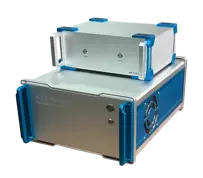
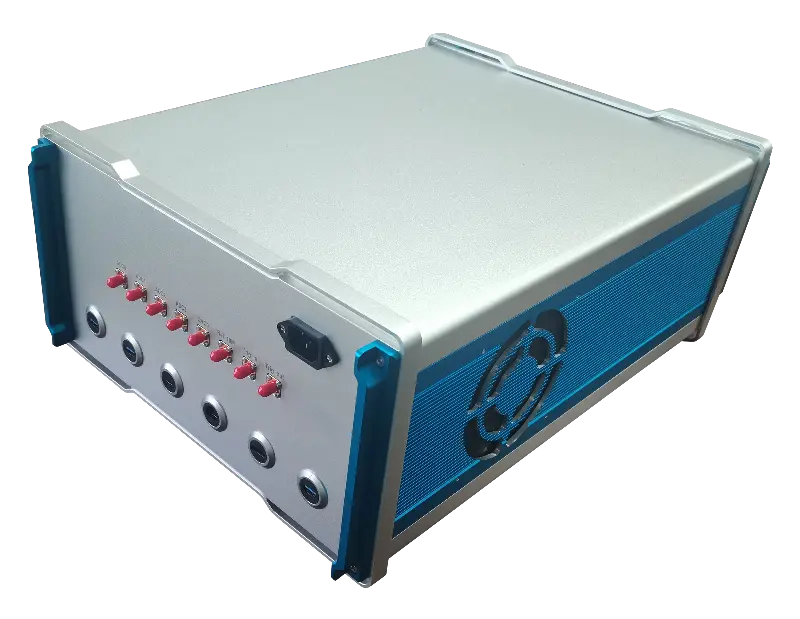
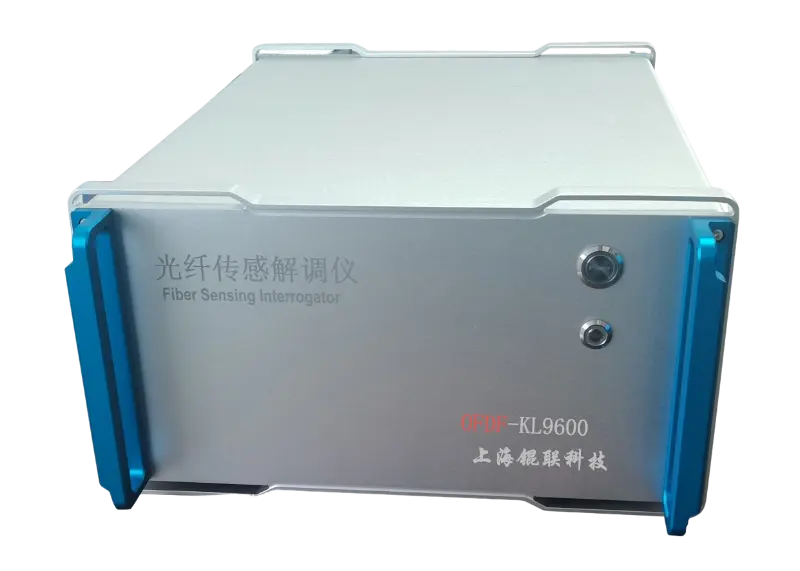
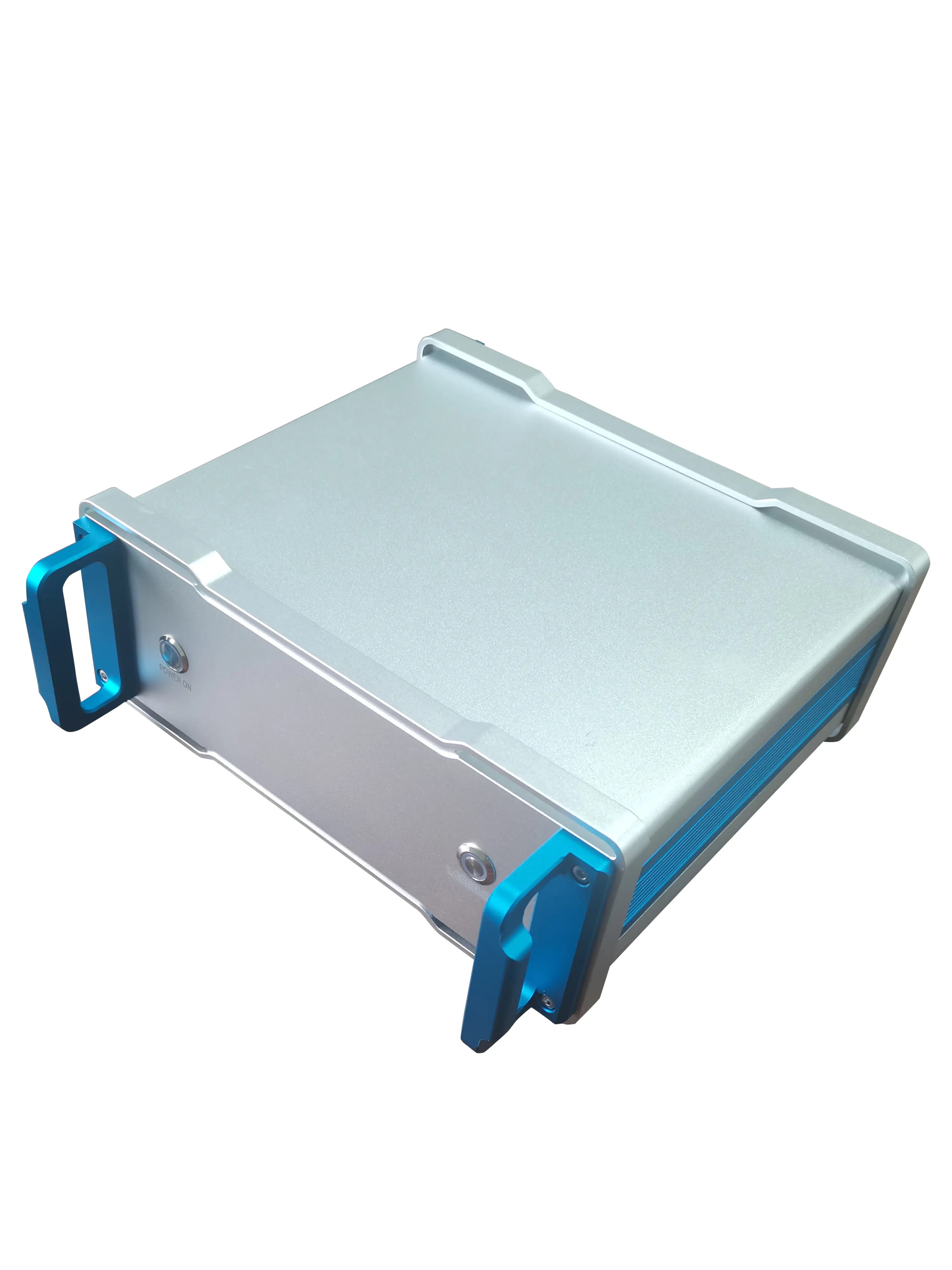
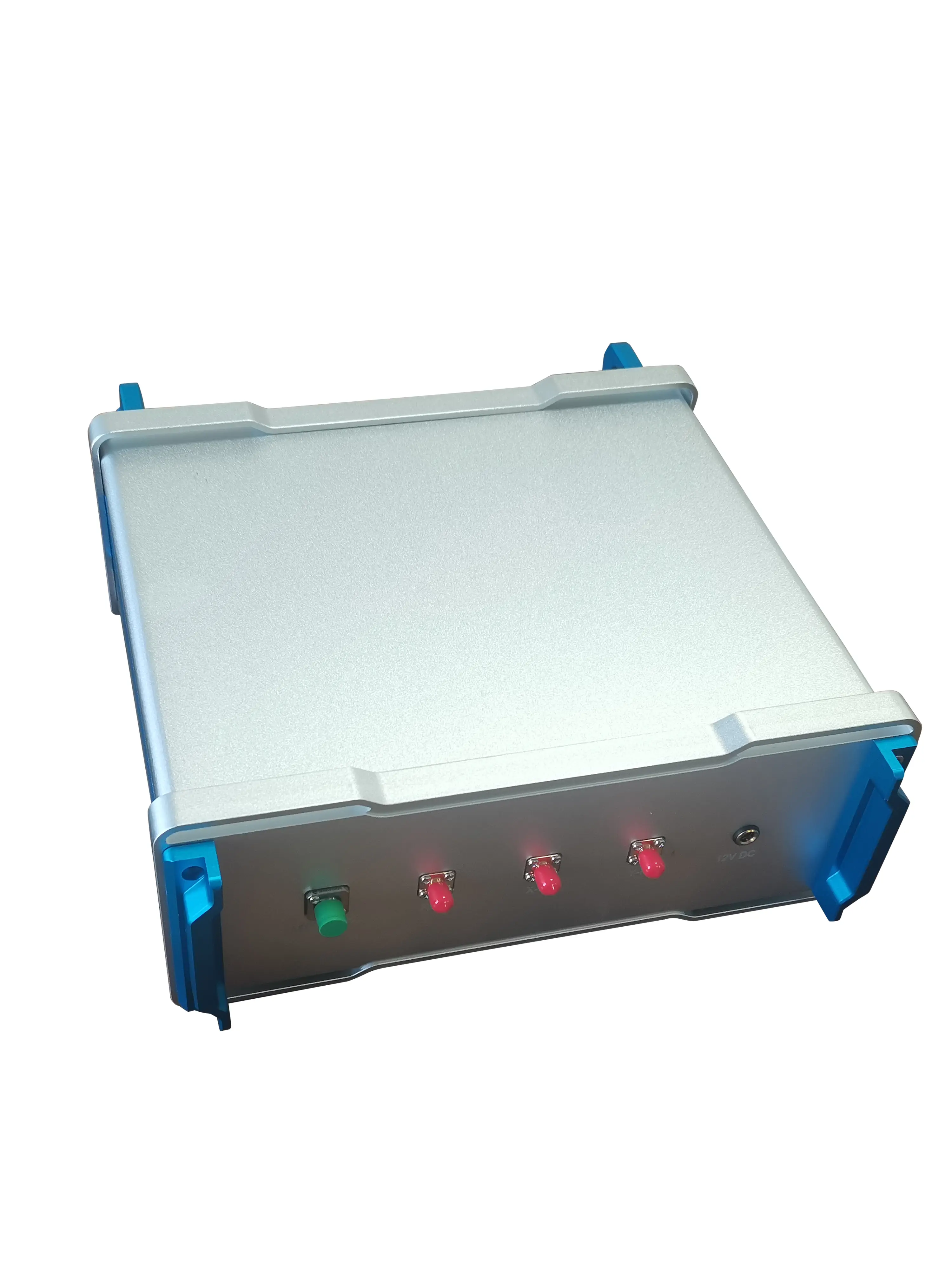
OFDR-KL9600 Demodulator


Product Details
Product Introduction
Optical Frequency Domain Reflectometry (OFDR) is a high-precision distributed optical fiber sensing technology based on the principle of frequency-domain interferometry. It enables sub-millimeter-level localization and quantitative sensing of minute strain and temperature changes along an optical fiber. The OFDR-KL9600 distributed optical fiber sensing system, independently developed by Shanghai Kunlian Technology, utilizes a narrow-linewidth, highly stable frequency-swept laser source combined with a high-dynamic-range interferometric reception link and an adaptive Rayleigh scattering spectral tracking algorithm. This configuration significantly enhances the system's signal-to-noise ratio and measurement stability while maintaining extremely high spatial resolution.
Unlike the pulse-based ranging mechanism of traditional OTDR systems, OFDR generates phase encoding within the scanning range via a frequency-modulated laser. It obtains the Rayleigh scattering reflection profile along the fiber length by performing an inverse Fourier transform on the spectral structure of the interference signals in the frequency domain. This profile acts as a unique "fingerprint" for every microscopic segment of the fiber. External disturbances, such as thermal expansion or structural strain, cause relative shifts in the scattering spectrum. These physical changes can be restored in real-time through high-precision phase difference analysis.
In terms of core hardware design, the system integrates a highly linear tuning control module, a low-noise photoelectric receiver, and a high-speed analog-to-digital conversion chain. It also employs an FPGA+DSP multi-level collaborative computing architecture for real-time spectral reconstruction and dynamic filtering of signals, effectively mitigating environmental disturbances and system drift. Its measurement accuracy, stability, and long-term repeatability all meet internationally advanced standards.
The OFDR-KL9600 distributed optical fiber sensing system can be deployed using standard telecommunication single-mode fibers, eliminating the need for specialized cables or sensing nodes. It offers exceptional system integration flexibility and long-term operational reliability, making it an ideal solution for high-resolution structural health monitoring, research on microscopic material properties, and precision engineering applications.
Core Features
✅
Ultra-High Spatial Resolution
Resolution as high as 10 μm ~ 1 mm, far exceeding traditional distributed optical fiber sensing systems.
✅
High-Sensitivity Strain Detection
Minimum strain resolution of 1 με, suitable for monitoring minute stress variations.
✅
High-Stability Measurement System
Built-in temperature control and reference channel design effectively suppress drift and noise.
✅
Non-Contact, Fully Distributed Sensing
Supports simultaneous multi-point/multi-segment analysis without requiring multiple independent sensors.
✅
Graphical Analysis Platform
Companion host computer software supports strain/temperature distribution maps, time-series comparison charts, and 3D heat maps.
| Parameter | Value | |||
|---|---|---|---|---|
| Measurement Type | Strain / Temperature | |||
| Spatial Resolution | ≤ 1 mm | |||
| Measurement Range | ≥ 20 m (extendable) | |||
| Strain Resolution | ≤ 1 με | |||
| Temperature Resolution | ≤ 0.1 °C | |||
| Laser Type | Tunable Narrow-Linewidth Laser | |||
| Output Interface | USB / LAN / Optical Fiber Interface | |||
| Software Platform | Supports Windows GUI / SDK Interface | |||
| Note: All models support continuously adjustable output power and are equipped with electronic control systems. | ||||
More Products
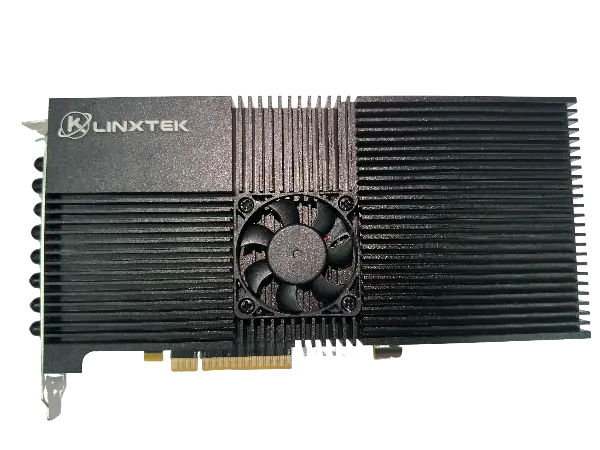
DAS-U1000 Ultimate Edition Demodulation Card
DAS-U250 Demodulator
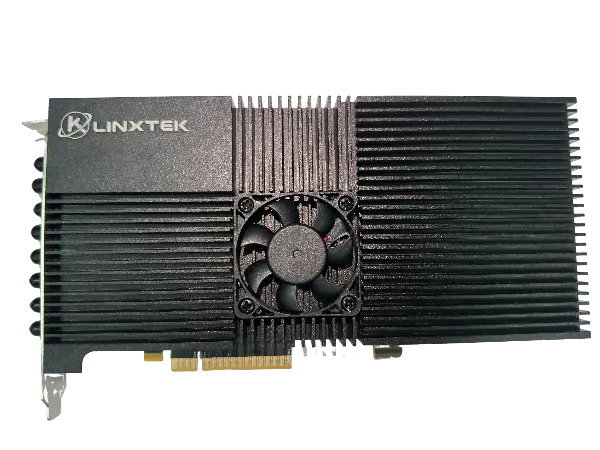
DAS-U250 Ultimate Edition Demodulation Card
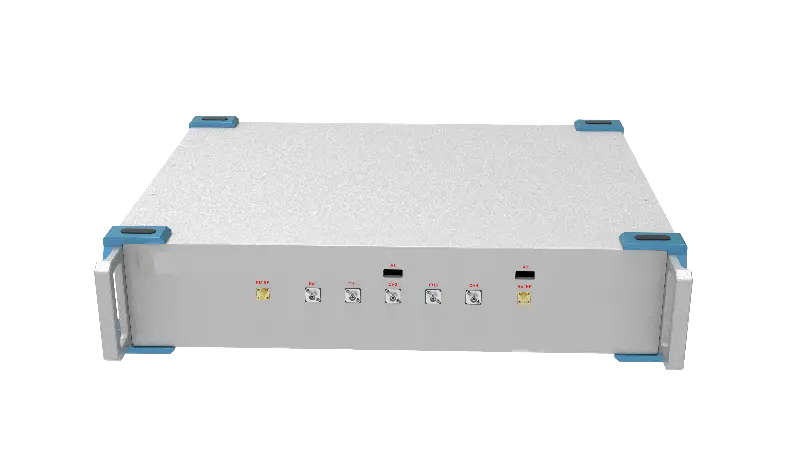
PDH Sensing Demodulator
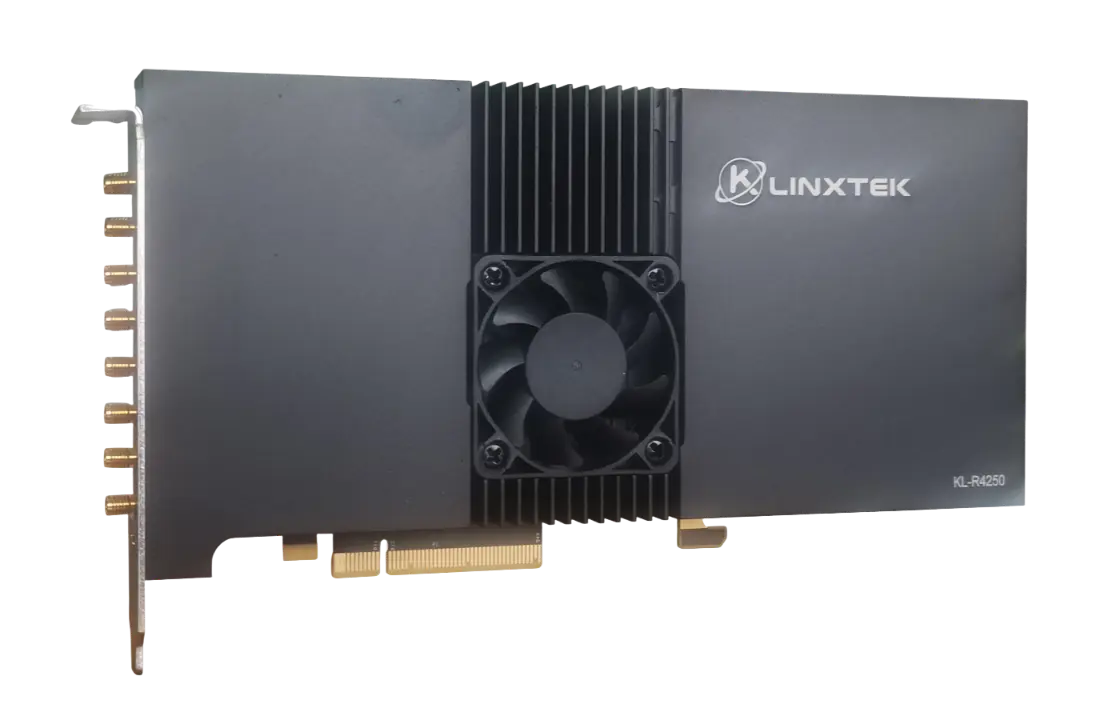
DAS-P250 Professional Demodulation Card
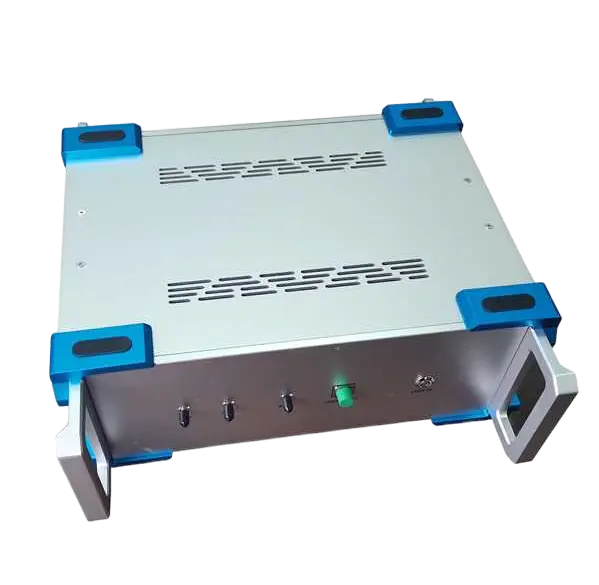
DAS Integrated Optical Module