


.webp)

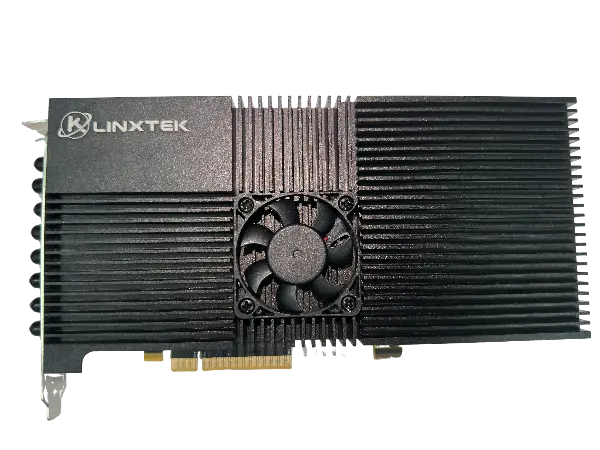
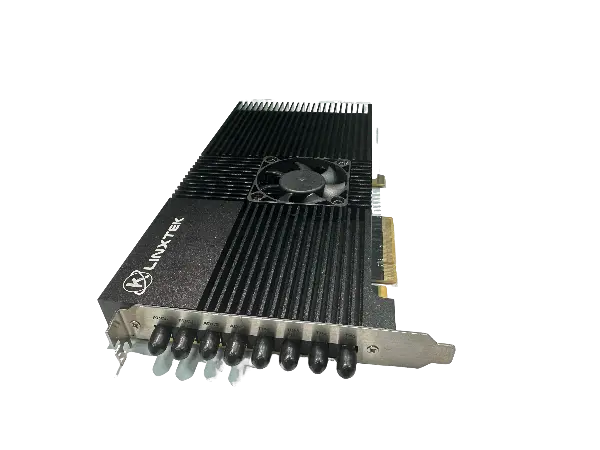
DAS-U1000 Ultimate Edition Demodulation Card


Product Details
Product Overview
The DAS-U1000 Distributed Optical Fiber Acoustic Demodulation Card, independently developed by Shanghai Kunlian Technology, is a flagship DAS demodulation system designed for extreme environment monitoring and high-precision sensing applications. The system is configured with a 4-channel 1000 MSPS 16-bit ADC and a single-channel 2500 MSPS 14-bit DAC, supporting external reference clock input. It achieves an excellent balance between long distance, high dynamic range, and high spatial resolution, meeting demanding engineering-grade monitoring requirements.
The core technological highlight of the DAS-U1000 is that it systematically resolves the coupled constraints among spatial resolution, detection distance, and dynamic range for the first time in distributed optical fiber sensing systems. Through a new generation of coherent noise modeling algorithms and an adaptive polarization state compensation mechanism, it effectively suppresses signal degradation caused by coherent fading and polarization randomness, enabling the maintenance of a spatial resolution better than 1 meter and high signal-to-noise ratio detection capability even over transmission distances of tens of kilometers.
Core Technical Advantages
✅ Dual Noise Suppression Mechanism:
Integrates coherent fading and polarization fading suppression algorithms, significantly improving the accuracy of identifying weak event signals.
✅ Breaking the Triple Limitation Bottleneck:
Enables relatively independent tuning of the three parameters: spatial resolution, detection distance, and dynamic range.
✅ Advanced FPGA Algorithms:
Utilizes embedded FPGA algorithms to achieve parallel signal processing and efficient parsing, greatly enhancing the identification efficiency and analysis capability of acoustic events.
✅ External Clock Synchronization Support:
Can connect to high-stability reference clocks, enhancing system stability and accuracy in multi-channel, long-distance collaborative monitoring scenarios.
✅ 4-Channel 1000MSPS High-Speed Sampling:
Supports large bandwidth, synchronous acquisition to capture high-frequency vibrations and transient acoustic signals, meeting the needs of extreme environment monitoring.
✅ Spatial Resolution Better Than 0.5 Meters:
Utilizes a high-precision time-domain demodulation structure, supporting sub-meter acoustic vibration localization, particularly suitable for monitoring structural detail responses.
Performance Specifications
| Item | Parameter |
|---|---|
| Analog Input Channels | 4 Channels |
| Maximum Sensing Distance | 60 km (Max) |
| Spatial Resolution | 1 m (Min) |
| Sampling Rate | 1000 MSPS / per channel |
| Response Frequency | 1 Hz ~ 20 kHz |
| Dynamic Range | ≥ 95 dB @ 10 Hz |
| Coupling Method | DC Coupling |
| Input Voltage Range | 2 Vpp |
| Analog Bandwidth | 0 ~ 100 MHz |
| Bias Adjustment | ±1V Adjustable |
| SFDR | Up to 88 dBc |
| Internal Storage | 2 sets of DDR4 memory: 1 set 16-bit 4 GByte, 1 set 32-bit 2 GByte |
| Interface Type | PCI 3.0 x8 interface |
| Operating Temperature Range | -20 ℃ ~ 50 ℃ |
| Demodulation Algorithm | Built-in IQ phase demodulation, can output raw or demodulated data |
| Trigger Output | Supports synchronous pulse output |
| System Compatibility | Windows / Linux |
Application Fields
✅ Oil, Gas & Underground Pipeline Integrity Monitoring: Quickly identifies anomalies such as leaks, impacts, and third-party interference.
✅ Seismic & Geological Activity Detection: High-precision tracking of microseismic events and rock mass movements.
✅ Large-scale Infrastructure Health Sensing: Used for detecting fatigue, cracks, and resonance in structures like bridges, dams, and high-speed rail tracks.
✅ Underwater & Border Security Monitoring: Suitable for intrusion detection and potential target identification in complex environments.
✅ Industrial Rotating Machinery Monitoring: Identifies abnormal vibrations, supporting predictive maintenance.
More Products
DAS-U250 Demodulator
OFDR-KL9600 Demodulator
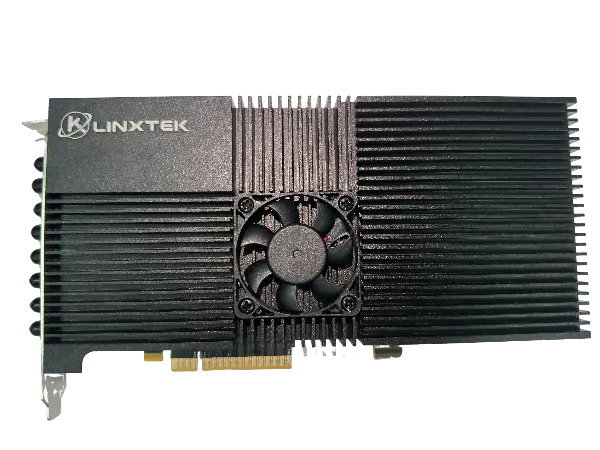
DAS-U250 Ultimate Edition Demodulation Card
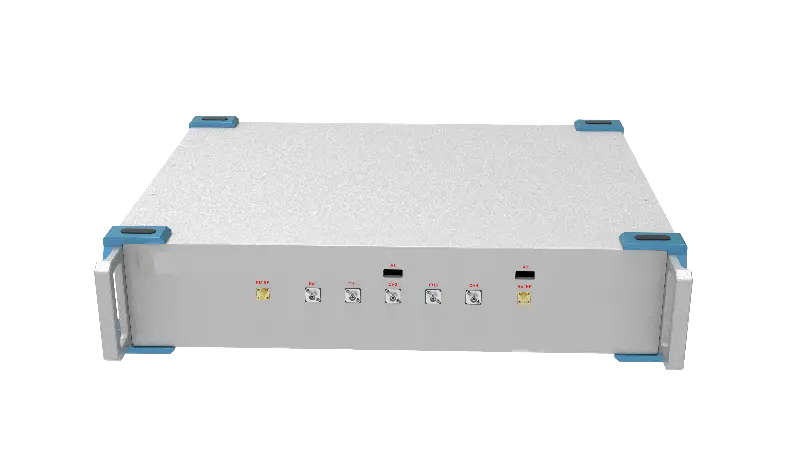
PDH Sensing Demodulator

DAS-P250 Professional Demodulation Card
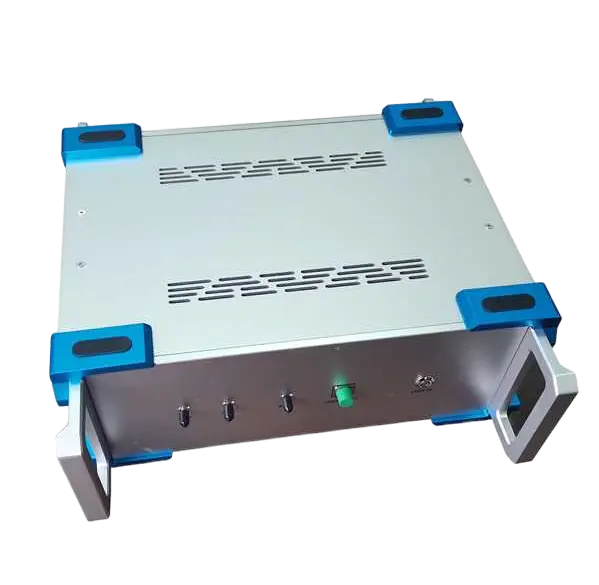
DAS Integrated Optical Module