


DAS-P1000 Professional Demodulation Card


Product Details
Product Overview
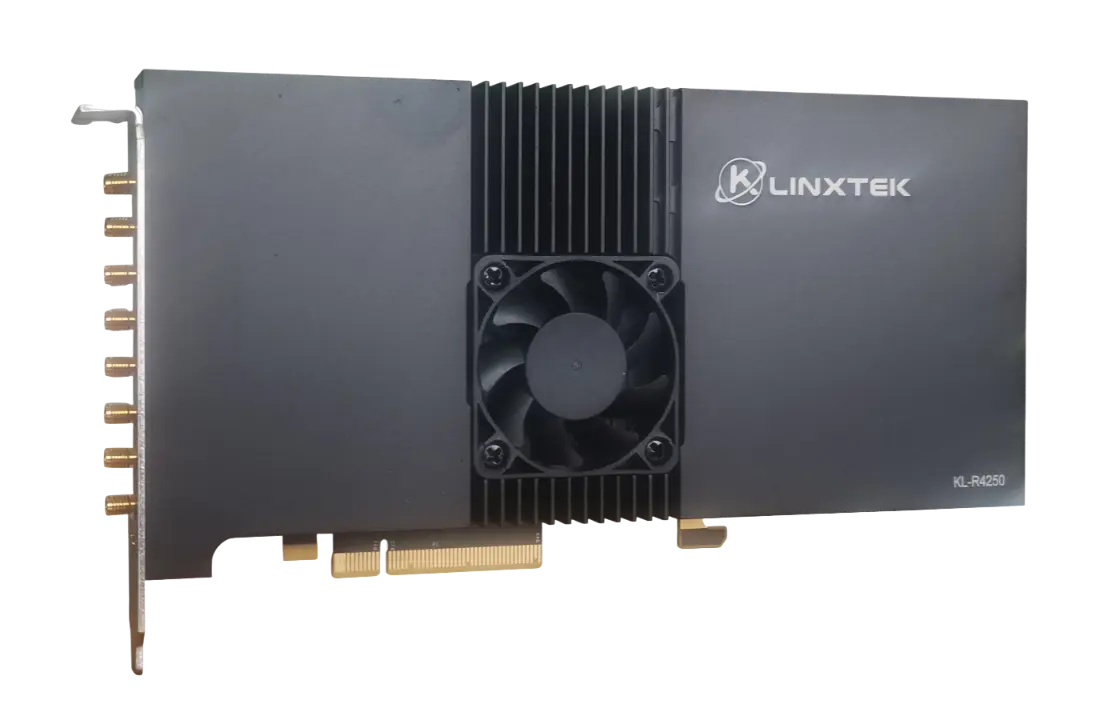
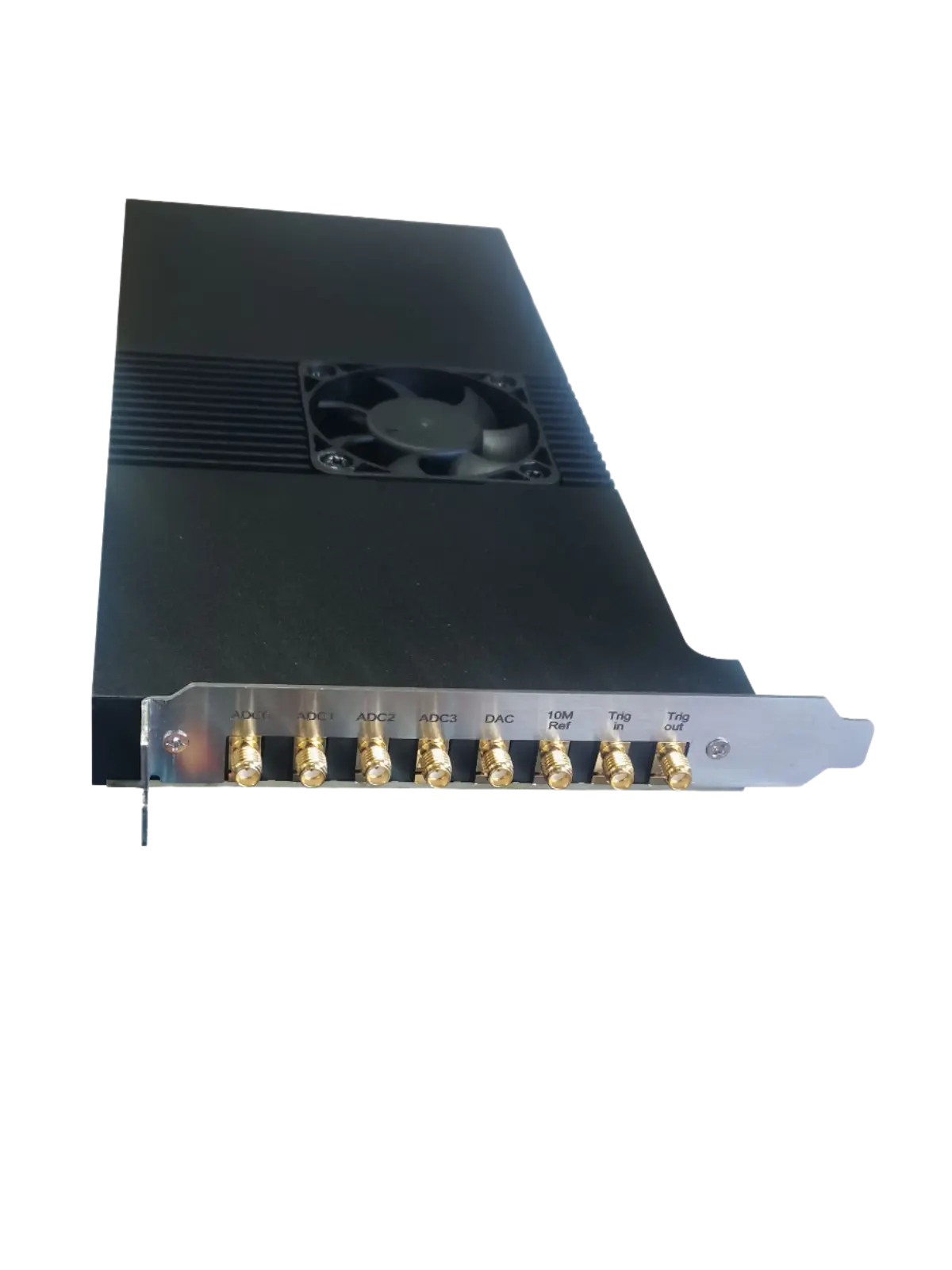
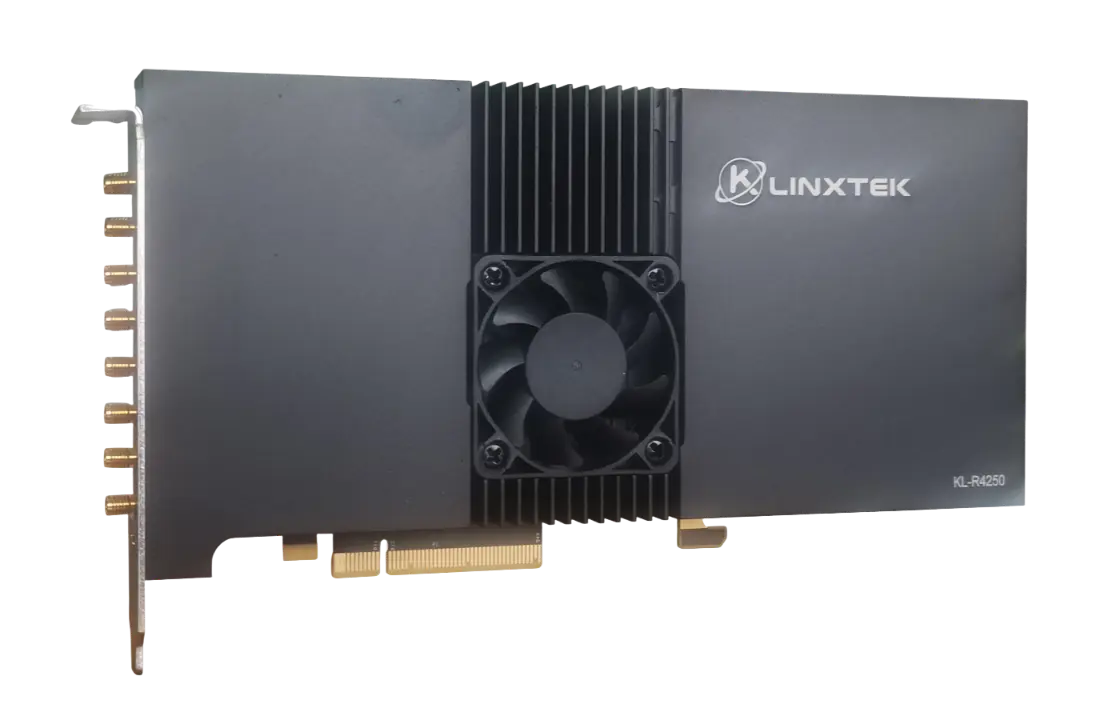
The DAS-P1000 is a professional-grade Distributed Acoustic Sensing (DAS) demodulation card launched by Shanghai Kunlian Technology for high-precision acoustic wave detection scenarios. The card integrates the company's independently developed high-speed data acquisition and processing platform. Its core configuration includes a 1 GSPS high sampling rate, 2-channel 1000 MSPS sampling rate ADC, a DAC conversion rate of 2500 MSPS, and support for external reference clock input, ensuring high signal sampling synchronization and system operation stability. Based on Kunlian Technology's proprietary pulse compression encoding modulation DAS technology, the DAS-P1000 can inject encoded laser signals into optical fibers, acquire backward Rayleigh scattering signals along the line in real time, and, after FPGA-based real-time demodulation and processing, accurately restore information about changes in vibration, acoustic waves, and other parameters along the fiber path.
Compared with traditional DAS systems, the DAS-P1000 significantly improves spatial resolution and signal-to-noise ratio while maintaining long-distance detection capabilities. A key highlight of the card is its built-in coherent fading suppression module, which effectively mitigates signal fluctuations caused by variations in the light source's coherence. In complex environments or long-distance applications, the DAS-P1000 significantly enhances signal stability and reliability compared to systems without suppression, with a spatial resolution better than 5 meters, providing a solid foundation for long-distance, high-precision acoustic wave detection.
Core Technical Advantages
✅ High Spatial Resolution Capability: Supports clear identification of minor localized disturbances over long-distance fiber optic cables, meeting fine-grained sensing requirements.
✅ Supports Ultra-Long Sensing Links: Effectively compensates for signal attenuation in long-distance transmission, ensuring detection accuracy and stability at remote ends.
✅ Wide-Band, Low-Frequency Response: Possesses sensitive detection capabilities for very low-frequency signals, further expanding the system's application boundaries.
✅ External reference clock input interface enables precise synchronization with the host system.
✅ Self-developed DAS demodulation algorithm and FPGA-based real-time signal processing.
✅ Built-in coherent fading suppression function enhances system stability and anti-interference capability.
✅ Spatial resolution better than 5 meters, meeting precision measurement demands.
Core Performance Parameters
| Item | Parameter |
|---|---|
| Analog Input Channels | 2 Channels |
| Resolution | 16 bits |
| Sampling Rate | 1000 MSPS / per channel |
| Input Impedance | 50 Ω |
| Coupling Method | DC Coupling |
| Input Voltage Range | 2 Vpp |
| Analog Bandwidth | 0 ~ 100 MHz |
| Bias Adjustment | ±1V Adjustable |
| SFDR | Up to 88 dBc |
| Internal Storage | 2 sets of DDR4 memory: 1 set of 64-bit 4 GB, 1 set of 32-bit 2 GB |
| Interface Type | PCIe 3.0 x8 Interface |
| Data Upload Rate | ≥ 2.2 GB/s |
| Demodulation Algorithm | Built-in IQ phase demodulation; can output raw or demodulated data |
| Trigger Output | Supports synchronous pulse output |
| System Compatibility | Windows / Linux |
Application Fields
Oil, Gas & Underground Pipeline Integrity Monitoring: Quickly identifies anomalies such as leaks, impacts, and third-party interference.
Seismic & Geological Activity Detection: High-precision tracking of microseismic events and rock mass movements.
Large-Scale Infrastructure Health Monitoring: Used for detecting fatigue, cracks, and resonance in structures like bridges, dams, and high-speed rail tracks.
Underwater & Border Security Monitoring: Suitable for intrusion detection and potential target identification in complex environments.
Industrial Rotating Machinery Monitoring: Identifies abnormal vibrations, supporting predictive maintenance.
More Products
DAS-U1000 Ultimate Edition Demodulation Card
DAS-U250 Demodulator
OFDR-KL9600 Demodulator
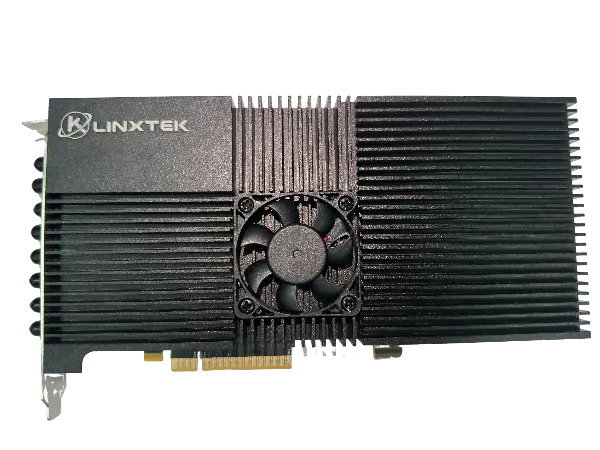
DAS-U250 Ultimate Edition Demodulation Card
PDH Sensing Demodulator
DAS-P250 Professional Demodulation Card