
 Follow Official WeChat


With the continuous expansion and improvement of high-speed rail networks, safety and reliability have become the primary tasks in ensuring high-speed rail operations.
With the continuous expansion and improvement of high-speed rail networks, safety and reliability have become the primary tasks in ensuring high-speed rail operations. High-speed rail lines bear significant transportation pressure, and under high-speed, high-frequency operating conditions, the safety of infrastructure such as railway lines, tracks, and stations is particularly critical. To enhance the safety monitoring level of high-speed rail, Distributed Acoustic Sensing (DAS) technology, as an innovative solution, is becoming a core component of high-speed rail monitoring systems. By deploying fiber optic sensors along the entire track, DAS provides real-time, continuous monitoring, capable of detecting subtle abnormal changes, issuing early warnings for potential faults, and ensuring the safe and stable operation of the high-speed rail system.
1. Track Monitoring and Strain Detection
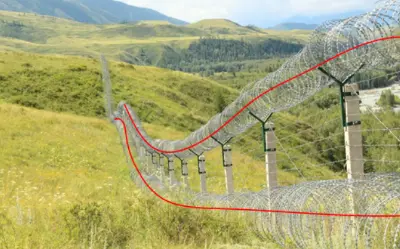
The operational safety of high-speed rail tracks is directly related to train safety. As trains travel at high speeds, the pressure and deformation on the tracks can be substantial, potentially leading to issues such as track settlement, bending, or cracks. Traditional track monitoring typically relies on localized sensors or manual inspections, which cannot monitor the entire track in real-time. Distributed Acoustic Sensing (DAS) technology, by deploying optical fibers along the entire track, can monitor track strain, displacement, and other physical parameters in real-time. When abnormalities such as settlement or deviation occur, the DAS system can immediately detect and issue alarms, helping maintenance personnel take timely measures to prevent accidents.
Application Effects:
✅ Enables comprehensive monitoring of track strain and displacement, providing high-precision track status data;
✅ Capable of capturing minor track deformations in real-time, identifying potential track issues early;
✅ Improves track maintenance efficiency, ensuring safe high-speed rail travel.
2. Train-Track Interaction Monitoring
In high-speed rail operations, the interaction between trains and tracks is crucial for system stability and safety. When trains pass over tracks, the vibrations and pressure waves generated can adversely affect both the track and the vehicle. Distributed Acoustic Sensing (DAS) technology can detect vibrations and strain generated during train passage in real-time, monitoring the interaction between trains and tracks. Through real-time data analysis, the system can identify abnormal vibration patterns or pressure fluctuations, helping to predict track wear and potential safety hazards in advance.
✅ Monitors the interaction between trains and tracks, identifying abnormal vibration patterns;
✅ Provides real-time data on the impact of train operations on tracks, offering a basis for subsequent maintenance;
✅ Optimizes maintenance and scheduling for high-speed rail trains and tracks, ensuring smooth train operations.
3. Tunnel Monitoring and Structural Safety
During high-speed rail operations, tunnels are essential components. However, tunnels may experience safety hazards such as deformation, cracks, or water seepage due to factors like surrounding soil and geological changes. DAS technology can deploy sensors along optical fibers installed inside tunnels to monitor parameters such as temperature, humidity, displacement, and cracks in real-time. By analyzing this data in real-time, abnormal structural changes in tunnels can be detected early, providing timely warnings for potential issues like collapse or water seepage.
Application Effects:
✅ Enables comprehensive monitoring inside tunnels, accurately detecting safety issues such as deformation and cracks;
✅ Provides real-time data to help assess the health status of tunnels;
✅ Improves tunnel maintenance efficiency, reducing the occurrence of sudden accidents.
4. Vibration Monitoring for Tracks and Bridges
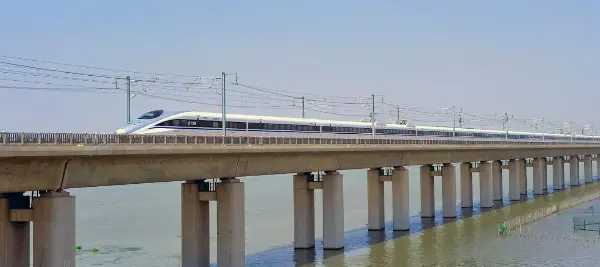
High-speed rail bridges, as critical components of high-speed rail lines, withstand significant vibrations and loads when trains pass. Prolonged vibrations may lead to structural issues such as cracks or displacement in bridges. Distributed Acoustic Sensing (DAS) technology can install fiber optic sensors on bridges to monitor vibration and strain conditions in real-time. When abnormal vibrations or strain occur, the DAS system can immediately issue alerts, helping staff identify and address issues promptly to prevent accidents.
Application Effects:
✅ Monitors bridge vibrations and strain in real-time, providing precise health assessments;
✅ Timely detection of structural issues in bridges, preventing large-scale damage in advance;
✅ Enhances the safety and reliability of high-speed rail bridges.
5. Real-Time Data Monitoring and Remote Management
One of the greatest advantages of Distributed Acoustic Sensing (DAS) technology is its ability to transmit real-time monitoring data to a central control system remotely. Whether the high-speed rail line is located in a city center or a remote mountainous area, operators can view monitoring data for the high-speed rail line and infrastructure in real-time through a remote management platform, ensuring safe operation across the entire network. This real-time data transmission and visual management capability enable large-scale, efficient monitoring of the entire high-speed rail network, improving response speed and decision-making capabilities for management personnel.
Application Effects:
✅ Enables comprehensive remote monitoring and data visualization;
✅ Provides a cross-regional high-speed rail monitoring system, enhancing management efficiency;
✅ Optimizes high-speed rail maintenance and scheduling, improving service levels.