
 Follow Official WeChat


Perimeter security is playing an increasingly important role in modern security management systems.
With the evolving social security landscape and growing demands for enhanced safety, perimeter security is playing an increasingly important role in modern security management systems. Particularly in high-security environments such as airports, prisons, borderlines, and critical industrial facilities, traditional security monitoring methods can no longer meet the need for comprehensive, real-time, and dead-zone-free surveillance. Distributed Acoustic Sensing (DAS) technology, as an innovative monitoring solution, enhances perimeter security by deploying optical fibers around the perimeter. This enables real-time monitoring, significantly improving the intelligence and automation levels of security systems. It allows for the immediate detection of various security risks and swift responses to potential threats.
1. Perimeter Intrusion Detection
Perimeter intrusion detection is one of the core tasks in perimeter security. Traditional intrusion detection typically relies on devices such as infrared sensors, video surveillance, and radar detection. However, these methods often suffer from blind spots, high false alarm rates, and limited monitoring coverage. In contrast, Distributed Acoustic Sensing (DAS) technology deploys fiber optic sensors along the perimeter, detecting minute vibrations and temperature changes in the surrounding environment to sense unauthorized intrusion activities in real time. Once an object or person approaches, climbs, or damages the fence, the DAS system captures the corresponding vibration signals, precisely locates the intrusion point, triggers alarms, and promptly notifies security personnel for action.
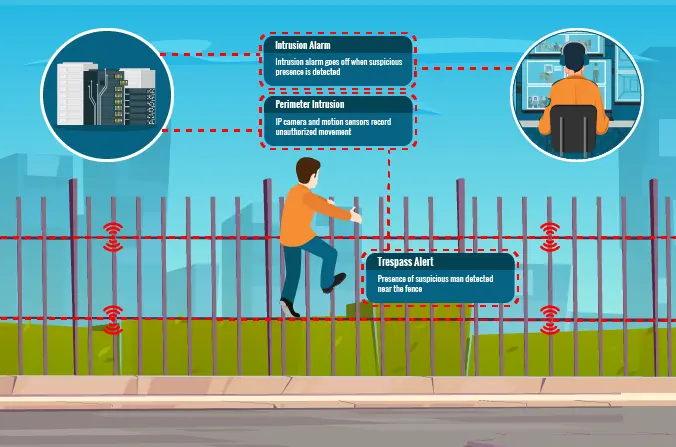
Application Effects:
✅ Comprehensive perimeter coverage with no blind spots;
✅ High sensitivity, capable of accurately capturing minor intrusion vibrations;
✅ Real-time alarm localization, enhancing response speed.
2. Anti-Tampering Monitoring
Perimeter fences and other security facilities are often targets for external attackers attempting actions such as cutting, drilling, or digging. DAS technology can monitor every vibration, displacement change, or other abnormal activity on the fence in real time. For example, when someone attempts to cut the fence or damage other structures, the fiber optic sensors immediately detect the vibrations or strain changes caused by external forces. The system rapidly relays this information to the central monitoring system, triggering alarms and pinpointing the location of the tampering. This ensures that security personnel can take action immediately.
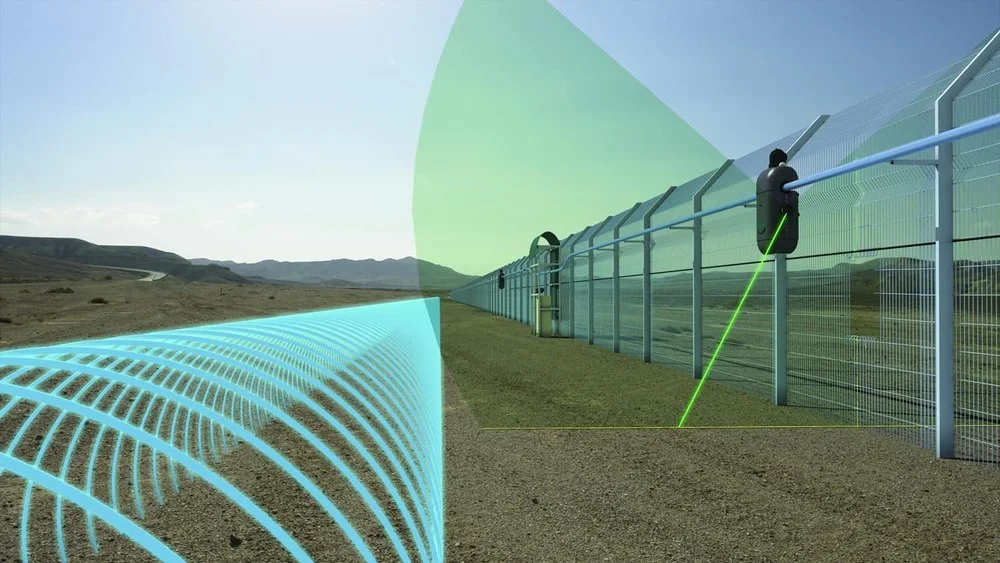
Application Effects:
✅ Accurately monitors the integrity of perimeter fences;
✅ Provides real-time warnings of tampering activities, reducing losses caused by human damage;
✅ Effectively reduces false alarm and missed detection rates, improving security effectiveness.
3. Perimeter Vibration and Gait Recognition
Beyond physical intrusion and tampering, perimeter security also needs to identify the behavioral characteristics of intruders, such as gait, climbing, and other activities. Distributed Acoustic Sensing (DAS) technology distinguishes between different vibration patterns, such as varying gaits and intensities, by monitoring vibrations on perimeter fences and the ground. For example, when someone climbs a fence or runs quickly, the DAS system can identify potential intrusion behavior based on characteristics like vibration signal frequency, amplitude, and duration, and issue timely alarms. Compared to traditional video surveillance systems, DAS technology offers the advantage of stable operation under various environmental and climatic conditions, unaffected by factors such as weather or lighting.
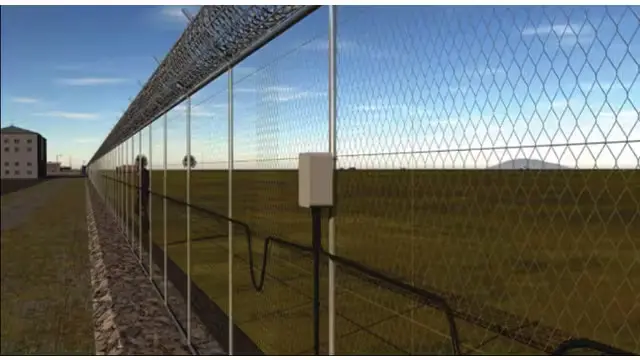
Application Effects:
✅ Accurately identifies intruder behavior based on different vibration patterns;
✅ Recognizes gait and movement characteristics, reducing false alarms;
✅ Enhances the intelligence level of security systems, enabling automated identification and response to intrusion events.
4. Perimeter Environmental Monitoring
In addition to physical intrusion and tampering, changes in the perimeter environment are also critical for security monitoring. DAS technology helps security personnel detect abnormal activities by monitoring environmental data such as vibrations and temperature in real time, both inside and outside the perimeter. For instance, unusual climatic changes or environmental fluctuations (such as fires or explosions) may occur in high-risk areas. The DAS system can promptly detect these abnormal environmental changes and provide early warnings, enabling security personnel to prepare emergency responses in advance.
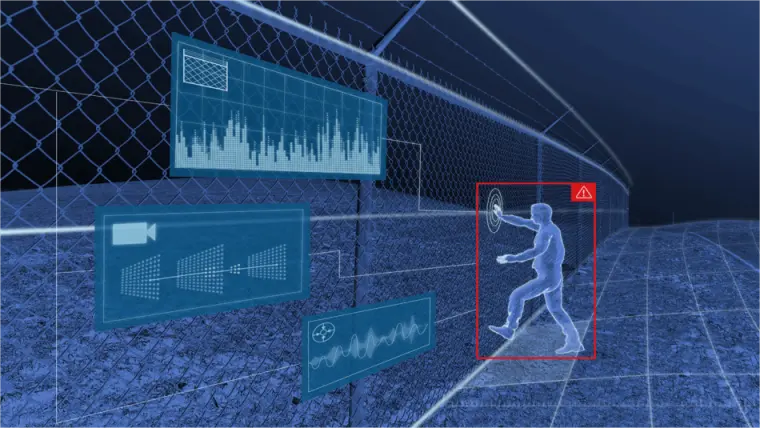
Application Effects:
✅ Enables real-time monitoring of environmental changes around the perimeter;
✅ Detects abnormal situations in advance, preventing emergencies;
✅ Improves the responsiveness and comprehensive monitoring capabilities of security systems.
5. Real-Time Data Transmission and Remote Management
The DAS system not only performs on-site monitoring but also transmits real-time monitoring data to a central control system, enabling remote management and real-time data analysis. Security personnel can monitor the perimeter security status at any time through a remote control platform. The system provides functions such as alarms, localization, and trajectory analysis based on the monitoring data, allowing security personnel to respond quickly and take appropriate measures. Through data visualization, security personnel can rapidly assess potential security risks and make precise decisions.
Application Effects:
✅ Enables real-time monitoring and data feedback, enhancing remote management efficiency;
✅ Data visualization improves decision-making speed and accuracy;
✅ Automated alarms and event logging enhance security response capabilities.